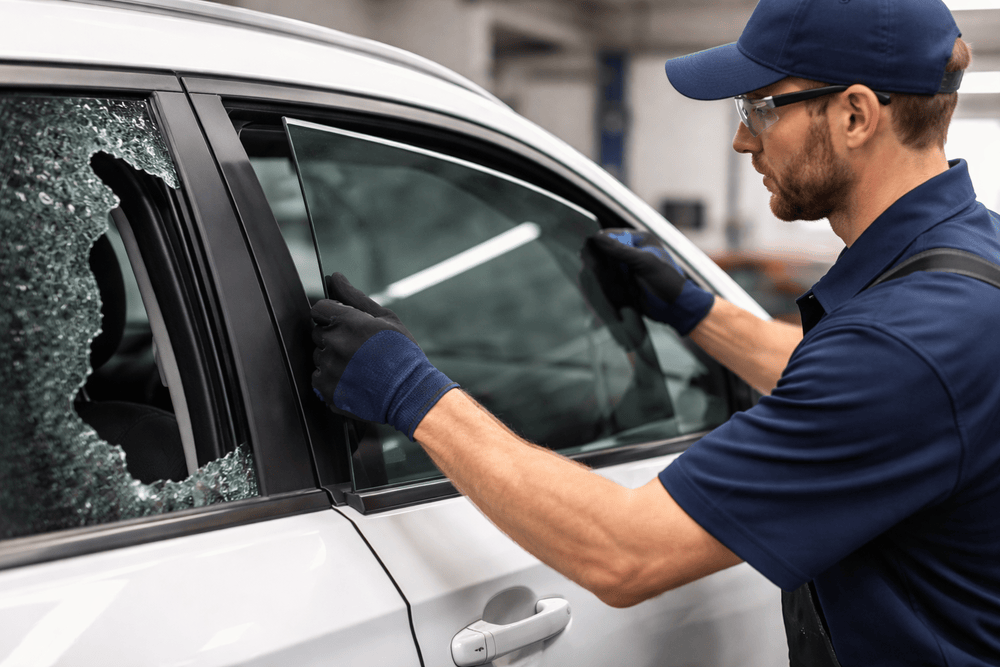
Understanding Passenger Side Window Replacement
Approaching your car and witnessing the smashed passenger-side window is an overwhelming experience. The outcome is always the same, whether it was caused by a break-in, a wayward baseball, or road debris: a jumble of broken glass and a car that is neither weatherproof nor secure. A broken side window is an urgent emergency, while a chipped windshield can frequently wait a few weeks for repair. It exposes your vehicle to wind, rain, and theft. Additionally, driving when temporarily covered presents serious safety hazards and limited vision. It might be intimidating to navigate the replacement procedure, particularly if you have never handled auto glass claims previously.
Get An Auto Glass Replacement Quote Now 866.278.7417

Windshield Replacement & Repair
Our competitors push you into going to their shop to get your glass fixed-making it cheaper for them. We make it easier for YOU to get back on the road by offering free mobile repairs at your home or work. With our free mobile services servicing the entire Orange County & Los Angeles area, we can often handle your windscreen replacement the same day! So the next time you need a windshield replacement, give us a call.
Talk to a Windshield Replacement Specialist Now 866.278.7417

Calibration
Calibration is the process of returning a vehicle’s ADAS to OEM specifications. Calibration is necessary after a new glass installation, particularly a windshield with a camera mounted to it, to ensure that the ADAS features continue to function properly despite having been moved during installation. If a car’s ADAS is not properly calibrated, the system may not function safely. A misaligned camera could jeopardize the functionality of the system and lead to dangerous driving or accidents, so it is crucial that the cameras are aligned perfectly, which is what windshield calibration ensures.
Talk to a Calibration Specialist Now 866.278.7417

Fleet Auto Glass Repair
We provide expert auto glass repair and windshield replacement services for commercial fleets of all sizes. We are experienced with all manufacturers and machine types of domestic or foreign cars, trucks, vans, or commercial vehicles, including heavy equipment. Our same day mobile auto glass and windshield repair service will enable you to get back on the road faster and start saving you time and money instantly. Give us a call today! We are here to help!
Talk to a Fleet Auto Glass Specialist Now 866.278.7417
The Special Qualities of Side Windows
You may have noticed that the appearance of a broken side window differs greatly from that of a cracked windshield. This is the outcome of particular safety engineering; it is not an accident. Knowing the differences between these types of glass helps to explain why passenger windows are rarely eligible for a simple chip repair, which is frequent for windshields.
Laminated glass versus tempered glass: Laminated glass makes up the majority of windshields. This is made up of two glass layers sandwiched by a layer of vinyl. The vinyl keeps it from collapsing in on the driver even if the glass may shatter when a rock strikes it.
On the other hand, the majority of rear and passenger-side windows are composed of tempered glass. This glass is heated to extremely high temperatures during production and then quickly cooled. Because of the internal strain created by this process, the glass is five to ten times stronger than ordinary glass.
That strain, meanwhile, also implies that if the glass is compromised, it shatters entirely rather than just cracking. Instead of breaking into sharp shards, tempered glass breaks into thousands of tiny, pebble-like cubes.
This safety element is intended to shield victims from severe cuts in the case of an accident. Nevertheless, it cannot be patched or fixed because the glass breaks altogether. It needs to be completely redone.
The Emergence of Laminated Side Windows: Although tempered glass is the norm, certain contemporary premium cars and SUVs now have side doors with laminated glass. Because laminated glass is more difficult to punch through during a theft attempt, manufacturers do this mainly for better security and noise reduction (acoustic glass). The cost of replacing your car’s laminated side windows will probably be more, and the repair procedure might be a little different.
Steps to Take Right Away Following the Breakage
You must deal with the immediate aftermath before you can take the car to a shop. By taking the proper precautions, you can safeguard both your personal safety and the interior of your vehicle.
First and foremost, be careful not to try to remove the glass with your bare hands. The bits can still be sharp enough to sever skin, even though tempered glass is meant to be less dangerous than sharp shards. If you must handle any debris, put on sturdy work gloves.
Record the Damage: Before you begin cleaning, take pictures if the damage was caused by theft or vandalism. These can be required for an insurance claim or a police complaint.
See if there are any missing valuables. Your insurance company will need a case number, so you should report anything stolen to the police right away.
Clearing the Debris: The best method for getting rid of the glass is to use a powerful shop vacuum. The center console, the floor mats, and the seats all need to be vacuumed. These glass cubes tend to hide in air vents and seat tracks, so be diligent.
Securing the Opening: You must seal the window if you are unable to have the glass replaced that same day. Duct tape shouldn’t be applied directly to the car’s paint since it can harm the clear coat and create an enduring, sticky residue.
Apply clear packing tape or “crash wrap” (a self-adhesive plastic film that may be found at auto parts stores) over a piece of heavy plastic sheeting instead. To avoid moisture damaging the electrical components inside the door panel, make sure the seal is tight.
Do you have a Question?
Get An Auto Glass Replacement Quote Now 866.278.7417
The Process of Professional Replacement
In terms of mechanics, replacing a passenger-side window is more difficult than replacing a windshield. A side window is movable, but the windshield is fixed to the car’s frame.
It runs on a mechanical system that is concealed inside the door. When performing a professional replacement, a technician usually accomplishes the following:
Removing the Door Panel: The internal door panel needs to be removed to reach the window mechanism. This entails carefully removing clips that secure the panel to the metal door frame and unscrewing hidden fasteners. The door panel may later rattle if these clips are pressed and break.
The most important step that distinguishes a successful repair from a poor one is cleaning the door cavity. A large amount of glass probably fell within the door construction when the window broke.
This glass will rattle each time the door is closed if it is not removed. Even worse, loose glass may clog the motor or grind against the new window. To remove the debris, technicians reach deep into the door hollow using flexible vacuum attachments.
The technician must insert the new glass into the door frame at a precise angle. The mechanical track that moves the glass is then attached to the window regulator.
Testing the Regulator: The technician connects the power switch to test the window’s functionality prior to reassembling the door. They make sure that the automatic “one-touch” up/down features are calibrated accurately and check for smooth movement.
Reassembly: After the window is operating flawlessly, the door panel is put back in place, and the vapor barrier—a plastic sheet behind it—is sealed.
Insurance and Cost Considerations
The cost of replacing a passenger-side window varies greatly depending on several factors.
Make and Model: Compared to a premium coupe or an uncommon foreign car, a window for a typical sedan will be substantially less expensive.
OEM vs. Aftermarket: Original Equipment Manufacturer (OEM) glass is identical to the original specs and bears the emblem of the automaker. Third-party companies produce aftermarket (OEE) glass. OEE glass is typically less expensive even if it is approved and safe.
Features: Is there a factory tint on the glass? Is it hot? Does it have a coating that repels water? The cost goes up with each new feature.
Managing Insurance: Before making an out-of-pocket payment, review your insurance policy. Glass damage is typically covered if you have comprehensive coverage. You need to verify your deductible, though.
It makes more sense to pay for the repair yourself rather than submitting a claim if the window replacement costs $350 and your deductible is $500. A particular “full glass coverage” rider with a $0 deductible is available under some insurance. In this instance, you should not be charged for the replacement.
Answers to Common Questions about Side Glass
After the repair, may I drive the automobile right away? A side window replacement is often a mechanical operation, as opposed to a windshield replacement, which needs an hour or longer for the urethane adhesive to cure.
The adhesive doesn’t need to dry. After the service is finished, you can usually drive the car and roll down the window right away. Will my other windows be compatible with the new one?
The replacement glass will be sent with the same tint darkness if your automobile has a factory tint (privacy glass). The new piece of glass will come clean, though, if your windows were tinted with an aftermarket tint.
Before going to a tint business to have matching film placed, you must wait a few days for the new glass to settle. When I shut the door, why does my window make a different sound? After a repair, go back to the shop if you notice a rattling sound.
This typically indicates that a clip on the door panel was broken during reassembly or that a piece of broken glass was overlooked inside the door panel. A trustworthy store will address this problem and guarantee their work.
Can a side window be replaced by a mobile service? Yes, mobile auto glass professionals can perform this service in your business parking lot or driveway. However, they will need a dry atmosphere because the door must be opened to reveal the interior. You will need a garage or roof cover if it is pouring or snowing, or you will have to drive the car to a physical shop.
Getting Peace and Security Back
You feel vulnerable when a passenger window breaks, but the fix is usually simple and fast. Skilled specialists can typically complete the replacement in less than 90 minutes.
You can prevent potential theft and shield the interior of your car from the weather by taking care of the problem as soon as possible. Make sure you pick a qualified installer who will take the time to clean the shattered glass from inside the door panel, regardless of whether you decide to pay out of pocket or submit an insurance claim. With a high-quality installation, your window will sound and look brand new.
Car Glass Replacement: Prices, Types, and Insurance Guide: On the highway, a rock strikes your windshield, creating a star-shaped crack that is directly in front of you. Every driver dreads it, not just because of the damage but also because of the ensuing pandemonium.
Do you require a repair or a complete replacement? Will it be covered by your insurance? And why does the dealership’s quote cost three times as much as the neighborhood glass shop? It takes more than just changing out a clear pane to replace vehicle glass.
Rain sensors, heating components, and sophisticated safety cameras that peer through that glass are all standard on modern cars. This technology greatly impacts the cost of materials and the labor required to install them.
The type of glass you select, the labor required, and the impact your insurance policy makes are the three primary pillars of auto glass replacement costs that are broken down in this guide. If you are aware of these aspects, you can make an informed choice that ensures safety without exceeding your budget.
Recognizing the Three Primary Types of Glass
The glass itself is typically the largest variable when you get an estimate. The terms might be confusing, and not all windshields are made equal. In general, replacement glass can be divided into three groups: aftermarket, OEM, and dealer.
Dealer Glass: This type of glass is purchased straight from an approved auto dealership. It has the vehicle brand’s logo (such as Ford, BMW, or Toyota) stamped in the corner and is created by the same company that made your car’s original windshield.
Cost: The most costly choice is this one.
Why choose it: This is your only choice if you are leasing a car and must return it with original parts, or if you just want the automobile to be 100% stock.
OEM (Original Equipment Manufacturer) glass is manufactured using the same molds and specs as dealer glass and is produced by the same company (such as Pilkington, PGW, or Saint-Gobain). The absence of the car manufacturer’s logo is the only distinction.
Cost: Usually 20% to 40% less expensive than dealer glass.
Why pick it: It is less expensive than the original windshield while providing the same level of quality, clarity, and fit. If asked, the majority of insurance providers will cover OEM glass.
Aftermarket (OEE, or Original Equipment Equivalent): Businesses that do not supply the automaker make aftermarket glass. These businesses buy the rights to replicate the glass template.
The fit and finish may differ significantly, but they must adhere to Department of Transportation (DOT) safety regulations. The hue may be slightly different from the original, or the glass may be somewhat thinner or thicker.
Cost: The least expensive choice.
Why pick it: This is a sensible option for budget-conscious or older cars. However, aftermarket glass might occasionally result in calibration problems if your vehicle has sophisticated sensors.
The Labor Factor: It’s Not Just Glue It used to take an hour to replace a windshield. After cutting the seal, a technician would remove the old glass, prime the frame, apply fresh urethane glue, and set the new glass. The physical installation procedure is still the same, but the sophistication of the vehicle has increased labor costs.
Do you have a Question?
Get An Auto Glass Replacement Quote Now 866.278.7417
Typical Installation Work
Usually, labor is billed on an hourly basis or at a fixed amount per work. Here, geographic location is crucial; labor costs will be higher in cities than in rural areas. Depending on the business, labor costs for a basic windshield without sophisticated features could range from $100 to $300.
The ADAS Impact: Advanced Driver Assistance Systems (ADAS) are revolutionizing labor costs. A camera is installed right behind the windshield if your vehicle includes technologies like Adaptive Cruise Control, Automatic Emergency Braking, or Lane Keep Assist.
That camera angle shifts, even by a millimeter, when the glass is changed. That small change has the potential to totally derail the system. The camera needs to be recalibrated as a result.
Static Recalibration: Needs a certain target board configuration in a regulated setting. To do dynamic calibration, the technician must drive the car on designated roads at predetermined speeds while connecting a specialist computer. This calibration process often doubles or triples the labor rate, adding substantial time and specialist equipment costs to the bill.
Managing Insurance Coverage: The insurance coverage for glass might vary greatly depending on your policy and where you live. You can avoid an unexpected fee by being aware of the fine print.
The comprehensive section of your auto insurance policy, which covers damage not brought on by a collision (such as fire, theft, falling items, or rock chips), usually includes coverage for glass damage. If you have comprehensive coverage, your insurance will likely cover the replacement.
The Dilemma of Deductibility
You can deduct the catch. Filing a claim for a $450 windshield replacement when your deductible is $500 or $1,000 makes no sense; you will have to cover the entire cost yourself.
Nonetheless, there are state-specific regulations pertaining to glass covering. Comprehensive insurance usually has to pay for windshield repair with no deductible in areas like Florida, Kentucky, and South Carolina. You might be able to purchase a certain “full glass coverage” rider in other jurisdictions, which eliminates the deductible for glass claims.
Aftermarket vs. OEM Riders: The majority of typical insurance policies only cover “like kind and quality” parts. This typically implies that they will cover the cost of OEE or aftermarket glass.
You would have to cover the difference in price out of pocket if you insist on dealer or OEM glass. For newer cars (about 1–2 years old), some insurers provide an OEM endorsement that guarantees original parts.
The “Right to Choose”: Your insurance will typically refer you to a certain claims administrator (typically a sizable glass network) when you call to report a crack. They may suggest that you have to use their favored supplier.
You are legally free to select whatever glass shop you like in the majority of places. If your chosen shop charges more than the “prevailing rate” the insurer will pay, you may be liable for the difference.
Frequently Asked Questions: Generally, a single glass claim won’t increase your premiums, particularly if it’s a comprehensive “no-fault” claim. But frequency counts. Your insurance company may consider you high-risk if you submit three glass claims in a two-year period, which could affect your rates.
Yes, and repairing a chip is much less expensive. The chip can typically be filled with resin if it is less than a quarter and not in the driver’s direct line of sight. This stops the crack from expanding and restores structural integrity. For chip repairs, the majority of insurance providers will waive the deductible, saving you money.
The urethane adhesive that is utilized will determine this. Some “rapid cure” adhesives allow for safe driving after 30 to 60 minutes. For others, the car must sit for several hours. Safe Drive-Away Time (SDAT) is the term for this. Driving too soon can jeopardize the seal and your safety in an accident, so always pay close attention to the technician’s directions.
Selecting the Best Option for Your Car
Don’t only search for the cheapest price when dealing with a damaged window or windshield. Take into account your car’s age, the safety features it has, and the conditions of your insurance coverage. If your automobile has ADAS, buying inexpensive glass or neglecting calibration poses a safety risk in addition to an economic one.
Always find out exactly what kind of glass the business plans to use and if the quote includes calibrating. With this knowledge, you can protect your wallet and your view of the road.
Mobile Safe Auto Glass
14241 E Firestone blvd suite 400,
La Mirada, CA 90638
Phone: (562) 608-1154
Toll Free: 1 866 278 7417
Mail: sales@mobilesafeautoglass.com
Get a FREE QUOTE today! You can get a free quote and schedule 24/7 using this free quote wizard.
Mon – Fri 8am – 5pm
Saturday 8am – 1pm
Sunday Closed