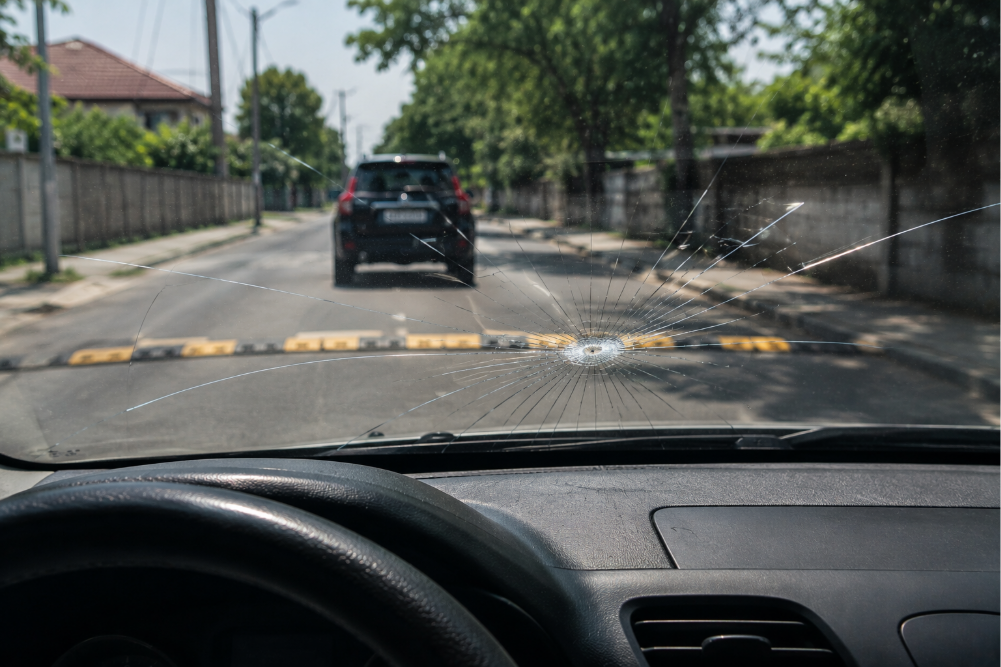
Speed Bumps Affect the Need to Fix Cracked Windshield
You may be unknowingly exacerbating the damage each time you roll over a speed bump with a shattered windshield. A little chip or hairline fracture may soon grow into a wide crack that covers your whole field of vision, and speed bumps are among the worst offenders. This article outlines the precise reasons why speed bumps hasten windshield deterioration, when a fracture poses a safety danger, and what to do before that little chip becomes an expensive replacement.
Get An Auto Glass Replacement Quote Now 866.278.7417

Windshield Replacement & Repair
Our competitors push you into going to their shop to get your glass fixed-making it cheaper for them. We make it easier for YOU to get back on the road by offering free mobile repairs at your home or work. With our free mobile services servicing the entire Orange County & Los Angeles area, we can often handle your windscreen replacement the same day! So the next time you need a windshield replacement, give us a call.
Talk to a Windshield Replacement Specialist Now 866.278.7417

Calibration
Calibration is the process of returning a vehicle’s ADAS to OEM specifications. Calibration is necessary after a new glass installation, particularly a windshield with a camera mounted to it, to ensure that the ADAS features continue to function properly despite having been moved during installation. If a car’s ADAS is not properly calibrated, the system may not function safely. A misaligned camera could jeopardize the functionality of the system and lead to dangerous driving or accidents, so it is crucial that the cameras are aligned perfectly, which is what windshield calibration ensures.
Talk to a Calibration Specialist Now 866.278.7417

Fleet Auto Glass Repair
We provide expert auto glass repair and windshield replacement services for commercial fleets of all sizes. We are experienced with all manufacturers and machine types of domestic or foreign cars, trucks, vans, or commercial vehicles, including heavy equipment. Our same day mobile auto glass and windshield repair service will enable you to get back on the road faster and start saving you time and money instantly. Give us a call today! We are here to help!
Talk to a Fleet Auto Glass Specialist Now 866.278.7417
Why Do Speed Bumps Spread Windshield Damage
Laminated safety glass, which consists of two glass layers joined by a polyvinyl butyral (PVB) interlayer, is used to make windshields. This structure is intended to cushion impacts and keep the glass from breaking. However, that structural integrity is jeopardized if there is already a chip or fracture.
The chassis of your car is abruptly and vertically jolted by speed bumps. The windshield experiences a minor flexion as a result of the force passing through the frame. That flex is little on a windshield that is intact. When one is cracked, the stress focuses in the crack’s weakest spot, which leads to its propagation.
The force increases with the speed at which you strike the speed hump. Repeated exposure to these jolts accumulates even at modest speeds. It’s similar to bending a plastic straw back and forth; although each action looks innocuous, the material eventually becomes fatigued and breaks.
Which kinds of cracks are most susceptible to stress from speed bumps? Road vibration affects windshield damage in different ways. Certain fissures are far more likely to propagate than others.
Bullseye and star chips are usually the result of tiny pebbles or other material striking the glass. Despite their circular form, they provide a concentrated weak spot. A clean chip may become a branching fracture when a violent shock over a speed bump causes the break’s outer edges to spread outward.
Because the glass is under the greatest stress at its edges, they are regarded as the most structurally hazardous kind of damage. Edge cracks may spread quickly across the windshield due to speed bumps, sometimes even in a single drive.
Stress fractures: Usually caused by abrupt temperature fluctuations, stress fractures develop without any impact at all. Speed bumps may exacerbate them rapidly since they are produced by internal pressure rather than external force.
lengthy Cracks: A crack is deemed lengthy if it is more than six inches in length. These usually need to be completely replaced since they are already too big to be fixed with a regular resin injection. The likelihood of the windshield failing in an emergency is greatly increased while driving over speed bumps with a lengthy crack.
How Other Road Hazards Compare to Speed Bumps
There are other road features besides speed bumps that put stress on a broken windshield. Similar vibration forces are created by unpaved roads, train crossings, and potholes. But what makes speed bumps special is that they are inevitable in many urban and suburban environments, including as parking lots, school zones, residential roadways, and driveways.
Frequency is the difference. On your journey, you may roll over six speed bumps but only strike one pothole. Each one exacerbates the strain on a windshield that is already compromised.
Another factor is temperature. Glass expands on a hot day. It shrinks on a chilly morning. The temperature difference may cause a crack that survived your trip home to expand overnight, and the first speed bump you encounter the following morning may tip it over the brink.
When Does a Windshield Crack Turn Into a Safety Risk? There is more to a windshield than just keeping rain and wind out. According to the Auto Glass Safety Council (AGSC), it contributes up to 30% of the structural stiffness of your car.
An undamaged windshield helps save the roof from collapsing in a rollover collision. It facilitates the appropriate airbag deployment in a front-end accident. All of these tasks may be jeopardized by a broken windshield. In particular, you should handle the fracture urgently if:
You can see the fracture directly. Glare and distortion brought on by cracks raise the possibility of an accident. The edge of the fracture has been reached. The whole perimeter of the windshield is weakened by edge damage.
The fracture is close to a camera or sensor. Sensors installed on the windshield are used in modern cars for rain detection, emergency braking, and lane-keeping. These systems may be disrupted by a fracture in this region.
Do you have a Question?
Get An Auto Glass Replacement Quote Now 866.278.7417
Reduce Additional Damage Before Getting It Repaired
There are a few doable actions you may do to lessen the damage if you have a broken windshield and can’t have it fixed right away:
Steer clear of speed bumps whenever you can. Avoid speed bumps by taking other routes or approaching them at the slowest possible pace. Less vertical force is applied to the glass as you move more slowly.
Park in the shade. Crack development is accelerated by thermal stress from direct sunshine. Temperature-related expansion is lessened while parking in a garage or other shady place.
Avoid using your defroster on high. A chip may spread in a matter of seconds when hot air is blasted at a cold, broken windshield, causing fast thermal expansion.
Steer clear of vehicle washes. Automated vehicle washes’ mechanical brushes and high-pressure water jets have the potential to stretch the glass and exacerbate pre-existing fractures.
Cover the chip with transparent tape. This is a temporary solution to prevent moisture and debris from entering the fracture, maintaining the glass’s quality and making restoration a feasible option.
The True Cost of Waiting Too Long: Delaying windshield repairs might be alluring. They seem like a low-priority investment, particularly if you can’t see the fracture immediately. However, financial calculations are subject to sudden adjustments.
The average cost of a chip repair is between $50 and $150. Depending on the make and model of your car, a complete windshield replacement may cost anywhere from $200 to over $1,000. Additionally, cars with ADAS sensors often need expert recalibration, which raises the cost by an additional $100 to $300.
If you have an unrepaired crack, every speed bump you encounter is risky. The harm could persist. Alternatively, it can spread just enough to increase the cost of a repair from $75 to $600.
Small Chips May Grow Into a Major Issue
Speed bumps with a damaged windshield are not a good combo. A little chip may develop into a major structural issue due to the repeated stress of road jolts, temperature swings, and daily driving.
The solution is simple: as soon as you discover damage, get it evaluated. The majority of vehicle glass repair businesses give free inspections, and many deal directly with insurance companies to pay for them. Quick action keeps your alternatives for repairs open, your expenses low, and—most importantly—your windshield performing as intended.
Frequently Asked Questions: Is it possible for a speed bump to automatically fracture a windshield? An intact windshield is unlikely to fracture due to speed bumps alone. However, the force of striking a speed bump may cause the damage to spread considerably if there is already a chip or fracture.
How quickly should I go over a speed bump if my windshield is cracked? Go as slowly as you can, preferably less than five miles per hour. The chance of the fracture expanding decreases when you approach a speed bump more slowly because less vertical force is applied to the windshield.
How soon after a speed bump, may a crack spread? Instantaneous crack propagation is possible. Sometimes, especially in edge fractures or lengthy cracks that are already under stress, a single forceful jolt may cause a crack to spread several inches in a matter of seconds.
Are windshield repairs brought on by traffic damage covered by auto insurance? Windshield replacement and repair are usually covered by comprehensive motor insurance, often with no repair deductible. Find out what your coverage covers by getting in touch with your insurance provider before making an out-of-pocket payment.
A Broken Windshield in the Future
A chip or crack in your windshield may seem to be a little irritation that is simple to overlook or put off. However, every speed bump, pothole, and uneven section of road you pass is subtly exacerbating the situation.
Here’s why you shouldn’t wait to replace your broken windshield since bumps are its biggest enemy. The majority of drivers are unaware of how rapidly a little fracture may become worse.
In a few days, a quarter-sized chip may cover your whole windshield. Temperature fluctuations, road surface vibrations, and the flex of your car’s structure all combine to exacerbate a fracture.
Additionally, the repair becomes more costly and hazardous as it becomes larger. This article explains what occurs to a broken windshield when it strikes a bump, why the damage spreads more quickly than most people realize, and what you should do before that little fracture grows into a much greater issue.
What Does a Bump Actually Do to a Cracked Windshield? Your windshield is more than just a piece of glass; it is a structural component of your vehicle. Modern windshields are made of laminated safety glass, which is composed of two glass layers connected by a plastic interlayer (often polyvinyl butyral, or PVB). This design keeps the glass from shattering into sharp fragments when it comes into contact.
Your automobile bends a little when you strike a bump. Vibrations pass through the chassis and into the windshield when the suspension compresses and the frame bends. The glass can easily take this bend under typical circumstances. However, the narrative shifts when a chip or fracture already exists.
A weak point—a line of decreased structural integrity—is produced by a fracture. Stress focuses at the crack’s tip each time the windshield bends. Physics takes care of the rest: the fracture spreads, grows, or branches outward. A two-inch fissure may become a six-inch crack at highway speed due to a single pothole.
Bumps Increase the Damage of Windshield Cracks
Vibration Weakens the Glass Around the Crack: The vibration caused by your tires rolling over uneven terrain goes upward through the body of your automobile and straight into the windshield glass. Stress is applied and released at the crack tip with each vibration cycle. This fatigue leads the break to spread further into the glass over repeated cycles, such as every bump, rough road, and train track.
Road Impacts Cause Abrupt Pressure Changes: Your suspension experiences an abrupt downward push and an equally abrupt rebound when you hit a sharp bump.
When the windshield is already weakened, this quick compression and expansion leads it to briefly bend in ways that are not intended for it. A speed bump, for instance, is a very modest bump that may produce enough flex to expand a crack several inches.
Temperature Variations Make Things Worse Between Bumps: Your car’s cracks don’t simply become worse while it’s going. Temperature causes glass to expand and compress. The glass somewhat expands on a hot day and shrinks on a chilly morning.
Even while your automobile is parked, these micro-movements continuously put stress on a crack’s margins. A fracture may expand considerably in only a week or two when temperature stress and road vibration are combined.
Do you have a Question?
Get An Auto Glass Replacement Quote Now 866.278.7417
How Quickly a Windshield Crack Can Spread
This relies on a number of variables, including the kind of fracture, its location, its current size, and the circumstances the car is subjected to. If left undisturbed, a tiny bullseye chip from a rock hit may stay stable for weeks.
However, a stress fracture may expand quickly with little provocation, especially if it runs along the windshield’s edge where glass strain is greatest. The most dangerous are edge cracks.
A single severe bump or excessive temperature may cause a crack that begins within an inch or two of the frame to spread over the full width of the windshield glass since the margins of the glass are under the greatest stress. When a fracture extends to the edge on both sides, the windshield is structurally compromised and often has to be replaced completely rather than just repaired.
When Is a Windshield Crack Repairable and When Is a Complete Replacement Required? Most auto glass technicians normally adhere to this guideline:
Chips smaller than a quarter, or about an inch in diameter, may often be fixed via resin injection. Cracks less than three inches are often repairable, depending on the position and depth.
When a crack reaches the edge of the windshield, is longer than three inches, or is in the driver’s direct line of sight, a full windshield replacement is often required. A repairable break in your automobile gets closer to the replacement threshold with each impact. Simply because the issue was neglected for too long, a $75–$100 chip repair might easily turn into a $300–$500+ windshield replacement.
Safety Risk While Driving with a Cracked Windshield
In addition to the expense, there is a serious safety concern. The structural strength of your car is greatly influenced by its windshield, especially in the event of a rollover.
A weakened windshield is one that is cracked. A damaged windshield has a higher chance of failing in an accident, which lessens its capacity to support the roof and activate the airbags. Certain airbags depend on the windshield to reroute inflation force in the direction of the person, especially passenger-side airbags.
That force may not be properly supported by a shattered windshield. The visibility factor is another. Your ability to respond quickly may be hampered by hazardous glare from sunshine or approaching headlights caused by even a little fissure in your sightline.
If your windshield is cracked, what should you do? Take immediate action. It gets worse and becomes more expensive the longer you wait.
Steer clear of vehicle washes. Glass is stressed by high-pressure water and brushes, which may hasten the formation of cracks. When you can, park in the shade. The spread between drives is slowed down by lowering thermal stress.
Take caution while driving over bumps. Avoid speed bumps, potholes, and uneven surface. Although it lessens the force placed on the crack, it won’t halt the damage. Get it evaluated right away. Make quick contact with a trustworthy car glass expert. Many may come to your house or place of business and provide mobile repair services.
Verify your insurance. In many places, windshield replacement or repair is covered under comprehensive vehicle insurance coverage with no deductible. It may be possible to have it corrected for free.
Common Questions
Can driving on uneven roads exacerbate a damaged windshield? Indeed. The glass flexes as a result of road vibrations, concentrating tension at the fracture tip and causing it to expand. The likelihood of the fracture extending further rises with each pothole, speed bump, and uneven road surface.
How long until my windshield has to be repaired if it’s cracked? There isn’t a universally safe timeline. Depending on the weather, kind of crack, and state of the road, a crack may expand in a matter of days. Generally speaking, you should get any chip or crack evaluated by an expert within 24 to 48 hours after becoming aware of it.
Does a windshield crack usually become worse when you hit a bump? Not usually, but it greatly raises the danger. The magnitude of the bump, the speed of the automobile, the position and size of the crack at the moment, and the degree to which the car’s structure bends all affect how severe it is. Measurable crack development may result from even little bumps.
What distinguishes a crack from a chip in the windshield? A chip is a tiny fragment of glass that has been removed by a single impact. A crack is a linear fracture that develops on its own as a result of structural stress or spreads outward from a site of damage. In general, chips are less expensive and simpler to fix than cracks.
Will replacing or repairing my windshield be covered by my insurance? Your insurance will determine this. In many US jurisdictions, comprehensive auto insurance covers windshield replacement or repair, often with no deductible. Examine your policy or contact your insurer directly before making an out-of-pocket payment.
Can a fractured windshield shatter in an accident? Yes. Because a cracked windshield has less structural integrity, it is more likely to break after a rollover or accident. This raises the possibility of harm by jeopardizing roof support and appropriate airbag deployment.
Mobile Safe Auto Glass
14241 E Firestone blvd suite 400,
La Mirada, CA 90638
Phone: (562) 608-1154
Toll Free: 1 866 278 7417
Mail: sales@mobilesafeautoglass.com
Get a FREE QUOTE today! You can get a free quote and schedule 24/7 using this free quote wizard.
Mon – Fri 8am – 5pm
Saturday 8am – 1pm
Sunday Closed