Connection Between Visibility and Fix Cracked Windshield
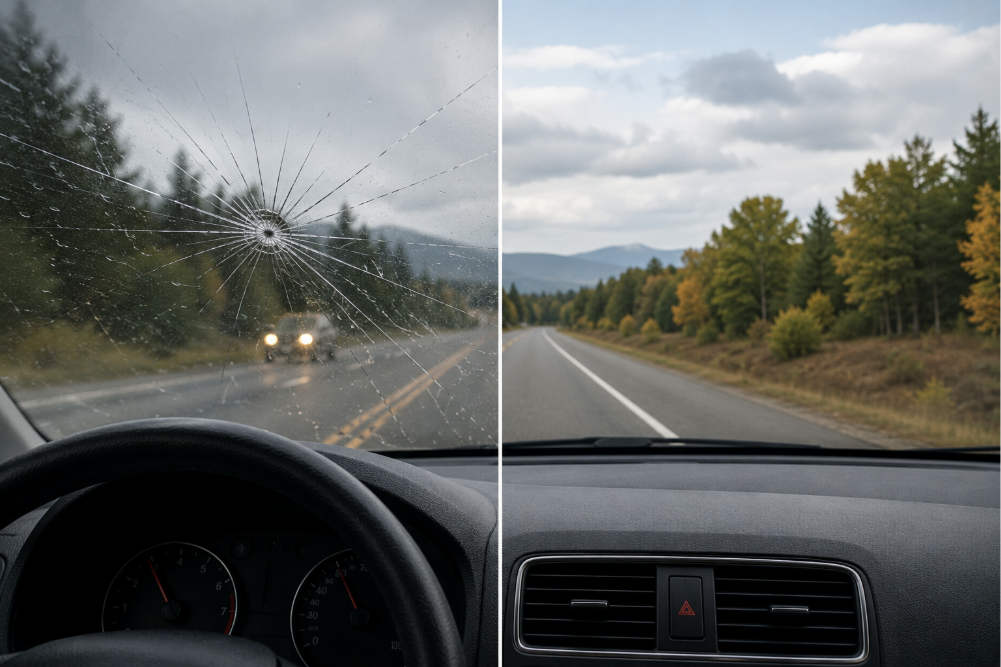
In addition to being unsightly, a broken windshield immediately reduces driver vision by warping light, producing glare, and weakening the glass’s structural integrity. Even little fissures have the potential to spread swiftly and block your view. One of the easiest methods to protect yourself and other drivers is to have a broken windshield mended as soon as possible. The majority of drivers consider a cracked windshield to be a cosmetic problem. Eventually, after things settle down, after the hectic season, or after the next payment, there will be something to deal with. However, a windshield crack is more than simply aesthetically pleasing. It directly jeopardizes your ability to perceive the road.
Get An Auto Glass Replacement Quote Now 866.278.7417

Windshield Replacement & Repair
Our competitors push you into going to their shop to get your glass fixed-making it cheaper for them. We make it easier for YOU to get back on the road by offering free mobile repairs at your home or work. With our free mobile services servicing the entire Orange County & Los Angeles area, we can often handle your windscreen replacement the same day! So the next time you need a windshield replacement, give us a call.
Talk to a Windshield Replacement Specialist Now 866.278.7417

Calibration
Calibration is the process of returning a vehicle’s ADAS to OEM specifications. Calibration is necessary after a new glass installation, particularly a windshield with a camera mounted to it, to ensure that the ADAS features continue to function properly despite having been moved during installation. If a car’s ADAS is not properly calibrated, the system may not function safely. A misaligned camera could jeopardize the functionality of the system and lead to dangerous driving or accidents, so it is crucial that the cameras are aligned perfectly, which is what windshield calibration ensures.
Talk to a Calibration Specialist Now 866.278.7417

Fleet Auto Glass Repair
We provide expert auto glass repair and windshield replacement services for commercial fleets of all sizes. We are experienced with all manufacturers and machine types of domestic or foreign cars, trucks, vans, or commercial vehicles, including heavy equipment. Our same day mobile auto glass and windshield repair service will enable you to get back on the road faster and start saving you time and money instantly. Give us a call today! We are here to help!
Talk to a Fleet Auto Glass Specialist Now 866.278.7417
Driver Visibility Is Affected by a Cracked Windshield
Most individuals are unaware of the obvious link between a broken windshield and decreased visibility. This is how your ability to see well when driving is affected by cracks.
Glass is only transparent when it is smooth and undamaged; cracks distort light and produce hazardous glare. The glass’s structural integrity is altered at the site of damage when a fracture appears. Instead of moving in a straight path, light that passes through a broken surface bends and scatters.
The outcome? Give it a glare. A shattered windshield may produce a bright, blinding flash that is difficult to see through when sunlight or approaching headlights strike it.
This glare may effectively blind a motorist for a brief while at night or at dawn and twilight, when lighting conditions are already difficult. Even a small loss of vision may have major repercussions while driving at 65 mph on a highway.
Even Tiny Cracks Cause Blind Spots: A crack may be hazardous even if it’s not in your direct line of sight. Before they approach your main field of vision, peripheral vision is essential for identifying potential risks like bicycles, pedestrians, and merging automobiles.
Unbeknownst to the driver, a fracture along the edge of the windshield might disrupt that peripheral awareness. The driver’s effective field of vision may be somewhat reduced by even a coin-sized chip that disperses light across a larger portion of the glass.
Cracks Make It Hard to See in Rain and Fog
Inside crevices, water and dirt naturally gather. Rain may reduce the quantity of clear glass that can be seen through by making fractures more noticeable or opaque. Water trapped in a fissure freezes and expands in cold temperatures, causing the fracture to grow quickly, often overnight.
The issue is made worse by fog. In addition to making it more difficult to see through fogged glass, fractures contribute distortion that reduces the effectiveness of defogging.
Smooth, undamaged glass is ideal for defrost systems. Even when the remainder of the windshield has been cleaned, areas of decreased sight remain due to uneven heat distribution on shattered glass.
Why Does a Windshield Crack Get Worse Over Time? By Friday, a fissure that seems little on Monday can grow considerably. Cracks may propagate due to temperature fluctuations, traffic vibrations, and even the force of shutting a vehicle door.
Because windshields are made to bend slightly while you drive, each flex puts stress on a crack, which promotes its growth. Usually, a chip less than a quarter may be fixed in a timely and economical manner.
The only alternative is often to replace the whole windshield whenever a crack becomes larger than a few inches, especially if it approaches the driver’s side or the edge of the glass. Waiting raises the expense of repairs in addition to the safety risk.
Do you have a Question?
Get An Auto Glass Replacement Quote Now 866.278.7417
Legal to Drive with a Cracked Windshield
States have different traffic regulations, but most of them prohibit driving with a cracked windshield if the damage is within a certain region of the glass or affects the driver’s eyesight. For broken windshields, law enforcement officials may choose to issue tickets, especially if the damage is obviously visible to the motorist.
A damaged windshield may have an impact on your auto insurance claim in addition to the legal danger. Insurance companies may contest whether the fracture was a contributing factor in an accident if your windshield was already damaged.
When Should a Cracked Windshield Be Repaired? In a nutshell, as quickly as feasible. However, the following useful recommendations can assist you in setting priorities:
If the chip or crack is greater than a dollar bill, in the driver’s direct line of sight, or close to the glass’ edge, it should be fixed right once. For minor chips that are out of the driver’s line of sight, schedule a repair within a few days—especially before any cold weather or lengthy rides.
Even if the damage is extremely little (less than a quarter), keep a close eye on it and arrange for a professional assessment. Even seemingly steady cracks might develop suddenly.
Numerous vehicle glass repair companies have mobile appointments, which allow a specialist to visit your house or place of business. The majority of chip fixes are far less expensive than a complete windshield replacement and often take less than an hour.
Distinction Between Replacement and Repair of Windshields
After evaluating the damage, a qualified vehicle glass specialist will suggest one of two solutions: Repair entails injecting a transparent resin into the chip or fracture. The epoxy covers the gap, gives the glass back some clarity, and stops the break from becoming bigger. Chips smaller than a quarter and cracks shorter than three inches are the finest candidates for repairs.
When a fracture is too big to properly fix, when the damage compromises the glass’s structural integrity, or when the crack is in the driver’s main field of vision, replacement is required. Even after a fracture has been mended, there may still be some distortion, which is undesirable in areas with high visibility.
Additionally, safety elements like front-facing cameras, rain sensors, and lane departure warning systems are built into modern windshields. As part of the servicing, a trained technician will carefully recalibrate these systems in order to replace these windshields.
Don’t Let a Crack Turn Into a Crisis: One of the most underappreciated road safety hazards is a cracked windshield. Although the damage may seem minor, it has a genuine and quantifiable effect on sight via glare, distortion, blind spots, and decreased clarity in damp circumstances.
Fortunately, repairing a broken windshield is almost usually simple, inexpensive, and quick. Comprehensive vehicle insurance covers most repairs in whole or in part, often with no deductible. Seldom is there a valid reason to hold off.
To have a break in your windshield evaluated, get in touch with a certified car glass repair company. The sooner you take action, the more likely it is that a simple fix will be adequate—and the sooner you’ll have complete, unhindered sight back where it belongs.
Common Questions
Does a little chip in my windshield really impair my vision? Indeed. When sunlight or headlights hit the damaged region, even a little chip may scatter light and produce glare. Over time, chips may potentially expand into bigger fissures, increasing the danger of visible.
How long until it becomes unsafe to drive with a broken windshield? Driving with a crack in your line of sight is never safe. Because cracks develop fast due to temperature changes and road vibration, you should still arrange a repair within a few days for tiny chips that are out of the driver’s line of sight.
Is windshield repair covered by auto insurance? Windshield replacement or repair is usually covered by comprehensive vehicle insurance, sometimes with a low or zero deductible. Before making an out-of-pocket payment, check with your insurance provider.
How do I determine if my windshield has to be completely replaced or repaired? This decision may be made by a certified car glass specialist. Generally speaking, cracks less than three inches and chips smaller than a quarter may be fixed. Replacement is often necessary for larger damage or any fracture in the driver’s sightline.
Is complete vision restored after windshield repair? Although modest residual deformation may remain at the repair site, restoration restores structural integrity and stops spreading. To guarantee completely clear vision, replacement is advised if the fracture is in the driver’s principal line of sight.
Windshield Crack Poses a Risk to Public Safety
Your car’s structural integrity is jeopardized, airbag efficacy is diminished, and driver sight is hampered by a shattered windshield. Particularly at high temperatures, little chips may grow into large fissures in a matter of days.
One of the simplest ways to keep yourself and your passengers safe while driving is to take quick action to repair or replace damaged windshields. That little chip on your windshield? When it occurred, it probably didn’t seem like a huge issue.
A stray pebble, a sudden decrease in temperature, and all of a sudden there’s a nick in the glass that you’ve been meaning to fix “soon.” However, the longer a crack remains untreated, the more it expands, increasing your danger each time you drive.
There is much more to your windshield than just keeping rain and wind out of your vehicle. It serves as your main line of unhindered vision, a safety device, and a fundamental structural element.
Your whole car is vulnerable when it is hacked. This article explains why a broken windshield poses a real risk to safety, when to replace it rather than fix it, and how to take action before a minor issue becomes an expensive one.
Reasons Your Windshield Does More Than You May Imagine
The windshield, which is essentially a very wide glass, is seen by most drivers as a passive element. The truth is more nuanced. Laminated safety glass, which consists of two glass layers joined by a layer of polyvinyl butyral (PVB) plastic, is used to make modern windshields.
In the case of a collision, this architecture is designed to absorb impact and keep the glass together, keeping potentially harmful fragments out of the cabin. In addition, the windshield makes a substantial contribution to the structural strength of your vehicle.
The National Highway Traffic Safety Administration (NHTSA) states that in a rollover accident, a completely unbroken windshield may hold up to 60% of the roof’s weight. If you fracture the glass, the car’s capacity to keep its people safe will be compromised.
The airbag factor is another. The purpose of passenger-side airbags is to reroute toward the passenger after deploying upward and bouncing off the windshield. That force could be too much for a broken or poorly bonded windshield, which would prevent the airbag from deploying properly when it’s most required.
How a Minor Chip Turns Into a Serious Crack: Cracks and chips don’t remain minor. One of the quickest accelerants is temperature change; glass expands in hot weather and contracts in cold, continuously putting existing damage under mechanical stress. After a hot afternoon or a cold blast, a chip that seems stable in moderate conditions might spread several inches overnight.
A repairable chip may become a crack that covers the whole width of the glass due to vibration from driving on bumpy roads, the pressure of a vehicle wash, or even slamming a door. The structural integrity of the windshield is severely jeopardized if a fracture approaches the edge, making restoration impossible and requiring a complete replacement.
Do you have a Question?
Get An Auto Glass Replacement Quote Now 866.278.7417
Driving Visibility Affected by a Cracked Windshield
The greatest direct daily danger of a broken windshield is visibility. Light is scattered by cracks and chips, producing glare that is particularly hazardous while driving in the direction of the sun or approaching headlights at night. On prolonged trips, a crack in the driver’s direct line of sight might impede the identification of hazards, slow down response times, and result in eye fatigue.
Driving with a broken windshield that blocks the driver’s vision is a moving infraction in several U.S. states. In addition to the legal danger, the practical degradation of sight is sufficient justification for taking action.
If you continue to drive with a cracked windshield, what will happen? The longer you delay, the greater the hazards. Every mile driven causes the fracture to vibrate more structurally.
Moisture from the surroundings penetrates the fracture, weakens the laminate bond, and speeds its spreading. Furthermore, delay often results in higher rather than lower expenses since many comprehensive vehicle insurance plans cover windshield replacement at no cost to the driver.
The inspection angle is another. A broken windshield may cause a vehicle safety inspection to be denied in the majority of US states. Proactively addressing damage prevents penalties, unsuccessful inspections, and the strain of making last-minute repairs before registration renewals.
Getting Worse Before You Can Resolve It
A few actions may prevent the spread if repair is not available right away: mAvoid excessive temperature changes: Park in shade during summer heat waves and avoid blasting hot air straight into a chilly windshield in the winter.
Use a windshield repair kit: The majority of auto parts retailers provide temporary DIY kits that can stabilize minor chips with resin, buying time until a professional repair is performed.
Steer clear of high-pressure vehicle washes since the temperature and pressure changes might hasten the development of cracks.
Use transparent tape: This is a temporary solution that will keep moisture and debris out of a chip. These actions can stop a tolerable chip from becoming an inevitable replacement, but they won’t solve the issue.
When Is the Best Time to Have Your Windshield Repaired? The response is simple: as soon as the harm is done. The majority of expert chip fixes take 30 minutes or less, making windshield repair more quicker and less expensive than complete replacement. There is no need to change your schedule since many car glass firms provide mobile repair services that come to your house or place of business.
Plan for a cure time if your damage already necessitates a complete replacement. Before the car is safe to drive, the majority of adhesives used to attach a new windshield must properly cure for one to eight hours. If this procedure is rushed, the windshield may not be properly bonded, which poses a serious danger in any crash.
Do Not Wait Until the Issue Is More Serious
An annoying middle ground is occupied by a cracked windshield, which is both noticeable and easy to overlook. However, this is one of the most obvious situations when a little repair now avoids a major issue later due to the structural function your windshield plays in an accident, as well as the visual and legal concerns of driving on cracked glass.
Verify if glass coverage is included in your vehicle insurance policy. Make an appointment for a trained technician’s evaluation. The majority of the time, you’ll discover that the repair is quicker, less expensive, and simpler than you anticipated—and the peace of mind that comes with a clean, structurally sound windshield is instantaneous.
Frequently Asked Questions: Is driving with a broken windshield safe? For a short period of time, driving with a tiny chip out of your line of sight is usually safe, but any crack that is larger than three inches, close to the edge, or in the driver’s field of vision presents a real safety issue and has to be fixed right soon.
What is the average cost of windshield repair? The average cost of professional chip repair is between $50 and $150. Depending on the type and model of the car, a complete windshield repair might cost anywhere from $200 to $500 or more. Windshield repair is often covered by comprehensive vehicle insurance coverage at no additional expense.
Does a cracked windshield always need to be replaced, or can it be fixed? If the damage is not in the driver’s direct line of sight and has not reached the border of the glass, chips less than one inch and cracks shorter than three inches may often be fixed. Usually, larger or deeper damage necessitates complete replacement.
How soon can a chip in the windshield become a complete crack? Under the correct circumstances, a chip may develop into a lengthy fracture in a matter of hours, especially after driving over uneven terrain or in very hot or cold temperatures. One of the most frequent causes of windshield crack formation is temperature variations.
Is replacing a windshield covered by vehicle insurance? In the United States, windshield replacement or repair is often covered by comprehensive vehicle insurance coverage, sometimes with no deductible. Before making an out-of-pocket payment, review the glass coverage language in your policy or get in touch with your insurer directly.
Mobile Safe Auto Glass
14241 E Firestone blvd suite 400,
La Mirada, CA 90638
Phone: (562) 608-1154
Toll Free: 1 866 278 7417
Mail: sales@mobilesafeautoglass.com
Get a FREE QUOTE today! You can get a free quote and schedule 24/7 using this free quote wizard.
Mon – Fri 8am – 5pm
Saturday 8am – 1pm
Sunday Closed