
How a Safety Feature Protects Drivers During Severe Collisions
There may be a striking difference between images of automobile accidents taken in the 1950s and nowadays. In the past, many people thought cars were made like tanks since they frequently seemed remarkably undamaged after a collision. A contemporary vehicle involved in a comparable collision today may appear totally wrecked, with the front end crushed like an accordion. It is simple to believe that the stiffer, older vehicle is safer. But looks can be deceiving. A modern car’s “destroyed” appearance is actually a skillfully planned engineering feat intended to save your life. The crumple zone, a car safety element, holds the key. During the first severe milliseconds of a crash, the crumple zone does the hard work, even though airbags and seatbelts frequently receive the most attention.
Get An Auto Glass Replacement Quote Now 866.278.7417

Windshield Replacement & Repair
Our competitors push you into going to their shop to get your glass fixed-making it cheaper for them. We make it easier for YOU to get back on the road by offering free mobile repairs at your home or work. With our free mobile services servicing the entire Orange County & Los Angeles area, we can often handle your windscreen replacement the same day! So the next time you need a windshield replacement, give us a call.
Talk to a Windshield Replacement Specialist Now 866.278.7417

Calibration
Calibration is the process of returning a vehicle’s ADAS to OEM specifications. Calibration is necessary after a new glass installation, particularly a windshield with a camera mounted to it, to ensure that the ADAS features continue to function properly despite having been moved during installation. If a car’s ADAS is not properly calibrated, the system may not function safely. A misaligned camera could jeopardize the functionality of the system and lead to dangerous driving or accidents, so it is crucial that the cameras are aligned perfectly, which is what windshield calibration ensures.
Talk to a Calibration Specialist Now 866.278.7417
Fleet Auto Glass Repair
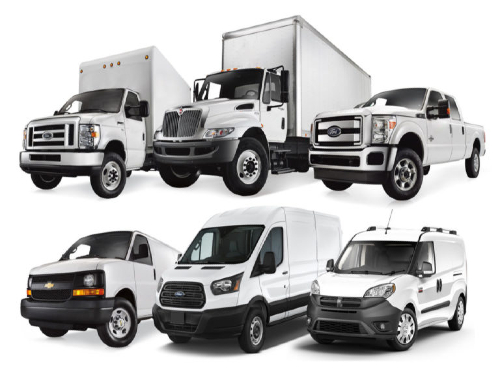
We provide expert auto glass repair and windshield replacement services for commercial fleets of all sizes. We are experienced with all manufacturers and machine types of domestic or foreign cars, trucks, vans, or commercial vehicles, including heavy equipment. Our same day mobile auto glass and windshield repair service will enable you to get back on the road faster and start saving you time and money instantly. Give us a call today! We are here to help!
Talk to a Fleet Auto Glass Specialist Now 866.278.7417
The Horrible Physics of an Unexpected Stop
We must examine kinetic energy in order to comprehend the necessity of crumple zones. An automobile has a tremendous amount of energy when it is driving. Your body and the 3,000-pound car you are driving at 50 miles per hour want to continue traveling at that speed.
That energy must be directed somewhere in the event of a major collision. The vehicle needs to stop. Time is crucial in this situation.
A stiff, tank-like car nearly quickly stops when it collides with a wall. The occupants immediately receive the kinetic energy when the vehicle stops. Your internal organs are subjected to devastating deceleration forces as your body keeps rushing forward until it strikes the steering wheel or dashboard.
The crumple zone comes into play at this point. Its function is to control kinetic energy by prolonging the vehicle’s stopping time.
The Analogy of a Bed Mattress
Imagine it as if you were jumping out of a second-story window. You immediately halt if you land on concrete. There is a lot of force, and you will probably shatter bones. Even if a thick mattress compresses when you land on it, you still halt. Your deceleration is slowed down by a few extra feet and a fraction of a second.
The peak force on your body is lessened by that small delay. The mattress in your automobile is the crumple zone. It gives itself up by carefully collapsing to take the hit so you don’t have to.
Creating the Ideal Failure: It is more difficult to design an automobile component that is meant to break than one that is meant to remain robust. Engineers have to design structures that will yield reliably under high impact forces while remaining rigid enough to withstand typical driving and little bumps.
Mercedes-Benz engineer Béla Barçai patented this idea in the early 1950s. An automobile shouldn’t be consistently rigid, he realized. Rather, it ought to be divided into three sections: deformable components in the front and back and a stiff center to safeguard the occupants.
Fuses in Structure and Folding Patterns: Crumple zones nowadays aren’t limited to soft metal. These geometric structures are intricate. A new car’s frame rails have distinct ridges, holes, and dimples stamped into the metal if you were to remove the bumper.
These are stress concentrators, sometimes referred to as “structural fuses.” These stamps decide where the metal will fold, much like a perforated line on paper dictates where it shreds.
The metal folds over itself in an accordion or concertina pattern when it crashes. The energy required for this folding process is enormous, and instead of crushing your ribs, it is bending metal.
Do you have a Question?
Get An Auto Glass Replacement Quote Now 866.278.7417
Magic in Material Science
Both the form and the materials used in these zones are crucial. A variety of steel grades are used by manufacturers:
Mild steel: Used to absorb early light impacts at the crumple zone’s outer extremities.
Higher energy loads are absorbed by high-strength steel, which is used farther back.
Closest to the cabin, ultra-high-strength steel serves as a last line of defense against entry. The car will crunch gradually thanks to this strength gradient. The closer the impact gets to the driver, the harsher it gets from where it starts.
The Unsung Partner: Without its companion, the safety cell, a crumple zone is worthless. Although the car’s front and back are intended to be sacrificial, the cabin—where people sit—must remain intact.
The roof might collapse on the occupants, or the engine block might be thrust into the driver’s lap if the entire vehicle is crushed. The passenger compartment is constructed as a reinforced cage as a result. The strongest materials are used in this section, such as carbon fiber composites in high-end cars or boron steel.
The idea is to make sure that even though the car’s front is getting shorter, the inside area stays the same. This makes it possible for the airbags and seatbelts to function as intended.
The airbag may completely miss the driver if the steering column shifts or the dashboard travels backward. In order for the restraint systems to function, the occupants must remain in the proper position, which is ensured by the hard safety cell.
When Direction Is Important
In head-on crashes, where there is ample car hood to absorb the shock, the mechanics of crumple zones are easiest to comprehend. Severe collisions, however, can occur from any direction.
Collisions at the rear end: A rear crumple zone is the rear hatch of an SUV or the trunk of a sedan. In order to prevent fires, the fuel tank is typically placed ahead of the rear axle and shielded by the safety cell. This keeps the gasoline system intact even in the event that the trunk is crushed.
The Problem of Side Effects: “T-bone” accidents, often known as side collisions, are a severe technical issue. There is simply a door, which is only a few inches away from the driver, and neither a large hood nor trunk to crush.
Engineers rely on diverting energy instead of absorbing it since there is no room for a broad crumple zone. Instead of allowing the force of the impact to concentrate in one area, high-strength beams inside the doors—often referred to as intrusion beams—spread it throughout the car’s frame.
Additionally, serving as a shield for the torso, the B-pillar—the vertical post between the front and rear doors—is frequently one of the strongest components of the entire car.
The Development: Although the gold standard for bending metal is still physics, technology is improving the intelligence of these devices. The age of “pre-safe” technologies is upon us.
Modern cars have radar and cameras that can identify an impending serious collision milliseconds in advance. Certain high-end luxury cars get ready for collisions before any metal comes into contact with one another. To put the driver in the safest position, seatbelts may pre-tension, or draw tight. In order to divert the impact force to the strongest area of the frame, suspensions may rise.
This maximizes the physical structure’s effectiveness even if it isn’t a “crumple zone” in the conventional sense. It guarantees that the passenger and the vehicle are positioned to withstand the force of the collision.
Common Questions Regarding Vehicle Safety
Are larger vehicles usually safer in an accident? Yes, in general, although with some restrictions. For the simple reason of mass, a larger, heavier vehicle usually provides better protection than a smaller one in a collision. However, a modern tiny automobile with sophisticated crumple zones and safety cells is safer than a huge car with antiquated architecture. Engineering is more important than just size.
Is my car considered to be of poor quality if it is totaled in a low-speed collision? In most cases, it means the reverse. The car completed its job if you collided with a pole at 20 mph and your hood and bumper were destroyed. Your neck and back didn’t have to absorb the energy because it did it for you. A human being is far more difficult to repair than an automobile.
After a collision, is it possible to rebuild a crumple zone? No, usually. The metal’s structure is jeopardized once it has undergone plastic deformation, or permanent bending. Energy cannot be absorbed by it in the same manner. For this reason, insurance companies frequently write off cars with frame damage. It is not possible to just reset the “fuse” because it has been blown.
If I’m not using a seatbelt, do crumple zones still function? They are effective, but they won’t help you. Without a seatbelt, you will continue to travel at the same speed until you strike the interior of the car, even though the crumple zone slows it down. You can “ride down” the collision as the car crumples because the seatbelt connects you to the vehicle.
The Unseen Protection: When you get in your car the next time, remember to be grateful for the unseen engineering that surrounds you. A meticulously planned system of stamped steel, reinforced pillars, concealed beams, and purposefully placed weak spots—all acting as silent guardians—lies beneath the paint and upholstery. The purpose of every curve, weld, and material selection is to regulate the forces that flow through the vehicle in an instant when something goes wrong.
It is unquestionably depressing to see a wrecked car by the side of the road. Broken panels and twisted metal depict a violent incident. However, a smashed hood combined with a mostly undamaged passenger interior is a success story for safety engineers and first responders. It indicates that physics was observed, energy was absorbed and redirected, and the safety cage performed as intended. Above all, it frequently indicates that a human life was saved.
Even if we drive carefully to avoid accidents, it’s comforting to know that your car is ready to sacrifice itself for you in an emergency. The car becomes your last line of defense during those crucial milliseconds; it was designed to make sure you survive the collision rather than to survive it itself.
How Your Vehicle Can Save Your Life
There are thousands of pounds of metal, glass, and plastic all around you when you’re behind the wheel. For the typical driver, a car might be a means of transportation, a cozy retreat, or even a prestige symbol. However, an automotive engineer views a car as a sophisticated energy management system created with the sole purpose of preserving the lives of its occupants in the event of an accident.
Vehicle safety has undergone a significant transformation. It was widely believed decades ago that a car would be safer if it were stronger and stiffer. As we now know, passengers directly experience the full energy of an impact when solid structures are in place. The foundation of modern safety is very different. In the blink of an eye, it is about managing physics and controlling chaos.
Knowing how these systems operate helps to explain more than just the high cost of repairs. It draws attention to the amazing engineering that protects you from the powerful forces of the road. Every part, from the steel frame to the seatbelt’s fabric, has a distinct function in a meticulously planned series of actions intended to save your life.
The Physics of Collisions: You must first comprehend collision physics in order to comprehend safety systems. The kinetic energy of a moving vehicle is enormous. That energy doesn’t simply vanish in a crash. It must go somewhere.
All of the energy needs to be absorbed right away if a car crashes into a wall and stops suddenly. The car would halt in a 1950s rigid vehicle, but the passengers would continue to travel at the same pace until they struck the steering wheel or dashboard. This frequently results in fatal injuries.
Modern engineering aims to increase the crash’s duration. Although it may seem paradoxical, engineers can distribute the impact force across a longer time span if they can extend the crash by milliseconds. The crash is survivable because of this decrease in peak force.
Crumple Zones: The crumple zone is the most obvious outcome of this energy management technique. After a modest collision, the front end of a modern car frequently appears wrecked, folded up like an accordion. This is a lifesaving characteristic, yet many people confuse it for “plastic” parts or weak construction.
Sacrificial Buildings: Crumple zones are sections at the front and back of a car that are made to bend and collapse under controlled conditions. Instead of passing the crash’s kinetic energy to the cabin, these steel structures modify the metal by folding and bending.
Consider it akin to leaping from a wall. The jolt goes directly up your spine if you fall with your knees locked. Your muscles absorb the energy when you bend your knees, resulting in a gentle landing. When an automobile crumples, it is “bending its knees.”
The Cell of Safety
The passenger cabin, often known as the safety cell, is intended to stay impenetrable, while the front and back are meant to collapse. Ultra-high-strength steel was used in the construction of this portion. In order to keep the engine, wheels, and other vehicles out of the area where people are seated, it must keep its shape at all costs. Vehicle impact protection is based on this combination of a stiff inner core and a soft outer shell.
Systems of Restraint: The car’s internal restraint systems control the occupants while the frame controls the outside forces. The airbag and seatbelt function as a single unit. It is impossible for one to operate efficiently without the other.
Seatbelts: The most efficient safety feature in a car is the seatbelt. But compared to the basic straps of the past, seatbelts nowadays are significantly more sophisticated. Two essential technologies are now part of them:
Pretensioners: A little charge activates a piston that tightens the seatbelt in the milliseconds following the detection of a collision but before your body begins to move forward. This ensures that you are in the ideal position for the airbag by eliminating any slack and pulling you securely into your seat.
Load limiters: The seatbelt mechanism permits a little quantity of webbing to spool out once the crash forces reach a certain threshold. This regulated release keeps the belt from squeezing too tight and hurting your ribs or chest.
Supplemental Restraint System (SRS): The purpose of airbags is to act as a cushion between the occupant and the inside hard surfaces of the vehicle. The vehicle’s deceleration is measured via sensors positioned throughout. An electrical signal is sent to an inflator by the computer if the data shows a significant impact.
In about 30 milliseconds—faster than a blink of an eye—this inflator ignites a mixture of chemicals that produce innocuous nitrogen gas, filling the nylon bag. Vents allow the gas to escape as the occupant touches the bag, resulting in a smooth landing as opposed to a harsh bounce.
Airbags have come a long way. Now we have:
Curtain airbags: These prevent heads from colliding with pillars or auto glass by lowering from the roof lining to cover the side windows.
In order to avoid leg injuries and prevent the occupant from sliding beneath the seatbelt, knee airbags deploy from the lower dashboard. In the event of a T-bone collision, side-impact airbags protect the torso by popping out from the side of the seat.
Glass technology and headrests: Safety engineering includes components of the vehicle that you might not think of as “safety equipment.”
Do you have a Question?
Get An Auto Glass Replacement Quote Now 866.278.7417
Protection Against Whiplash
The headrest is an essential safety feature in addition to being comfortable. The seat propels your body forward in a rear-end accident, while your head trails behind. Whiplash results from this overextension.
The purpose of contemporary headrests is to catch the head early. Some are even “active,” which means that in order to reduce the distance between the head and the restraint during a rear impact, they move forward mechanically.
Windshields with lamination: Your windshield’s glass has a structural purpose. A layer of plastic (polyvinyl butyral) is positioned between two layers of glass in a laminated pattern. The glass may break if something strikes the windshield, but the plastic covering keeps it intact. This keeps people within the car during a rollover and stops glass fragments from flying into the cabin.
Common Questions: Are SUVs that are heavier and larger safer than little cars? Yes, in general, although with some restrictions. Physics favors the heavier object in a head-on collision between two cars. On the other hand, big SUVs may be more likely to turn over due to their higher center of gravity. An older, larger SUV without modern crumple zones and stability control is frequently less safe than a contemporary small car with enhanced safety ratings.
Are airbags always deployed in accidents? No. The impact’s angle and degree are assessed by the car’s computer. Seatbelts are enough in a low-speed collision, and using an airbag would result in needless repairs and possibly minor injuries. They are only used for impacts that are moderate to severe.
Why are cars now so readily “totaled”? When the cost of repairs surpasses the car’s value, it is deemed a total loss. The intricate crumple zones, sensors, and airbag systems are frequently severely damaged in a collision since modern cars are built to compromise their construction in order to save the occupants. Even though the car is wrecked, it accomplished its purpose—absorbing the energy so you wouldn’t have to.
Crash Protection’s Future
Vehicle safety now focuses on preventing collisions rather than just surviving them. Modern cars are quickly adopting active safety features like forward-collision alerts, Lane Keep Assist, and Automatic Emergency Braking (AEB) as standard.
These technologies continuously monitor the road ahead, detect possible hazards, and take action—often quicker than a human driver can—to help prevent an accident before it starts. They do this by using a network of cameras, radar, and software.
However, passive safety measures continue to be your last line of defense until collisions are completely eradicated. Massive forces can be managed in a matter of milliseconds thanks to the carefully planned crumple zones, stronger steel beams, and precisely timed airbag deployments.
When prevention fails, they work together to create a protective cocoon around the occupants. Consider the intricate engineering all around you the next time you fasten your seatbelt. It is a silent bodyguard that is constantly on duty and prepared to do an incredible feat of physics at any time.
Mobile Safe Auto Glass
14241 E Firestone blvd suite 400,
La Mirada, CA 90638
Phone: (562) 608-1154
Toll Free: 1 866 278 7417
Mail: sales@mobilesafeautoglass.com
Get a FREE QUOTE today! You can get a free quote and schedule 24/7 using this free quote wizard.
Mon – Fri 8am – 5pm
Saturday 8am – 1pm
Sunday Closed