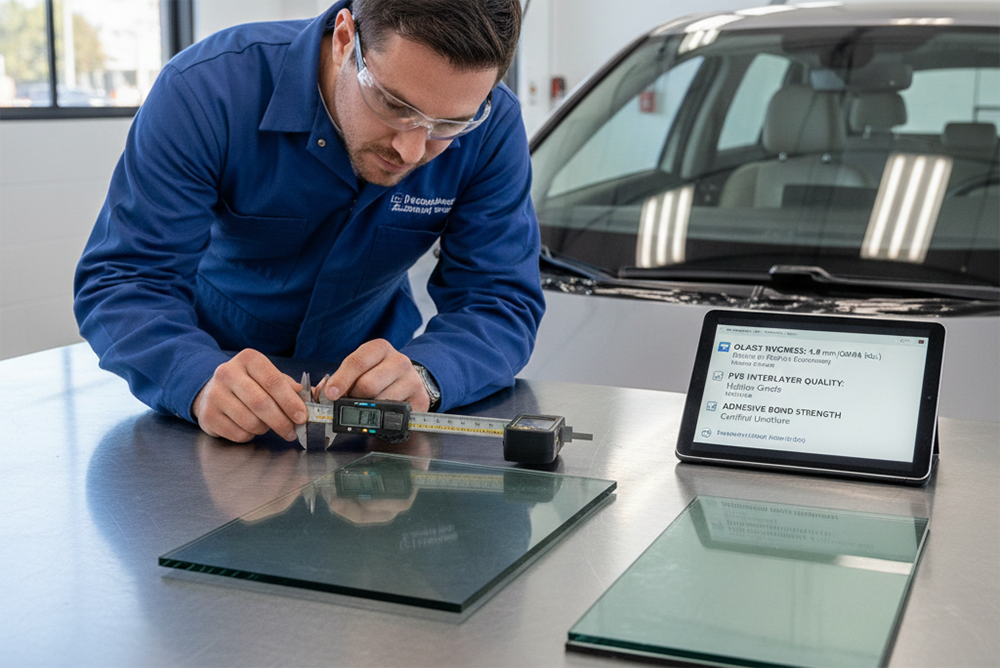
Auto Glass Replacement Materials That Affect Durability
The discomfort of a cracked windshield is something that every motorist will ultimately experience. Whether it’s a pebble that was kicked up on the highway or damage caused by a storm, the first thing that people do is to look for the quickest and cheapest solution to address the problem. On the other hand, when you obtain estimates that differ by hundreds of dollars, it raises a reasonable question: what are you actually paying for? Typically, the difference in price may be attributed to the quality of the materials that are utilized. The structural integrity of your car is strongly dependent on precise production standards, despite the fact that glass may appear to be identical to the untrained eye.
Get An Auto Glass Replacement Quote Now 866.278.7417

Windshield Replacement & Repair
Our competitors push you into going to their shop to get your glass fixed-making it cheaper for them. We make it easier for YOU to get back on the road by offering free mobile repairs at your home or work. With our free mobile services servicing the entire Orange County & Los Angeles area, we can often handle your windscreen replacement the same day! So the next time you need a windshield replacement, give us a call.
Talk to a Windshield Replacement Specialist Now 866.278.7417

Calibration
Calibration is the process of returning a vehicle’s ADAS to OEM specifications. Calibration is necessary after a new glass installation, particularly a windshield with a camera mounted to it, to ensure that the ADAS features continue to function properly despite having been moved during installation. If a car’s ADAS is not properly calibrated, the system may not function safely. A misaligned camera could jeopardize the functionality of the system and lead to dangerous driving or accidents, so it is crucial that the cameras are aligned perfectly, which is what windshield calibration ensures.
Talk to a Calibration Specialist Now 866.278.7417

Fleet Auto Glass Repair
We provide expert auto glass repair and windshield replacement services for commercial fleets of all sizes. We are experienced with all manufacturers and machine types of domestic or foreign cars, trucks, vans, or commercial vehicles, including heavy equipment. Our same day mobile auto glass and windshield repair service will enable you to get back on the road faster and start saving you time and money instantly. Give us a call today! We are here to help!
Talk to a Fleet Auto Glass Specialist Now 866.278.7417
The Original Equipment Manufacturer (OEM), Original Equipment Manufacturer (OEM), and Aftermarket
The origin of the glass itself should be considered the most important aspect in determining its durability. In addition to the fact that not all glass is created equal, the production method also determines how well the windshield fits the frame and how well it can withstand road debris. An OEM, which stands for “original equipment manufacturer,” is the benchmark of excellence. Original equipment manufacturer (OEM) glass is manufactured by the same company that created the original glass for your vehicle when it was first manufactured (for example, Saint-Gobain, Pilkington, or PGW were the manufacturers).
In terms of thickness, shape, color, and durability, it is similar to the windshield that you had originally installed. Additionally, it has the emblem of the automobile manufacturer. Fitment difficulties are essentially nonexistent due to the fact that it is manufactured in accordance with the particular technical specifications of the automobile brand. This reduces the likelihood of stress cracks or leaks occurring.
OEE stands for “original equipment equivalent,” and it is typical for the same facilities that create OEM glass to also produce OEE glass. However, OEE glass does not have the mark of the automobile manufacturer. It is constructed in accordance with the same norms and requirements. When compared to original equipment manufacturer (OEM) products, this provides the ideal blend of excellent durability and cheaper cost for the majority of drivers.
Concerns about the durability of aftermarket glass are frequently raised in this context. Glass that is sold in the aftermarket is manufactured by businesses that do not supply the automobile manufacturer. Because of design patents, they are legally unable to recreate the glass precisely as it was designed; therefore, they “reverse engineer” the size and form of the glass.
Despite the fact that it is frequently less expensive, aftermarket glass may have the following drawbacks: Inconsistent Thickness: Glass that is thinner is more likely to break and chip as a result of mild impacts. Wavering glass can lead to driver weariness and interfere with safety systems, which is referred to as optical distortion. If the curve is not perfectly formed, the installer will have to press the glass into position in order to get a satisfactory fit. This results in residual stress, which might spontaneously cause the windshield to shatter a few weeks or months after it was initially installed.
Considering the Crucial Function of Urethane Adhesive
The fact that you have the best glass in the world is irrelevant if it is not properly bonded to the vehicle, even if you have the best glass in the world. A substance called urethane is the adhesive that is responsible for keeping the automobile together. In order to save money, low-cost autoglass businesses sometimes use urethane of a poorer quality. As a means of making the construction of the vehicle more rigid, high-modulus urethane of superior quality is utilized.
When it comes to current unibody automobiles, where the windshield makes a considerable contribution to the torsional stiffness of the vehicle, this rigidity is absolutely necessary. The Safe Drive Away Time (SDAT) is also determined by the quality of the urethane, which contributes to the curing time. A maximum of thirty to sixty minutes is all that is required for premium adhesives to attain their optimum strength.
These adhesives cure rapidly and chemically connect with the glass and the frame of the car. Adhesives of lower grade could need the vehicle to be left alone for at least twenty-four hours. In the event that a shop uses inexpensive adhesive and allows you to drive away immediately, the windshield may become detached in the event of an accident or may even leak during the initial downpour.
The Use Of Primers And Rust Retardants
To be durable, it is not enough for the glass to not break; the frame must also be able to withstand the test of time. During the process of removing an old windshield, the technician frequently scratches the pinch weld, which is the metal frame that the glass is attached to. Rust will commence to build beneath the new glass if these scratches are not treated in the appropriate manner. As time passes, this rust eats away at the metal, which ultimately results in the seal failing. Water leaks, wind noise, and finally a windshield that is no longer structurally solid are the consequences of taking this course of action.
Prompt replacement services make use of a priming system that consists of many steps. Two things are accomplished by these primers: they promote adhesion by chemically preparing the surface in order to ensure that the urethane adheres permanently. To prevent corrosion from taking hold, they seal any tiny scratches that may be present on the metal frame. This prevents rust from forming.
Do you have a Question?
Get An Auto Glass Replacement Quote Now 866.278.7417
Systems for Advanced Driver Assistance
The quality of the materials used in modern automobiles has an impact on how long the technology in your vehicle will last. Cameras that are installed directly behind the windshield are necessary for the operation of electronic features like lane-keeping assistance, automated emergency braking, and rain sensors. These cameras have been altered so that they can see through glass that possesses particular optical characteristics.
There is a possibility that the camera may not operate properly if you choose to purchase cheaper aftermarket glass that has tiny distortions or wrong tint levels. Because of this, you can see error warnings on your dashboard, or even worse, your safety systems might not respond properly in the event of an emergency. Furthermore, a vast majority of ADAS cameras need the attachment of certain brackets to the glass.
These brackets are pre-installed with accuracy on OEM and high-end OEE glass, which comes standard with them. When working with low-end glass, it is frequently necessary for the technician to physically glue the old bracket onto the new glass, which is a critical point of failure. In the event that the bracket rattles or breaks off, the system will fail, necessitating yet another costly repair fix.
The Influence That Molding and Clips Have On
The trim is the last, and most important, piece of the durability puzzle. There are rubber moldings that surround the majority of windshields, and particular clips are used to keep them in place. It is common for these clips to break during the removal process and moldings to deform. It is more effective to replace these throwaway parts rather than attempting to salvage them if longevity is the primary concern.
When old, fragile moldings are reused, water usually seeps in between the cracks. As a result of water being trapped against the frame, rust develops more quickly and the adhesive seal is compromised. It is true that ignoring new moldings can save you a few bucks on the bill, but it will also considerably reduce the amount of time that the installation will last.
Questions That Are Frequently Asked
Is it safe to utilize glass that has been upgraded? Generally speaking, the answer is yes, provided that it satisfies the safety criteria set out by the Department of Transportation (DOT) (check for the AS1 label on the glass). On the other hand, “safe” does not always equal “durable.” When compared to OEM choices, manufacturers of lower-end aftermarket brands may have a greater likelihood of experiencing chips, pits, or distortion.
If the store is employing high-quality products, how can I tell if they are? Put it to them straight. Ask them if they use original equipment equipment (OEE) or original equipment manufacturer (OEM) glass, what brand of urethane they use (Sika and Dow are leaders in the business), and what the safe drive-away time is. A store with a good reputation will be open and honest about the materials they use.
If I have OEM glass, does my insurance cover it? Your insurance coverage and the age of your car both play a role in this. The majority of insurance companies will only pay for aftermarket glass if the vehicle is not quite new (often between one and two years old). In the event that you need OEM glass for an older car, you can be required to pay the difference out of your own cash.
My brand-new windshield cracked after a week; what caused this? In most cases, this is a “stress crack” that developed as a result of improper installation or faulty glass. It is possible for the tension to cause the glass to break without any contact if the curve of the glass does not completely match the frame or if there is a burr on the metal frame that has not been smoothed down.
Making an Investment in Long-Term Security
When it comes to the replacement of autoglass, the relationship between durability and safety is a direct one. As a structural shield, the windshield serves to protect you and your passengers from potential hazards. The difference in price typically reflects a difference in the quality of the glass, the adhesive, and the installation method. Although it is tempting to pick the lowest cost, choosing the lowest quote is not always the best option.
It is possible to guarantee that your new windshield will give the same level of vision, structural support, and lifespan as the factory original by insisting on using high-quality adhesives and original equipment manufacturer (OEM) or similar glass. You are making an investment that safeguards not just the value of your car but also, more crucially, the people who are inside of it. How the composition of glass and adhesives determines its durability is the subject of this hidden chemistry. Glass is frequently considered to be a substance that is permanent.
Glass provides the idea that it may remain forever, particularly if it is not shattered by a rapid impact. This is true for anything from ancient Roman vases to current skyscrapers. On the other hand, the reality is far more complicated in the context of industrial, automotive, and electrical applications. The durability of a glass assembly is not only determined by the abrasiveness of the pane but rather by the delicate dance that takes place between the chemical composition of the pane and the adhesives that are used to hold it in place.
Optical clarity and affordability are two of the most common factors that engineers and designers consider when choosing auto glass; adhesive is typically considered an afterthought. Taking this technique will result in failure very early on. There is a possibility that a bond will initially be strong, but it will eventually fail after a few months of temperature cycling. Additionally, the glass itself may become brittle when subjected to chemical exposure that it was never intended to endure.
In order to comprehend the duration of a glass product’s lifespan, it is necessary to examine the system in its entirety. In this process, the individual atoms that make up the glass structure are subjected to stress, and the polymer chains that make up the adhesive are examined to see how well they can withstand environmental assaults. The assembly is able to persist for decades when these two components are working together in harmony. Failure is unavoidable on account of their collision.
When It comes To The Glass Substrate
A single substance does not constitute glass. It refers to a group of materials, each of which possesses a distinct set of chemical and thermal characteristics. How the glass responds to the effects of environmental stress over time is determined by the precise formulation of the glass. The soda-lime glass is the most popular type of auto glass, and it is utilized in a wide variety of applications, ranging from windowpanes to beverage bottles. Lime, which is formed of calcium oxide, soda, which is sodium oxide, and silica make up the majority of its mass.
However, soda-lime glass has a rather high coefficient of thermal expansion, despite the fact that it is inexpensive and chemically stable in settings that are quite moderate. As a result, it undergoes substantial expansion and contraction in response to variations in temperature. In applications that involve high heat or fast temperature swings, soda-lime glass is susceptible to thermal shock, which can result in catastrophic failure even before an adhesive problem emerges.
Borosilicate Glass: Borosilicate glass is produced by the addition of boron trioxide to silica sand via the manufacturing process. The coefficient of thermal expansion is significantly reduced as a result of this composition. The material does not undergo significant expansion when heated, which results in it experiencing less internal stress as a result of changes in temperature. As a result of its ability to physically withstand the physical fatigue that causes softer glasses to break, borosilicate has a substantially longer lifespan than other materials, making it an ideal choice for laboratory equipment, external lighting, and industrial sight glasses.
Aluminosilicate Glass: Aluminosilicate auto glass, which is popularly connected with chemically toughened glass for mobile devices like smartphones and tablets, is characterized by the substitution of alumina for some of the silica. Through the use of this replacement, a structure is produced that is capable of withstanding increased compressive stress. In spite of the fact that its scratch resistance is well-known, the primary factor that determines its longevity is its structural integrity. In most cases, surface damage serves as a nucleation location for wider cracks, although it is resistant to surface damage.
An Important Function Played by Adhesives
If the link that is keeping the glass together weakens, even the most unbreakable glass will break. Polymers are used in adhesives, and unlike glass, which is inorganic and stable, polymers are sensitive to breakdown when exposed to ultraviolet radiation, moisture, and extremely high temperatures. The selection of adhesive serves as the limiting factor for the longevity of the entire assembly process. Epoxy resins are well-known for their remarkable strength as well as their resistance to chemical substances.
They establish bindings that are solid and long-lasting, and they are able to withstand strong chemical cleaning and mechanical pressures. On the other hand, typical epoxies contain a flaw, and that flaw is UV light. Exposure to sunlight for an extended period of time can cause the polymer chains in epoxy to break down, which can result in chalking and yellowing of the surface. The glue loses its capacity to absorb mechanical shock as it gets brittle, which ultimately results in the glass becoming detached from the adhesive.
In terms of flexibility and resilience to the elements, silicone adhesives are the undisputed champs. They are extremely impervious to the deterioration caused by ultraviolet light and maintain their stability throughout a wide temperature range. As a result, they have become the industry standard for architectural glazing. A weakness of theirs is that they lack structural strength. Despite the fact that they have a lengthy lifespan, they are not capable of withstanding the same strong mechanical pressures as epoxies. Silicone is excellent for a lifespan that is defined by its capacity to withstand the climate of the outdoors; nevertheless, it may not be adequate for a lifespan that is determined by significant mechanical stress.
As a result of its ability to cure in a matter of seconds when subjected to particular wavelengths of light, UV-curable acrylates have become more attractive for use in high-speed production. The profile of their longevity is not uniform. Although modern formulations are quite resistant to yellowing, they may become susceptible to moisture over the course of their lifetime. Certain acrylates have the ability to absorb water in humid situations, which causes the adhesive to expand and decreases the binding strength, ultimately resulting in delamination.
Do you have a Question?
Get An Auto Glass Replacement Quote Now 866.278.7417
This Is The Problem Of Thermal Mismatch
The mismatch in the coefficient of thermal expansion (CTE) is the most prevalent reason for spontaneous glass failure in assemblies that are bonded together. The point of intersection between composition and adhesive choice is seen here. When things are heated, every substance expands, and when they are cooled, they contract. In most cases, the CTE of glass is small. In general, the CTEs of metals and polymers are rather high. When the temperature rises after bonding auto glass to a metal frame, the metal pulls away from the glass after the bonding process has been completed.
When you employ a hard adhesive, such as a normal epoxy, with a soda-lime glass that is chemically standard, the adhesive transfers all of that stress straight to the glass. Soda-lime glass is prone to cracking due to its less than ideal resistance to thermal stress. In order to achieve the longest possible lifespan, the adhesive needs to function as a buffer. The use of a flexible adhesive in assemblies that contain materials that do not match allows the bond line to extend and compress, therefore absorbing the movement without passing harmful energy to the glass.
Vectors of Environmental Dangerousness
In addition to the effects of mechanical stress, the bond contact is intentionally attacked by the environment. It is common for the longevity of the assembly to be contingent on the degree to which the glass-adhesive contact is able to withstand the two particular adversaries of water and light. Hydrolysis: Water is a solvent that may be used anywhere. Over the course of time, moisture may enter the space between the adhesive and the surface of the auto glass. Through a process that is known as hydrolysis, the chemical bonds that are responsible for holding the glue to the glass are broken. More specifically, the hydrogen bonds or the covalent siloxane bonds are broken.
The composition of the glass affects this situation. The surface chemistries of certain glasses are more hydrophilic, which means they are more water-loving. This causes moisture to be drawn into the bond line. Surface treatments, like silane primers, are frequently necessary in order to chemically modify the surface of the glass. This results in the formation of a hydrophobic barrier, which protects the lock from being undone by water.
Ultraviolet light carries sufficient energy to disrupt chemical bonds, which is what photo-oxidation is. Additionally, the adhesive is frequently subjected to direct sunlight through the glass itself when it is used in applications involving transparent glass. If the adhesive is not UV-stable and the glass transmits high quantities of ultraviolet light (such as quartz or some borosilicates), then the bond will deteriorate from the inside out (in the opposite direction). On the other hand, soda-lime glass has the ability to naturally block some ultraviolet B and ultraviolet C rays, which accidentally saves the glue that is behind it.
Creating for Longevity in Design
It is necessary to have a comprehensive perspective of the assembly in order to achieve a lengthy lifespan. The selection of a sturdy glass and a sturdy adhesive is not sufficient on its own. It is the responsibility of the engineer to ensure that the adhesive’s flexibility is compatible with the thermal expansion of both the substrate and the auto glass. When it comes to applications that take place outside, the combination of a UV-stable silicone and a chemically resistant borosilicate glass often provides the largest range of service life.
A toughened aluminosilicate that is bonded with a high-strength modified epoxy can be the best option for applications that fall under the category of high-impact indoor applications. Last but not least, surface preparation is the variable that is frequently neglected. In the event that the glass is not cleaned and primed appropriately, even the most ideal mix of materials will be unsuccessful. In order to prevent the adhesive from wetting out the surface, contaminants create tiny spaces. These holes allow moisture to build, which ultimately leads to the failure of the adhesive.
Creating a Connection That Will Last
In accordance with the laws of physics and chemistry, the lifespan of a auto glass assembly may be accurately predicted. It is determined by the degree to which the glass is able to withstand thermal shock, the degree to which the adhesive is able to withstand environmental deterioration, and the degree to which the two materials are able to move together efficiently under stress.
It is possible for manufacturers to forecast and prolong the lifespan of their goods by going beyond the traditional metrics of strength and doing an analysis of the chemical composition of the adhesive in conjunction with the composition of the glass. For the purpose of comprehending the molecular forces that are at work, it is necessary to look below the clear surface.
Mobile Safe Auto Glass
14241 E Firestone blvd suite 400,
La Mirada, CA 90638
Phone: (562) 608-1154
Toll Free: 1 866 278 7417
Mail: sales@mobilesafeautoglass.com
Get a FREE QUOTE today! You can get a free quote and schedule 24/7 using this free quote wizard.
Mon – Fri 8am – 5pm
Saturday 8am – 1pm
Sunday Closed