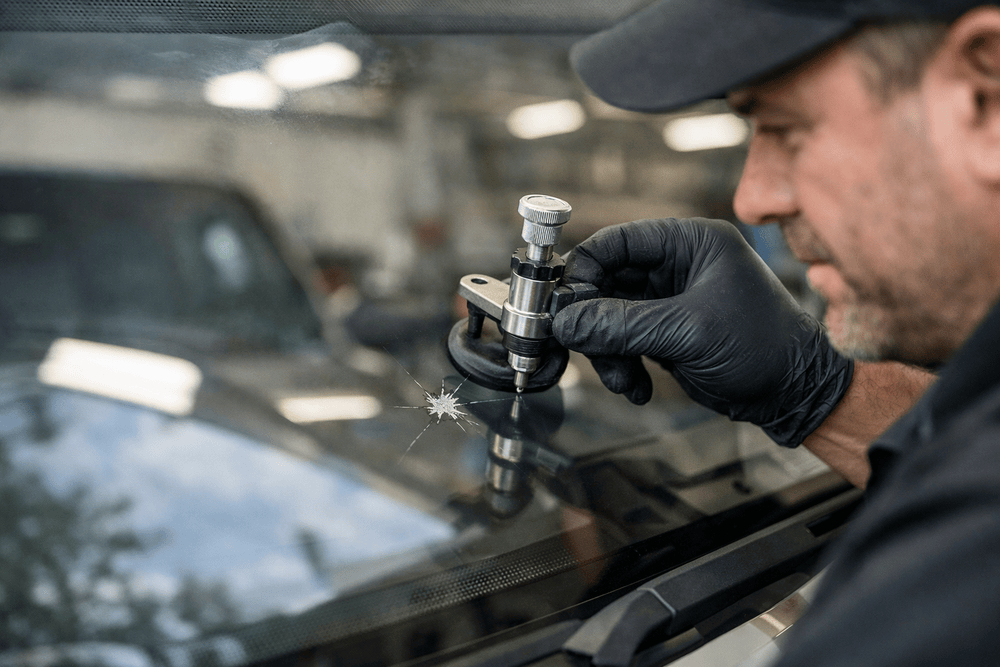
At Home Windshield Repair Before Local Inspection
That bright sticker in the corner of your windshield is going to expire. You are familiar with the routine: inspect the lights, activate the horn, and confirm that the tires have sufficient tread. You can’t ignore it now, even if you did so back then. Even without the worry of a possible failure because of glass breakage, vehicle inspections are already stressful. One of the most frequent causes of cars failing safety checks is a broken windshield, which may cost hundreds of dollars to replace. Thankfully, not every crack or chip has to be completely replaced. With the correct equipment and a little time, you can typically fix small damage right in your driveway.
Get An Auto Glass Replacement Quote Now 866.278.7417

Windshield Replacement & Repair
Our competitors push you into going to their shop to get your glass fixed-making it cheaper for them. We make it easier for YOU to get back on the road by offering free mobile repairs at your home or work. With our free mobile services servicing the entire Orange County & Los Angeles area, we can often handle your windscreen replacement the same day! So the next time you need a windshield replacement, give us a call.
Talk to a Windshield Replacement Specialist Now 866.278.7417

Calibration
Calibration is the process of returning a vehicle’s ADAS to OEM specifications. Calibration is necessary after a new glass installation, particularly a windshield with a camera mounted to it, to ensure that the ADAS features continue to function properly despite having been moved during installation. If a car’s ADAS is not properly calibrated, the system may not function safely. A misaligned camera could jeopardize the functionality of the system and lead to dangerous driving or accidents, so it is crucial that the cameras are aligned perfectly, which is what windshield calibration ensures.
Talk to a Calibration Specialist Now 866.278.7417

Fleet Auto Glass Repair
We provide expert auto glass repair and windshield replacement services for commercial fleets of all sizes. We are experienced with all manufacturers and machine types of domestic or foreign cars, trucks, vans, or commercial vehicles, including heavy equipment. Our same day mobile auto glass and windshield repair service will enable you to get back on the road faster and start saving you time and money instantly. Give us a call today! We are here to help!
Talk to a Fleet Auto Glass Specialist Now 866.278.7417
Why Inspections Target Windshields
Like a ding in a bumper or a scratch on the paint, it is easy to consider a windshield crack just aesthetic. However, safety inspectors see the windshield as a key structural component of your car.
Modern windshields do more than stop the wind. They contribute greatly to the structural integrity of the car’s cabin. In the case of a rollover, the windshield helps prevent the roof from caving inward.
The windshield also acts as a backstop to ensure that the passenger-side airbag deploys correctly. If the glass is damaged, the airbag could not work as intended, putting passengers in danger.
Inspectors also search for eyesight blockage. Any damage in the driver’s direct line of sight—often defined as the area covered by the windshield wipers—can distort light or obscure dangers, leading to an automatic failure in many jurisdictions.
Assessing the Damage: To DIY or Not? You must ascertain if the damage can be repaired before purchasing a repair kit. Not all cracks are prospects for a house repair. You might spend time and money trying to repair a break that is too big or deep, only to fail the inspection nevertheless.
The Size Test: If the chip or crack is small enough to fit beneath a regular U.S. quarter, it can probably be fixed using a do-it-yourself kit. This is known as the “Quarter Test.” Certain sophisticated kits promise to repair fractures up to six inches long, but these are difficult to do without expertise. For the objective of passing an inspection, stick to mending minor chips and cracks.
The Depth Check
A windshield is made up of two layers of glass, with a layer of plastic (PVB) sandwiched in between the two layers of glass. It will not be possible to use a do-it-yourself kit if the break has penetrated the inner layer of glass, which is the side that is located within the cabin. You need a complete replacement. If you run your fingertip over the damage on the inside of the glass and feel a catch, the damage is too deep.
Damage Categories: In the outermost layer of glass, a bullseye is a circular fracture that has a split cone of the same shape. The majority of the time, they are the easiest to correct.
A central impact point that has tiny fractures that expand outward is referred to as a “star break.” These are tough yet achievable.
Long Crack: A single line running across the glass. If it’s under three inches, you can stop it from growing, but hiding it from inspection is hard.
Selecting Your Weapon: Windshield Repair Kits: Nearly all auto parts stores and internet merchants provide windshield repair kits. Although brands differ, the chemistry is usually the same.
These kits employ a curable resin that has the same optical index as glass. When injected into the fracture and cured (typically by UV radiation), the resin joins the glass together and makes the damage substantially less obvious. Most kits come with a few typical components:
Resin: The liquid bonding agent.
Injector: A syringe or pressure screw device to push the resin into the fracture.
Bridge or Pedestal: A mechanism that connects to the glass to keep the injector stable.
Curing Film: Small plastic strips to cover the resin while it cures.
Razor Blade: For scraping off unwanted dried resin.
Do you have a Question?
Get An Auto Glass Replacement Quote Now 866.278.7417
Step by Step Repair Guide
Repairing a windshield is a meticulous operation. Rushing through it typically leads to trapped air bubbles or partial fills, which means the fracture stays visible and the structure remains weak.
Prepping the Glass: Start with a dry, clean surface. Clean the area around the chip with an alcohol prep pad or glass cleaner. Ensure there is no loose glass dust inside the impact point. You may use a safety pin or a thumbtack to carefully pick out stray debris, but be gentle—you don’t want to make the hole wider.
Crucial Tip: Perform the repair in a shady place. The resin cures when exposed to UV radiation (sunlight). If you start the repair in direct sunlight, the glue will solidify before it has a chance to fill the fracture fully.
Setting Up the Bridge: Center the bridge or pedestal exactly above the impact point. The aim is to position the injector opening exactly with the center of the chip. Suction cups normally hold the bridge in place. Double-check the alignment from inside the automobile to verify you are exactly on target.
Injecting the Resin: Screw the injector into the bridge until the rubber seal meets the glass firmly. Add the necessary number of droplets of resin into the injector.
This process requires a pressure-and-vacuum cycle. You will tighten the injector to drive glue into the fractures (pressure), then relax it to enable trapped air to escape (vacuum).
You may need to repeat this procedure numerous times. Look attentively at the crack from inside the automobile; you should see the black shape fading as it fills with clear liquid.
Curing the Resin: Once the fracture seems clean and filled, remove the bridge equipment. The resin will still be moist on the surface. Immediately apply a drop of “pit filler” resin (typically a slightly thicker formula provided in the kit) on the impact location and cover it with a transparent curing strip.
Place the automobile in direct sunlight. The UV rays will solidify the resin in around 15 to 30 minutes. If it is an overcast day, the procedure can take an hour.
The Final Touches: Remove the curing strip when the resin has solidified. You will notice a lump of dried resin on the glass. To cut the glass, take the razor blade and hold it at an angle of ninety degrees to the surface. Scrape back and forth to remove the extra glue until it is flat with the windshield surface. Wipe the glass clean, and you are done.
Common Mistakes That Lead to Inspection Failure
Things may go wrong even with a repair kit. To avoid falling into the traps that alert an inspector to bad repair work, here is how to avoid them.
It is important to note that glass undergoes expansion and contraction in response to variations in temperature.
If it is chilly outside, warm up your windshield with the defroster (gently) before beginning. If it is blistering hot, chill the glass in the shade. Extreme temperatures might cause the split to widen the minute you apply pressure with the injector.
Leaving Air Bubbles: If the resin doesn’t cover the fissure totally, it leaves behind pockets of air. Light is refracted by these pockets, giving the crack a glossy, noticeable appearance. An inspector searching for visual obstacles will see a sparkling, half-filled crack instantly. Be patient with the vacuum cycle during injection.
Drilling Incorrectly: To make room for the resin, some professional kits need drilling into the glass. This procedure is not necessary for the majority of DIY kits. Unless you have expertise piercing glass, avoid it. You are more likely to break the windshield than mend it.
When to Call a Professional: Sometimes, the damage is just too obstinate for a $15 kit. If you try a repair and the fracture is still very apparent, or if the resin refuses to cure correctly, it is time to visit a professional car glass specialist.
Because insurance companies would rather pay $50 for a repair than $400 for a new windshield, many insurance policies include windshield repairs without requiring the policyholder to pay a deductible. Before you battle with a DIY kit, verify your insurance. To ensure that you pass your inspection, you may be able to hire an expert to conduct it for free.
Commonly Asked Questions
When will the fracture completely disappear? Rarely, in fact. Two of the most important goals of a repair are to restore the structural integrity of the structure and to prevent the fracture from spreading further. While the resin improves the cosmetic look significantly—often making it 80% to 90% less visible—you may still detect a faint imprint or a tiny imperfection where the impact happened.
Is it possible to fix a fissure in the driver’s field of vision? Technically, yes, but it is problematic for inspections. A little deformation may remain even after a fracture has been successfully fixed. If an inspector believes that the residual mark interferes with your vision of the road, they might still fail the vehicle. For damage right in front of the driver, replacement is frequently the better choice.
After Windshield repairs, how long must I wait before I can drive? Once the resin is set and scraped flat, you may drive immediately. The connection is waterproof and long-lasting. Afterward, you can even have your vehicle washed.
What if I botch up the repair? You usually can’t attempt again if the resin cures and the crack isn’t filled. The solidified resin inhibits fresh liquid from entering the fissure. At that point, your only alternatives are living with the flaw or replacing the windshield.
Drive with Confidence: Keeping an eye out for windshield damage is a crucial element of being vigilant when it comes to automobile maintenance. Fixing a chip before your inspection is about safety, not just getting a new sticker.
You can save money, stop the damage from becoming worse, and keep your automobile road-legal by taking care of the issue early with a home repair kit. Don’t allow a minor rock chip to develop into a large problem. Please consider obtaining a kit, finding some shade, and repairing the glass before inspection day arrives.
Prevent Unsuccessful Inspections and Save Money
Every motorist fears the sound of a rock striking their windshield with a quick, piercing thwack. You look at the glass right away, hoping to see nothing. However, it is often there: a little chip, a bullseye, or a tiny starburst.
It is simple to dismiss these little faults. You can convince yourself that it’s too small to fix now or that you’ll do it next month. Unfortunately, procrastinating on vehicle glass maintenance frequently leads to a considerably lighter pocketbook. What begins as a twenty-dollar repair work may soon turn into a thousand-dollar replacement and a failed car safety inspection.
Understanding when to act, how damage spreads, and the ramifications for your vehicle’s roadworthiness is crucial for every automobile owner. By taking care of glass damage as soon as possible, you safeguard your passengers, preserve the worth of your vehicle, and make sure you won’t be in a difficult situation when it comes time to renew your license.
The Hidden Dangers of “Just a Crack”: Many drivers see windshields as just wind blockers, yet contemporary vehicle glass includes a complex safety component. During a front-end collision, your windshield may contribute up to forty-five percent to the structural integrity of the cabin of your car, and during a rollover accident, it can contribute up to sixty percent.
A rock chip compromises the structural strength of that glass. A compromised windshield might fly out or break early in an accident, making it easier for the roof to collapse inward. In addition, the windshield serves as a backstop, which is necessary for the correct deployment of the airbag on the passenger side of your vehicle.
The airbag may deploy out the window instead of toward the passenger if the glass breaks, making it ineffective. Maintaining the integrity of your glass isn’t only about excellent vision; it is important for keeping the safety cage of your car intact.
Why Safety Inspections of Windshields Fail
Depending on where you reside, your car likely receives a yearly or biannual safety examination. Inspectors follow tight criteria regarding glass quality, and a broken windshield is one of the most prevalent grounds for instant failure.
The Driver’s Line of Sight: The most essential region for inspectors is the “critical vision area.” This is commonly described as the area just above the steering wheel, encompassing the breadth of the windshield wiper’s sweep.
Even a slight chip or dent in this zone might result in a failed inspection since it can distort light or distract the driver. If the damage catches the sunshine or headlights from approaching cars, it causes a glare that briefly blinds you. Inspectors will not clear a vehicle bearing this responsibility.
Wiper Blade Damage: Inspectors also assess whether the glass damage interferes with the functioning of your windshield wipers. The car is considered dangerous if a fracture has sharp edges that catch or rip the wiper blade’s rubber. If your windshield is tearing your wipers, you cannot effectively remove rain or snow from your car.
Crack Size and Location: Regulations differ by state and nation, but generally speaking, any crack that is longer than a few inches or connects with another crack (producing a spiderweb appearance) is grounds for failure. Additionally, damage spreading to the edge of the windshield compromises the seal between the glass and the frame, which is an automatic fail in severe inspection countries.
Do you have a Question?
Get An Auto Glass Replacement Quote Now 866.278.7417
The Financial Reality
The difference between mending a chip and replacing a windshield is considerable, both in terms of time and money.
The Low Cost of Repairs: A qualified technician may inject a specific glue into the chip if damage is discovered early. When exposed to UV light, this resin cures, reuniting the glass and stopping the break from expanding. This procedure normally takes less than 30 minutes.
Financially, a chip repair normally costs between $60 and $100. However, if you have comprehensive coverage, many insurance companies will pay the whole amount and eliminate the deductible from your policy. They take this action since paying for a repair now is much less expensive than paying for a replacement later.
The High Cost of Replacement: Once a crack develops beyond the size of a dollar note, fixing it becomes unlikely. The replacement of your windshield in its entirety is no longer an option for you.
It is possible that the price of the glass itself might range anywhere from $200 to more than $1,000, depending on the make and model of your automobile. But the glass is no longer the sole expenditure.
The ADAS Factor: Most current automobiles (approximately 2016 and newer) are equipped with Advanced Driver Assistance Systems (ADAS). These include functions like adaptive cruise control, automated emergency braking, and lane-keeping assistance. These devices’ cameras and sensors are installed just behind the windshield.
You interfere with these sensors when you change the glass. They must be carefully recalibrated to work appropriately. Your automated braking system may misjudge distances if there is even a single degree of misalignment.
This calibration procedure needs specialized equipment and training, adding anything from $300 to $600 to your replacement expense. Ignoring that little rock fragment has now become a $1,500 expenditure.
How Weather Turns Chips into Cracks
You may be wondering why a chip remains steady for months before abruptly breaking apart overnight on the windshield. The answer may often be found in the phenomenon of thermal shock.
Whenever glass is heated, it expands, and when it is cooled, it contracts. Your windshield is made up of two separate panes of glass, with a cover made of vinyl sandwiched in between them. When the outer layer is damaged by a chip, it becomes very susceptible to temperature variations.
Winter Stress: If you have a chip on your windshield and you blast the defroster on a frosty morning, the quick heating of the cold glass produces uneven expansion. This stress looks for a release point in the weak region of the chip, and when it finds one, a horizontal fracture occurs.
Summer Stress: Conversely, cleaning your automobile with cold water on a hot day, or blasting the A/C while the car has been scorching in the heat, produces quick contraction. The consequence is the same: the glass fails. Vibration from driving, hitting potholes, or even slamming the vehicle door may provide the final push needed to turn a repairable chip into a replacement-level break.
Stay Ahead of the Break: Windshield maintenance is a typical example of how a minor preventive effort generates substantial savings. The journey from a little stone chip to a failed safety inspection and an emptied financial account is shorter than most drivers think.
Don’t wait for the weather to decrease or for your registration renewal notification to come in the mail. If you notice any damage to your glass, please consider exploring your repair options promptly. By taking immediate action, you safeguard the structural integrity of your car, guarantee a successful next inspection, and retain your valuable funds instead of entrusting them to an auto glass shop.
Mobile Safe Auto Glass
14241 E Firestone blvd suite 400,
La Mirada, CA 90638
Phone: (562) 608-1154
Toll Free: 1 866 278 7417
Mail: sales@mobilesafeautoglass.com
Get a FREE QUOTE today! You can get a free quote and schedule 24/7 using this free quote wizard.
Mon – Fri 8am – 5pm
Saturday 8am – 1pm
Sunday Closed