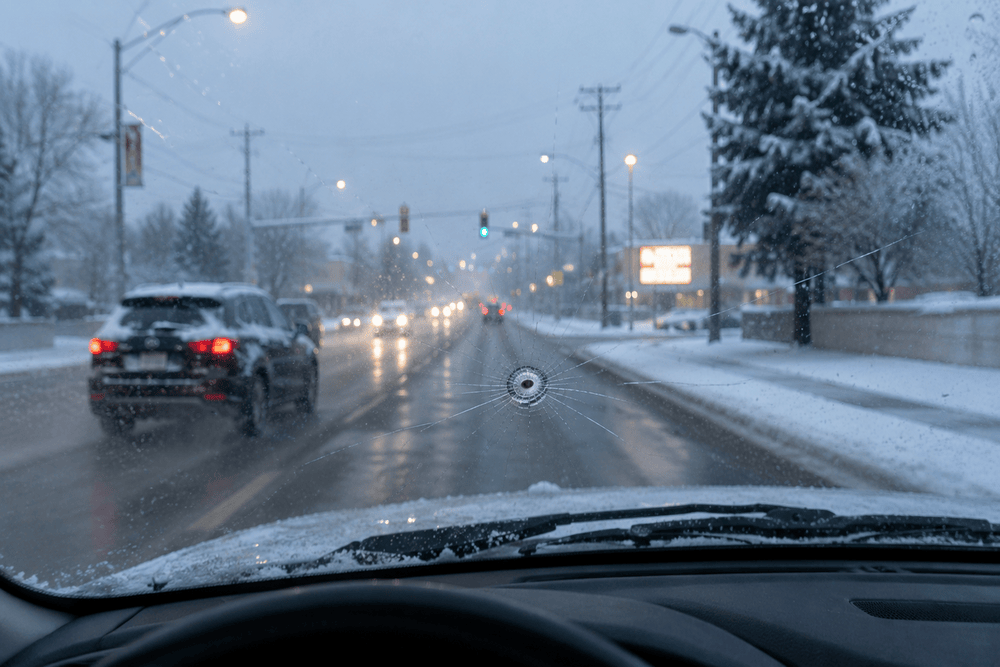
Winter Driving Makes Car Fix Cracked Windshield Urgent
While a cracked windshield is always hazardous, it becomes even more so in the winter. Before winter arrives, timely repair or replacement is crucial because cold temperatures accelerate the spread of cracks, weaken structural integrity, and impair visibility. You’ve been ignoring that little chip since summer? It won’t be little for a long time until winter comes. Your options and safety margin quickly diminish when minor windshield damage turns into a full-blown crack due to cold weather. One of the issues that drivers frequently underestimate is windshield damage. When visibility is good and the weather is mild, it’s easy to ignore a chip here or a tiny crack there. However, driving in the winter brings with it a number of pressures that hasten deterioration and provide very hazardous situations.
Get An Auto Glass Replacement Quote Now 866.278.7417

Windshield Replacement & Repair
Our competitors push you into going to their shop to get your glass fixed-making it cheaper for them. We make it easier for YOU to get back on the road by offering free mobile repairs at your home or work. With our free mobile services servicing the entire Orange County & Los Angeles area, we can often handle your windscreen replacement the same day! So the next time you need a windshield replacement, give us a call.
Talk to a Windshield Replacement Specialist Now 866.278.7417

Calibration
Calibration is the process of returning a vehicle’s ADAS to OEM specifications. Calibration is necessary after a new glass installation, particularly a windshield with a camera mounted to it, to ensure that the ADAS features continue to function properly despite having been moved during installation. If a car’s ADAS is not properly calibrated, the system may not function safely. A misaligned camera could jeopardize the functionality of the system and lead to dangerous driving or accidents, so it is crucial that the cameras are aligned perfectly, which is what windshield calibration ensures.
Talk to a Calibration Specialist Now 866.278.7417

Fleet Auto Glass Repair
We provide expert auto glass repair and windshield replacement services for commercial fleets of all sizes. We are experienced with all manufacturers and machine types of domestic or foreign cars, trucks, vans, or commercial vehicles, including heavy equipment. Our same day mobile auto glass and windshield repair service will enable you to get back on the road faster and start saving you time and money instantly. Give us a call today! We are here to help!
Talk to a Fleet Auto Glass Specialist Now 866.278.7417
How Does a Cracked Windshield Get Worse in Cold Weather
Glass expands in hot weather and contracts in cold. This movement is hardly perceptible on a moderate day. However, during the winter, there can be a significant difference between the freezing overnight temperature and the warm air blasting from your defroster—all of which is absorbed by your windshield.
Any existing cracks or chips are forced to separate by this heat stress. Without any more contact, a two-inch chip on Monday may easily grow into a twelve-inch fracture by Friday.
The break travels through the glass along the route of least resistance, and as it reaches the windshield’s edges, the structural damage is much worse. The issue is made worse by the state of the roads.
Potholes, frost heaves, and debris kicked up by other cars all cause vibrations and impacts on winter roads, which hasten the spread of cracks. On an icy, potholed winter road, a windshield that would have survived a smooth summer trip might break easily.
Why a Cracked Windshield Is a Structural Safety Risk in Winter: Your windshield is a load-bearing structural element of your car, not just a piece of glass that keeps wind and rain out.
The windshield keeps the cabin from collapsing in a rollover accident by supporting up to 60% of the weight of the roof. Under such stress, a cracked windshield may break.
The likelihood of accidents rises dramatically in the winter. As per the U.S. According to the Department of Transportation, snowy, slushy, or icy roads account for 24% of weather-related car crashes, which cause over 1,300 fatalities and 116,800 injuries each year.
If you drive on winter roads with a windshield that is structurally compromised, you might not be protected if something goes wrong. Another thing to think about is airbag deployment.
Before inflating in the direction of the passenger, the passenger-side airbag is intended to bounce against the windshield. A shattered windshield may not be able to properly resist such force, which might lead to the airbag deploying in the incorrect direction and perhaps harming the passenger instead of saving them.
How Winter Visibility Is Affected by a Cracked Windshield
Wintertime visibility is already difficult due to snow, ice, fog, and low-angle sun. You don’t need an additional layer of sight hindrance caused by a broken windshield.
Light is scattered by chips and cracks. When sunlight or approaching headlights strike a damaged region, they refract in erratic directions, producing glare that may cause temporary blindness. In winter, low sun angles in the morning and afternoon cause light to pass through your windshield rather than over it, making this impact much harsher.
Additionally, ice and frost react differently to damage that already exists. In addition to causing elevated ridges and uneven surfaces that your ice scraper won’t adequately remove, cracks hold moisture, which freezes and exacerbates the damage. As a consequence, the windshield becomes more difficult to see through and defrost, which is not good on any cold morning.
What Takes Place If Your Windshield Is Cracked Throughout the Winter? The short answer is that the damage will worsen and do so more quickly than you anticipate.
There are financial and legal ramifications to take into account in addition to the physical decline. It is illegal for drivers to operate cars with damaged or obstructed windshields in the majority of U.S. states.
If you are stopped over with a broken windshield, you can be fined. If you are in an accident, your insurance company might lower your claim or refuse coverage if the damage was an unresolved, pre-existing problem.
Early repairs are nearly always less expensive than complete replacements. The average cost of a chip repair is between $50 and $150. The cost of a complete windshield repair may range from $200 to more than $1,000, depending on the car and whether or not it has advanced driver assistance system (ADAS) sensors. A repair often becomes a replacement if you wait through the winter.
Do you have a Question?
Get An Auto Glass Replacement Quote Now 866.278.7417
How to Keep Your Windshield Safe in the Winter
A few routines may help stop new damage and reduce the growth of existing cracks, even if fixing existing damage is the top priority right now:
Gradually warm your vehicle. Rapid thermal stress is produced when the defroster is blasted on a freezing windshield. Start on a low setting and progressively raise it. Make use of the appropriate ice scraper. Steer clear of metal scrapers and always use the blade side rather than the handle end.
When feasible, park in a garage. Thermal stress on the glass is lessened when you protect your car from overnight temperature extremes.
Maintain a safe following distance. In winter, one of the main causes of windshield chipping is gravel and road debris that other cars throw up.
Take care of new chips right away. Almost often, fresh chips can be fixed. They may become cracks if you wait, even for a few days in cold weather.
Don’t Wait Until Spring to Fix Your Windshield: Although winter is the worst time to have a cracked windshield, it’s also the best time to fix one—before the damage gets worse, before visibility deteriorates, and before a small repair turns into an expensive replacement.
A cracked windshield in the winter is a serious safety concern rather than only an aesthetic annoyance because of the combination of structural danger, faster crack propagation, and decreased vision. Before the cold arrives, have your windshield professionally inspected if you already have damage.
The majority of auto glass shops provide free evaluations, and many insurance plans provide free chip repairs. You could save hundreds of dollars—and possibly much more—by making a brief phone call.
Common Questions
In cold temperatures, will a cracked windshield break? Automobile glass that has been laminated is not meant to break. However, intense heat stress during the winter may cause a fracture to quickly develop over the whole width of the windshield, rendering it dangerous to drive and necessitating a complete replacement as opposed to a simple repair.
Can I temporarily repair a windshield crack in the winter with super glue or nail polish? These do-it-yourself solutions are ineffective and can actually complicate professional repair by contaminating the crack. The only dependable solution is a professional resin-based repair, which is often so cheap that short-term solutions aren’t worth the risk.
How much time does it take to replace or repair a windshield? It usually takes 30 to 45 minutes to fix a chip. One to two hours are needed for a complete windshield replacement, plus at least one hour for drying before driving. Numerous stores provide mobile services so you may do the task from your house or place of business.
Does winter windshield repair get covered by auto insurance? Windshield damage is usually covered by comprehensive vehicle insurance, often with a low or waived deductible for repairs. Before making an out-of-pocket payment, review your policy or give your insurance a call. Many drivers pay nothing for a chip repair.
Is it ever safe to drive while your windshield is cracked? For a brief while, a tiny chip that is out of the driver’s line of sight might be acceptable, but any crack that is spreading or longer than a few inches renders the car dangerous. Because of the greater structural demands and less visibility during the winter, the bar for “safety” is lower.
Can a Cracked Windshield Be Repaired by Cold Weather
A cracked windshield cannot be permanently repaired by cold weather. A crack may momentarily shrink or become less noticeable due to low temperatures, but this effect is transient. The fracture will widen and may become worse as the temperature rises.
The only dependable solution is still expert repair or replacement. On a chilly morning, you go outside to your vehicle and discover something unexpected: the crack in your windshield seems less than it did the day before.
Did the cold really make a difference? It’s a sensible idea, and many drivers have considered it. Acting on that premise might be costly because, regrettably, the answer is more nuanced than it first seems.
Windshield cracks are impacted by cold weather, but not in the manner that most people would want. Low temperatures may temporarily cover up damage rather than repair it, and in many circumstances, they can make the underlying issue much worse. Making an informed repair decision starts with knowing what is truly happening to your glass when the temperature drops.
This article explains how windshield cracks are affected by cold weather, what you should and shouldn’t do in the winter, and when it’s time to quit waiting and get help.
How Is a Cracked Windshield Affected by Cold Weather? Glass shrinks in the cold and expands in the heat. The glass in your windshield shrinks somewhat when the temperature drops, which may cause a crack’s edges to push together.
This causes the crack to appear narrower—or even almost invisible—to the unaided eye. However, the structural damage is still present.
Imagine it as a cut rubber band. Its strength is not restored by pulling the two ends together; instead, the break is concealed. The harm reappears as soon as circumstances alter.
Why It Is True That Cold Temperatures Can Make Cracks Worse
The thing that most drivers are unaware of is that a crack is more likely to get worse in cold weather than to get better. This is due to several factors.
Thermal stress: The heat strikes the already-stressed glass unevenly when you get into a chilly vehicle and turn on the defroster right away. While the outside remains frigid, the internal surface heats quickly. Because of the tension created by the temperature differential, existing cracks may spread quickly, sometimes covering the entire windshield in a matter of seconds.
Moisture expansion: Water can freeze overnight if it seeps into a crack. As ice develops, it expands, which causes the fissure to widen from the inside. This is one of the most typical ways that a little chip may grow into a large fracture in the winter.
Brittleness: Compared to warm glass, cold glass is more brittle. When temperatures are extremely low, a crack may spread further due to a sudden bump, vibration from the road, or even a loud noise.
Which kinds of windshield damage are more likely to occur during the winter? Not every crack reacts to frigid temperatures in the same way. The kind and location of the damage are very important.
Chips and Bulls-Eye Cracks: The most manageable kind of windshield damage is small chips, which are brought on by gravel or other road debris. A specialist may fill the chip with epoxy before moisture or frost gets inside if it is fixed promptly before winter arrives. Even a little chip might grow into a crack that necessitates a complete windshield replacement if left untreated during a cold season.
Long Stress Cracks: Cracks that stretch more than six inches or run along the windshield’s borders are regarded as structural damage. These are especially vulnerable to cold temperatures because the glass is continuously stressed by the contraction and expansion cycle. Rather than being repaired, these cracks nearly always need to be completely replaced.
Cracks in the Driver’s Line of Sight: Any crack in the driver’s direct line of sight is a safety and legal risk, independent of the structural problem. Waiting for warmer weather won’t stop them from spreading quickly in cold weather.
Do you have a Question?
Get An Auto Glass Replacement Quote Now 866.278.7417
Is It Possible to Fix a Windshield in Cold Weather
Yes, but with some restrictions. Although very low temperatures (below 32°F/0°C) might make the resin injection procedure more difficult, the majority of competent windshield repair experts are able to operate in cold weather. For resin to fully cure and adhere to the glass, a certain temperature range is required.
To deal with this, many technicians operate in climate-controlled buildings or in heated tents. Ask the service provider about their procedure for cold weather if you’re planning a repair for the winter.
If the weather on the day of your appointment is significantly below freezing, mobile repair services may need to reschedule. In summary, a windshield repair should not be put off due to cold weather. It’s a justification for giving it top priority.
When Is Replacement Your Only Choice? As long as they are out of the driver’s line of sight and do not pierce both layers of the laminated glass, chips smaller than a quarter and cracks shorter than three inches can be repaired. Any damage outside of these ranges usually necessitates a complete replacement of the windshield.
Borderline damage may be firmly pushed into “replacement only” zone by cold weather. One freeze-thaw cycle may render a chip irreparable, even if it was repairable in the fall.
Act Now Instead of Waiting for Warmer Weather
One of the most enduring automobile myths is the notion that a windshield fracture might be repaired or delayed by cold weather. In fact, winter weather provide the perfect setting for cracks to widen, deepen, and become more costly to repair.
The best course of action if your windshield has a chip or crack is to get it evaluated by a professional before the damage becomes worse. Many repairs are simple, inexpensive, and at least partly covered by comprehensive vehicle insurance coverage; often, no deductible is needed.
You shouldn’t keep an eye out for a cracked windshield throughout the winter. You should take care of it before winter decides for you.
Frequently Asked Questions: Can a damaged windshield be permanently sealed by cold weather? No. Glass contracts in cold weather, which might momentarily make a fracture look smaller, but the underlying damage is still there. The fracture will widen once again and maybe become bigger as the temperature rises.
Will a windshield crack get worse if I use my car’s defroster? It can, really. When hot air is blasted into cold glass, the temperature changes quickly, stressing the windshield. To lessen the chance of a crack expanding, start your defroster on low heat and gradually raise it.
In the winter, is it safe to drive with a cracked windshield? The location and size of the crack determine this. Regardless of the season, any crack in the driver’s direct line of sight is dangerous. An already unsafe scenario becomes much more deadly during the winter months when existing fissures are more likely to develop abruptly.
What is the wintertime cost of windshield repair? The average cost of chip repairs is between $50 and $150. Depending on the car, a complete windshield repair might cost anywhere from $200 to $500 or more. Windshield repair is often covered by comprehensive auto insurance policies with no deductible.
Is it possible to apply windshield resin in extremely cold temperatures? For most resins to properly cure, temperatures over 32°F (0°C) are necessary. In order to finish repairs throughout the winter, professional technicians often employ heated surroundings or specific cold-weather resins. Before making a reservation, always check the procedure with your service provider.
Mobile Safe Auto Glass
14241 E Firestone blvd suite 400,
La Mirada, CA 90638
Phone: (562) 608-1154
Toll Free: 1 866 278 7417
Mail: sales@mobilesafeautoglass.com
Get a FREE QUOTE today! You can get a free quote and schedule 24/7 using this free quote wizard.
Mon – Fri 8am – 5pm
Saturday 8am – 1pm
Sunday Closed