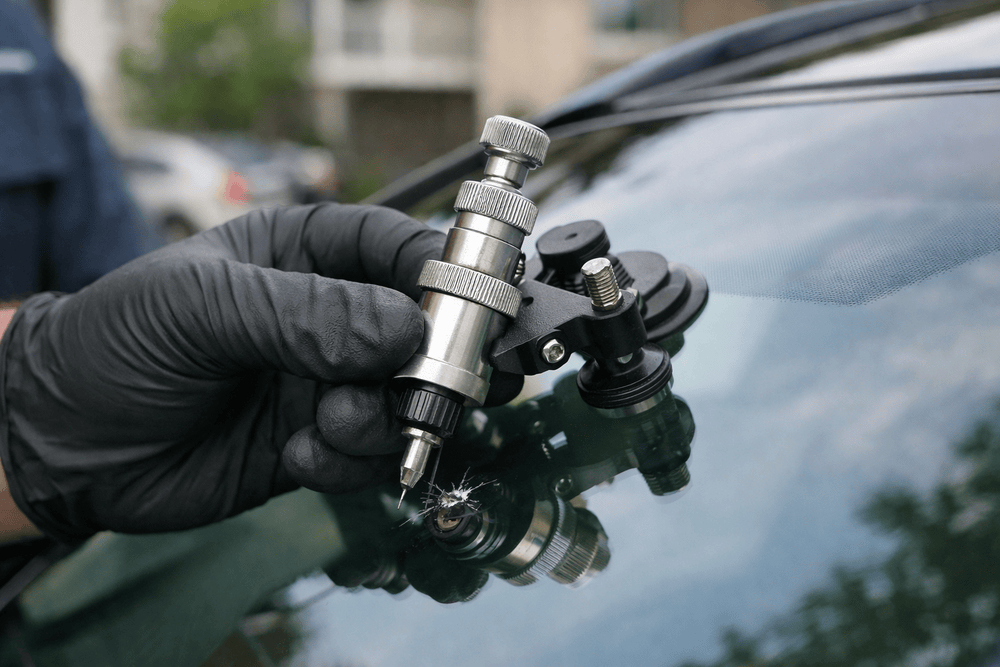
Windshield Repair Near Me and ADAS Safety Concerns
Every driver fears the sound of a big pop on the highway. After you witness the pebble impact, the spiderweb crack starts to extend across your field of vision. Taking out your phone and searching for “windshield repair near me” is probably your first impulse if you’re looking for the fastest and least expensive fix. It was a simple mechanical task ten years ago to replace a piece of vehicle glass. The new windshield would be installed after a technician removed the old glass and applied a fresh seal. But there has been a significant change in the automotive industry.
Get An Auto Glass Replacement Quote Now 866.278.7417

Windshield Replacement & Repair
Our competitors push you into going to their shop to get your glass fixed-making it cheaper for them. We make it easier for YOU to get back on the road by offering free mobile repairs at your home or work. With our free mobile services servicing the entire Orange County & Los Angeles area, we can often handle your windscreen replacement the same day! So the next time you need a windshield replacement, give us a call.
Talk to a Windshield Replacement Specialist Now 866.278.7417

Calibration
Calibration is the process of returning a vehicle’s ADAS to OEM specifications. Calibration is necessary after a new glass installation, particularly a windshield with a camera mounted to it, to ensure that the ADAS features continue to function properly despite having been moved during installation. If a car’s ADAS is not properly calibrated, the system may not function safely. A misaligned camera could jeopardize the functionality of the system and lead to dangerous driving or accidents, so it is crucial that the cameras are aligned perfectly, which is what windshield calibration ensures.
Talk to a Calibration Specialist Now 866.278.7417

Fleet Auto Glass Repair
We provide expert auto glass repair and windshield replacement services for commercial fleets of all sizes. We are experienced with all manufacturers and machine types of domestic or foreign cars, trucks, vans, or commercial vehicles, including heavy equipment. Our same day mobile auto glass and windshield repair service will enable you to get back on the road faster and start saving you time and money instantly. Give us a call today! We are here to help!
Talk to a Fleet Auto Glass Specialist Now 866.278.7417
Comprehending ADAS Technology
Electronic technology known as Advanced Driver Assistance Systems (ADAS) helps drivers with parking and driving tasks. ADAS improves road and vehicle safety by providing a secure human-machine interface.
You may utilize these features on a daily basis without being aware that they are a part of an intricate network. Typical ADAS characteristics consist of:
If your car starts to stray from its lane without using a turn signal, Lane Departure Warning (LDW) will notify you. If you drift, Lane Keep Assist (LKA) will automatically steer the car back into the lane.
The Forward accident Alert (FCA) alerts drivers to an approaching accident with a car or obstruction in front of them. Automatic Emergency Braking (AEB): Reduces impact speed or prevents collisions by automatically applying brakes.
Adaptive Cruise Control (ACC): Modifies the speed of the vehicle to keep a safe distance from cars in front of it.
Automotive imaging, LiDAR, radar, image processing, computer vision, and in-car networking are just a few of the data sources that these systems rely on. Most of these safety systems are powered by a front-facing camera that is often positioned to the windshield just behind the rearview mirror.
Crucial Connection Between Sensors and Glass
The windshield serves as a lens since the ADAS camera sees through it. The camera’s capacity to accurately “see” the road depends on the clarity, thickness, and curve of that glass.
When replacing a windshield, the camera needs to be taken out and put back on the new glass. Even a one-degree change in the camera’s angle can have far-reaching effects later on. The camera’s field of vision shifts if it is slightly out of alignment.
A Forward Collision Alert system is one example. It determines how far your bumper is from the vehicle ahead of you. A mere millimeter of downward tilt in the camera angle could cause the system to calculate the distance incorrectly by many feet. As a result, your automobile may slam on the brakes for a phantom obstacle, or even worse, it might fail to brake entirely when faced with a real threat.
Because of this, finding “windshield repair near me” is much more difficult than it was in the past. You need a technician who can calibrate delicate safety equipment, not simply a glazier.
When is calibration required for repair versus replacement? It’s critical to understand the difference between a straightforward chip repair and a complete windshield replacement.
Chip Repairs: A professional can inject a resin to seal the crack and restore structural integrity if you discover a rock chip early, usually when it is smaller than a quarter.
As long as the damage is not immediately in front of the camera lens, ADAS calibration is typically not necessary for a straightforward chip repair. Even a satisfactory repair could skew the image if the chip or crack blocks the camera’s vision; therefore, a complete replacement is required for safety.
Complete Replacement: The windshield needs to be replaced if the crack is too big or in the driver’s line of sight. In this case, any car with a front-facing camera needs to be recalibrated.
There aren’t any exceptions. If a store offers to replace your windshield but claims that calibration is not required or that you can “do it later,” you should search elsewhere right away.
Do you have a Question?
Get An Auto Glass Replacement Quote Now 866.278.7417
The Calibration Process Explained
Depending on the requirements set forth by the manufacturer, a qualified auto glass shop will perform one of two types of calibration when you bring your car in. Certain cars even need both.
Static Calibration: This procedure is usually carried out inside the shop in a controlled setting. The car is parked on a level area. At predetermined heights and distances from the vehicle, the technician installs a number of exact targets and patterns on fixtures.
The computer in the automobile then aligns the cameras by scanning these targets. Static calibration may not always be possible with mobile “driveway” services since it requires a large, clear area and specific lighting.
Dynamic Calibration: This method entails operating the car on the road for a predetermined period of time at predetermined speeds. By creating a feedback loop with a handheld device connected to the car’s OBDII connection, the camera learns to identify road signs and lane markings in real time. The above procedure may seem like a straightforward test drive, but it requires certain weather conditions (no snow or heavy rain) and routes that are properly designated.
The Dangers of Ignoring Calibration It is impossible to overestimate the risks of ignoring this stage. ADAS components do not self-correct when they are moved during a windshield repair. Driving a car with miscalibrated sensors puts you at risk for:
System Failure: Your dashboard may display error messages if the safety functions simply stop functioning.
False Activations: Your vehicle may brake abruptly on a clear roadway or direct you into traffic to avoid a phantom lane line.
Delayed Reactions: Automatic braking frequently makes the difference between a near miss and a major collision by saving milliseconds. Reaction time is accelerated by misalignment.
Despite these dangers, the vehicle glass sector is still catching up. Not every local shop has purchased the costly tools and instructions needed for ADAS calibration. Because of this, there is a market niche where low-cost suppliers may undercut prices by ignoring safety precautions.
Choosing a Safety Conscious Repair Shop
Use the following criteria to screen possible service providers when you put “windshield repair near me” into your search bar. Never accept the lowest price or the first result.
Do you carry out ADAS calibration internally? Ideally, you should establish a single point of contact for all your needs. Some glass firms outsource the calibration to a dealership, which can cause your repair time to increase by several days. An in-house shop probably has more control over the quality.
Do your technicians hold certifications? Seek out ADAS system training certificates or qualifications from the Auto Glass Safety Council (AGSC).
Do you utilize OEE or OEM glass? Factory glass and OEM (Original Equipment Manufacturer) glass are the same. Superior grade aftermarket glass is known as OEE (Original Equipment Equivalent). Steer clear of cheap aftermarket glass because even with flawless calibration, distortions can fool your safety cameras.
Will you offer calibration proof? A paper or digital certificate attesting to the calibration’s success and passing all system checks will be provided by a reliable shop.
Putting Safety Above Convenience
Driving has become safer and more pleasurable because of the incorporation of technology, but car owners also have greater responsibilities. Although it may seem convenient to get a quick, inexpensive windshield repair in a parking lot, this is no longer the norm for contemporary auto care.
When you need vehicle glass service, keep in mind that you are fixing more than simply a window—you are fixing a safety system. You can make sure that your car’s eyes are as keen as yours by selecting a licensed repair facility that is knowledgeable about and adept at ADAS calibration.
Knowing that the clever systems put in place to keep you safe are working just as they should, you may drive away with confidence. Why Replacing a Windshield Is More Than Just Getting New Glass Ten years ago, a cracked windshield was just an annoyance.
In an hour, you would be back on the road after calling a repair business, which would remove the old glass and seal in a new one. Though barely a technological event, it was a structural requirement and a cosmetic remedy.
Driving has evolved. These days, the cars that come off assembly lines are essentially mobile supercomputers. They observe, consider, and respond to their surroundings. These days, a rock hitting your windshield does more than just break a piece of laminated glass. It could blind the intricate network of sensors protecting you.
Replacing your windshield is no longer an effortless task if your car has safety systems like automatic braking or lane-keeping assistance. A crucial procedure known as ADAS calibration is necessary. Understanding the importance of this step could make the difference between a safe drive and a disastrous mishap.
Understanding ADAS
We must ascertain what is truly behind your rearview mirror before beginning the repair procedure. Advanced Driver Assistance Systems are referred to as ADAS. This acronym is the aggregate term for the safety technologies intended to improve, automate, and modify car systems for increased driving safety.
Radar, LiDAR, and—most importantly for the purposes of this discussion—forward-facing cameras are key inputs that these systems rely on. Usually, these cameras are installed straight onto the inside of your windshield.
They serve as your car’s eyes, continuously scanning the road for traffic signs, pedestrians, other cars, and lane markers. These windshield-mounted cameras often provide the following features:
If you cross a line without signaling, the Lane Departure Warning (LDW) system will warn you. Lane Keep Assist (LKA) actively steers the vehicle back into the center of the lane.
Automatic Emergency Braking (AEB) detects an impending collision and engages the brakes if the driver does not respond. ACC, or adaptive cruise control, keeps you at a predetermined distance from the vehicle in front of you.
Traffic Sign Recognition: Shows speed limit signs on your dashboard after reading them. The camera needs to know the precise location of the vehicle in respect to the road in order for these systems to function. The windshield is useful in this situation.
The Windscreen as an Accurate Lens
Although windshields are typically thought of as translucent shields, a computer sensor sees them as lenses. The camera interprets the world by looking through the glass.
The camera is adjusted to the clarity, curvature, and location of the particular glass when a factory installs a windshield. Even with premium glass, the camera’s position somewhat shifts when the windshield is replaced. We are discussing differences of millimeters.
Moreover, there may be minute variations in the optical clarity or curvature of the glass itself. These variations can greatly diffract the light entering the camera lens, even though they are not visible to the human eye. The ADAS computer obtains inaccurate data if the camera’s position changes by merely one degree or if the glass distorts the image by a tiny percentage.
The Butterfly Effect of Miscalibration: When operating a two-ton vehicle, you may be wondering how much a millimeter means. “A lot,” is the answer.
A small misalignment at the camera source can result in a significant calculation mistake later on. The focal point 50 or 100 yards down the highway may be several feet off if your camera is positioned just a fraction of an inch from the glass.
Delayed Braking: A precise distance estimate is necessary for your Automatic Emergency Braking system to function. The system can apply the brakes too late to avoid an accident if the camera miscalculates how far away the automobile is that stopped in front of you.
Do you have a Question?
Get An Auto Glass Replacement Quote Now 866.278.7417
Phantom Braking
On the other hand, a misaligned camera could see a car in a nearby lane, a shadow, or a metal plate on the road as an impediment right in your way. This could endanger you and the drivers behind you by causing the car to brake hard when there is no threat.
Lane Drift: The car may continuously try to direct you into oncoming traffic or off the shoulder, believing it is keeping you “centered,” if the Lane Keep Assist system believes the center of the lane is two feet to the left of where it actually is.
System Failure: The computer in the car may occasionally realize that the information it is getting is illogical. It can turn off all safety systems and put warning lights on your dashboard. You lose the safety features you purchased, even if the outcome is preferable to an accident.
The Calibration Process: Static vs. Dynamic: After each windshield replacement on an ADAS-equipped vehicle, technicians must undertake calibration to make sure these horrors don’t occur.
This resets the camera’s settings to precisely match the new glass. The manufacturer of your car determines which of the two primary calibration techniques—or both—is necessary.
Static Calibration: A controlled shop environment is used for this procedure. The tires are inflated to a certain pressure while the car is parked on a level surface. The technician positions extremely accurate “targets”—patterns that resemble geometric shapes or QR codes—on fixtures at precise heights and distances from the car.
After scanning these targets, the car’s computer switches into learning mode and modifies the camera’s aim to line up with the actual center of the vehicle. Static calibration is typically not possible in a driveway during a mobile service because this calls for a broad, unobstructed area and special lighting.
Adaptive Calibration
The vehicle enters the actual world using this technique. A technician drives the automobile on well marked roads at predetermined speeds while connecting a handheld computer to the OBDII connection.
The camera is calibrated by the system using environmental data and actual lane markings. Although this seems easier, it needs well-painted roads and ideal weather conditions (no rain or snow).
Dual Calibration: To guarantee redundancy and perfect accuracy, some manufacturers, especially for more recent and sophisticated cars, demand both static and dynamic calibration.
Why You Shouldn’t Take Shortcuts: It’s normal to search for the cheapest option when presented with a repair bill. A glass shop may be able to provide a “quick swap” without calibrating at a reduced cost. They may claim that the camera didn’t need to be reset because the car “looks fine” or that they didn’t unplug it.
This advice is risky. The majority of automakers make it clear that calibration is required whenever the suspension geometry is altered, the windshield is removed, or the camera is unplugged. You are operating a car with impaired senses if you omit this step.
Liability is also a significant factor. Insurance issues may occur if you are in an accident and it turns out that your safety systems malfunctioned because of poor maintenance (i.e., missing calibration).
Fortunately, comprehensive insurance policies that cover windshield replacement typically cover the expense of calibration. They understand that restoring the vehicle to its pre-loss condition requires fixing the safety systems, not just the glass.
What Your Repair Technician Should Know
As a customer, you have the right to ensure the proper repair of your vehicle. Ask these questions to determine the shop’s level of experience when scheduling a windshield replacement:
Does my automobile need to be calibrated? A trustworthy store will check your VIN and notify you right away.
Do you carry out calibrating internally? Some glass shops contract with dealerships to do this, which may cause the repair to take longer.
Is a calibration certificate available? You should receive documentation attesting to the successful calibration.
Do you adhere to OEM guidelines? Rather than employing a generic approach, the shop ought to follow the specific instructions supplied by your vehicle’s manufacturer.
Safety Is Non-Negotiable: For modern automobile owners, the days of the $200, one-hour driveway windshield replacement are dwindling as vehicle technology advances. Auto glass is now a fundamental part of your car’s safety design thanks to the incorporation of ADAS.
Calibration is the only way to make sure the smart features safeguarding your family are operating as intended, even though the extra effort and expense may seem like a burden. You want to be sure that your automobile perceives the road as it is when the car in front of you stops abruptly or you are drifting toward the edge of a wet highway.
Mobile Safe Auto Glass
14241 E Firestone blvd suite 400,
La Mirada, CA 90638
Phone: (562) 608-1154
Toll Free: 1 866 278 7417
Mail: sales@mobilesafeautoglass.com
Get a FREE QUOTE today! You can get a free quote and schedule 24/7 using this free quote wizard.
Mon – Fri 8am – 5pm
Saturday 8am – 1pm
Sunday Closed