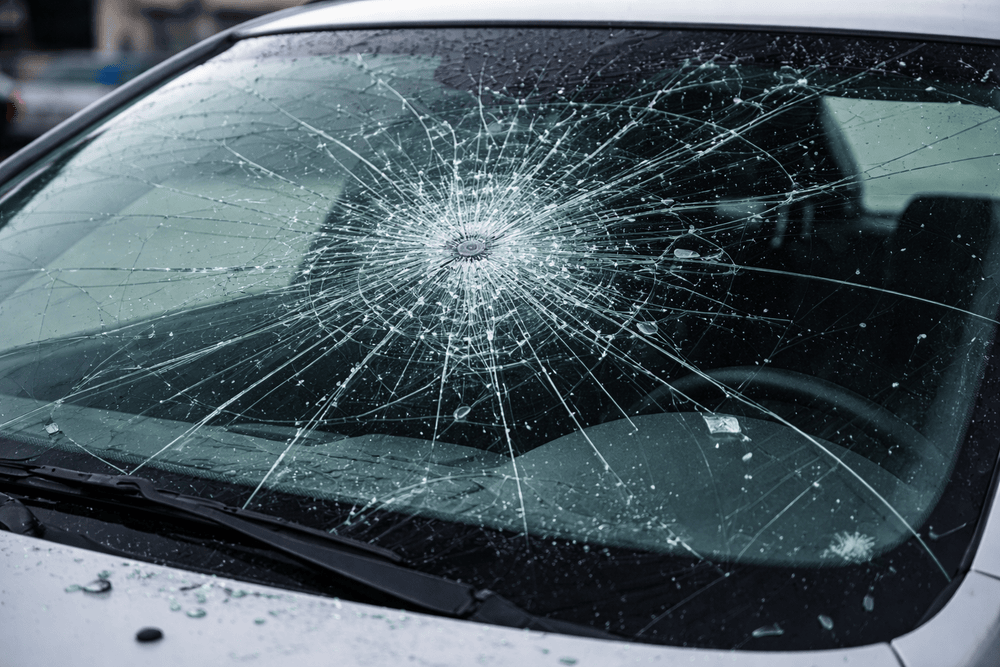
Weather Impact on Broken Windshield Repair
Everybody has been there. You flinch as you look at the glass and notice a small, seemingly unimportant chip. For a while, it seems small enough to ignore. You may even promise yourself that you’ll fix it when you have some free time or next month. Unfortunately, when it comes to auto glass damage, time is rarely in your favor. Even while that chip might appear steady right now, your car’s surroundings are always changing. The weather is one of a weakened windshield’s worst adversaries. Temperature changes, moisture, and even direct sunlight greatly influence the rate at which a little imperfection becomes a serious safety risk.
Get An Auto Glass Replacement Quote Now 866.278.7417

Windshield Replacement & Repair
Our competitors push you into going to their shop to get your glass fixed-making it cheaper for them. We make it easier for YOU to get back on the road by offering free mobile repairs at your home or work. With our free mobile services servicing the entire Orange County & Los Angeles area, we can often handle your windscreen replacement the same day! So the next time you need a windshield replacement, give us a call.
Talk to a Windshield Replacement Specialist Now 866.278.7417

Calibration
Calibration is the process of returning a vehicle’s ADAS to OEM specifications. Calibration is necessary after a new glass installation, particularly a windshield with a camera mounted to it, to ensure that the ADAS features continue to function properly despite having been moved during installation. If a car’s ADAS is not properly calibrated, the system may not function safely. A misaligned camera could jeopardize the functionality of the system and lead to dangerous driving or accidents, so it is crucial that the cameras are aligned perfectly, which is what windshield calibration ensures.
Talk to a Calibration Specialist Now 866.278.7417

Fleet Auto Glass Repair
We provide expert auto glass repair and windshield replacement services for commercial fleets of all sizes. We are experienced with all manufacturers and machine types of domestic or foreign cars, trucks, vans, or commercial vehicles, including heavy equipment. Our same day mobile auto glass and windshield repair service will enable you to get back on the road faster and start saving you time and money instantly. Give us a call today! We are here to help!
Talk to a Fleet Auto Glass Specialist Now 866.278.7417
The Science of Glass and Stress
You must first comprehend how auto glass functions to comprehend how weather impacts your windshield. Laminated safety glass is used to make modern windshields. The structure is made up of two glass layers with a layer of vinyl (polyvinyl butyral) positioned between them.
Because of this design, in the event that the glass breaks, it will stay together instead of breaking into jagged pieces. Glass, on the other hand, reacts to thermodynamics.
Glass expands when heated and compresses when cooled, just like most other materials. These expansions and contractions are distributed uniformly over the surface of an unbroken windshield. The glass maintains its strength while the stress is dispersed.
This consistent surface tension is broken by a chip or crack. It produces a vulnerability. The stress concentrates precisely at that weak region as the glass expands or contracts as a result of temperature changes.
Both the surrounding unbroken areas and the damaged area are unable to withstand the physical movement of the glass. The quick “run” of a crack across the windshield, frequently accompanied by a loud cracking sound, is caused by this discrepancy in tension.
Summer Heat: The Silent Glass Killer While winter is often associated with severe weather, summer heat may be just as damaging to a windshield. The summer heat causes your car’s metal frame to heat considerably, which is then transferred to the glass’s edges. Meanwhile, the center of the glass absorbs direct solar energy.
The Greenhouse Effect: The temperature inside your automobile doesn’t remain at 90°F (32°C) when you leave it parked in the sun. The temperature can quickly rise to 130°F or higher. The windshield absorbs both the retained heat inside the cabin and the heat from the outside air.
This intense heat causes the glass molecules to vibrate and expand. The glass grows evenly if there is no damage. If a chip is present, the expansion forces the crack to enlarge by pushing on the damage.
The Danger of Thermal Shock
However, how we respond to the heat is more dangerous in the summer than the actual heat itself. The first thing that comes to mind when you get into a hot automobile is to turn on the air conditioning. Thermal shock is the result of this.
When severe temperature variations happen in separate areas of the glass at the same time, thermal shock occurs. When you strike 150°F glass with 40°F air from the air conditioner vents, the glass’s inner layer quickly shrinks while the outside layer stays inflated due to the heat.
The windshield is under a tremendous deal of stress due to this push-and-pull force. If there is a chip in the AC’s impact zone, there is a very high chance that it will spread right away.
Winter Problems: Ice and Contraction: Winter presents a unique set of difficulties that are just as harmful to damaged car glass. The rule that materials contract in cold temperatures also applies to glass. The windshield gently contracts as it cools.
Increased Brittleness: Lower temperatures cause glass to become more fragile. Surface tension produced by the glass’s contraction pushes at whatever damage is already present.
In essence, a chip raises stress levels. A tiny bump in the road or shutting the car door too forcefully can create enough vibration to turn a chip into a full-blown crack, as the glass constantly remains under tension to pull apart in freezing temperatures.
The Freeze-Thaw Cycle: During the winter, moisture plays a big role. Water can leak into the tiny cracks of a windshield chip when it rains or snows. That trapped water turns to ice if the temperature falls below freezing during the course of the night.
When water freezes, it expands, which makes it special. The expanding water in a crack acts as a wedge, pushing the glass from the interior outward. This microscopic wedging further weakens the structure, intensifying the damage and complicating effective healing.
Do you have a Question?
Get An Auto Glass Replacement Quote Now 866.278.7417
The Defroster Conundrum
Thermal shock is a significant concern in winter, just as it is in summer. Drivers frequently turn on the defroster at its maximum heat setting as soon as they wake up to a frozen windshield. This method directs hot air onto ice-cold glass.
Extreme stress is produced by the hot area’s quick expansion against the cool glass around it. Industry research indicates that applying a defroster to a damaged windshield during cold weather greatly raises the likelihood that the crack may expand in a matter of minutes.
How Weather Affects the Repair Process Weather not only ruins glass, but it also determines when and how a technician can repair it. A specific resin is injected into the chip or crack in a windshield, and ultraviolet (UV) light is used to fix it. The environment has a significant impact on this process.
Temperature and Viscosity of Resin: The resin used for repairs is a chemical fluid that must have a certain viscosity in order to correctly flow into a chip’s microscopic crevices.
The resin may get too thick to flow properly in cold weather. The repair will be poor and obvious if it does not fill the tiny spaces in the break. Before beginning the repair, technicians frequently need to properly warm the resin and glass to a certain temperature range.
In Hot Weather: The resin may cure too soon before it has completely repaired the damage if the windshield is overheated. Additionally, heat might make the resin overly thin. To guarantee a satisfactory binding, skilled technicians must chill the glass to a controllable temperature, often between 60°F and 90°F.
Barriers to Moisture
Wet windshields cannot be fixed. The resin does not combine with water since it is hydrophobic. Moisture in the fracture (from rain, snow, or humidity) will prevent the glue from sticking to the glass.
If you try to fix a wet windshield, the patch will be unsuccessful, appear hazy, and eventually crack anew. Before applying resin, technicians must use drying tools to remove any moisture from the break. During rainy seasons, the moisture makes mobile repairs challenging and frequently necessitates bringing the car into a shop or covered garage.
Sunlight and Curing: Direct sunlight may actually work against the resin throughout the repair process because it uses UV light to cure.
The epoxy will set too quickly on the surface and leave air spaces underneath if sunlight strikes it before it has completely entered the chip. To ensure that the resin flows completely before using their curing light to harden it, technicians frequently employ UV shields to block the sun while they operate.
Tips to Protect Your Windshield Until Repair
There are a few things you may do to lessen the impact of weather if you see damage but are unable to visit a shop right away: Parking in a garage or shade helps keep your car’s temperature more consistent by shielding it from the sun and chilly air.
Steer clear of drastic temperature changes by not turning on the air conditioner or defroster. Allow the vehicle to gradually warm up or cool down. If at all feasible, turn the air vents away from the glass.
Cover the Chip: To keep moisture and dirt out of the chip’s crack, cover it with a little piece of transparent tape. This keeps the region clean, increasing the likelihood of a successful repair later on, but it doesn’t stop the fracture from expanding.
Make Repair Your Top Priority: The best defense is prompt action. Compared to a complete windshield replacement, a chip repair is far quicker and less expensive.
Common Questions: Is it possible to repair my windshield while it’s raining? In general, no. For the resin to adhere to the glass, the damaged area needs to be totally dry. To ensure that the moisture is removed from the crack before the repair starts, the car must be transported to a dry, covered location, such as a garage or repair shop, if it is raining.
After a repair, how long must I wait to drive in the rain? It is instantly waterproof after a skilled repair is finished and the glue has dried. After the service is complete, you can usually drive in the rain or wash your car.
Are windshields more likely to break in colder climates? Extreme cold makes laminated glass more brittle and prone to further cracking upon contact, even though modern laminated glass is made to resist breaking into hazardous shards. Significant damage is more likely to result from a small stone striking a windshield on a chilly day than from the same stone striking a windshield on a warm day.
Don’t Let the Weather Decide: Although your windshield is an engineering marvel, it has limitations. Natural forces, such as the blazing summer heat or the icy winter frost, are always trying to undermine the structural soundness of glass that has been weakened.
What begins as a small aesthetic irritation can rapidly develop into a serious safety concern that necessitates a complete, costly replacement. Addressing chips and cracks as soon as they emerge is the best course of action.
You may see that “waiting for better weather” is a bad tactic if you understand the physics at work. As long as you get it in the hands of a professional who is weather-aware, the optimum weather for a windshield repair is whatever it is today.
Comprehending Windshield Repair
Even while a tiny chip in your windshield might not seem like much, if you ignore it, it can rapidly become a big issue. The weather affects the durability and lifespan of repairs made to your car’s glass, which is always exposed.
Environmental elements, such as intense summer heat waves and unexpected downpours, might weaken your windshield’s structural integrity. Maintaining a safe car requires an understanding of how heat and moisture affect glass and the resin used to mend it.
This guide examines how weather affects windshield damage, the importance of scheduling, and how to make sure your repairs last.
How Heat Affects Windshield Damage: One of the main threats to auto glass is temperature variations. When heated, glass expands, and when cooled, it contracts. Even though this expansion is typically minuscule, it significantly strains any windshield flaws that may already exist.
The Thermal Stress Factor: The inside temperature of your car can soar on a hot day when it is exposed to the sun. Thermal shock results from the abrupt shift in temperature when you turn on the air conditioner as soon as you enter. While the inner layer of glass cools quickly, the exterior layer stays hot.
This stress looks for a release point if there is a chip or crack. The outcome is frequently the “running” of a crack, in which a tiny star break or bullseye abruptly crosses the driver’s field of vision.
Heat and Repair Resin: Heat has an effect on the actual repair procedure. To repair a windshield, a specialty glue is injected into the damaged area. For this resin to adhere to the glass, it must cure completely.
During Repair: If the resin is exposed to direct UV radiation before it has had time to completely penetrate the crack, excessive heat may cause it to cure too quickly. To control this issue, professional technicians frequently operate indoors or with sunshades.
Post-Repair: Premium resin is made to resist high temperatures after it has dried. However, if the curing process wasn’t done correctly, intense heat right after a do-it-yourself repair might occasionally weaken the connection.
The Effects of Moisture and Rain
Another powerful enemy of broken windshields is water. The safety laminate that sits between the glass layers is not water-resistant, but the glass itself is.
Contamination of the Break A polyvinyl butyral (PVB) layer sits between two layers of glass to form a windshield. The outer layer of your windshield is frequently broken when a rock strikes it. Water may flow into that crack if it rains.
Water carries minerals, road oils, and grime. If these impurities become embedded inside the break, they can obscure the glass and make a clean repair nearly impossible. For the repair adhesive to adhere properly, the surface must be clean; unclean, wet cracks produce weaker, more noticeable repairs.
Freezing and Expansion: The combination of moisture and freezing temperatures causes glass to fracture, although rain alone does not. When water enters a chip and the temperature falls below freezing, the water becomes ice.
Water expands by about 9% when it freezes. Overnight, this expansion transforms a tiny chip into a big, irreparable crack by acting as a wedge to force the glass apart.
Do you have a Question?
Get An Auto Glass Replacement Quote Now 866.278.7417
Durability of Professional Windshield Repairs
Many car owners are concerned about how long the repair will last when their windshield is damaged. Will it endure? How sturdy is it compared to the original glass?
Structural Integrity: A skillfully performed professional repair restores the windshield’s structural integrity. The resin is designed to replicate the physical and visual characteristics of glass. It stops the crack from widening by reinforcing the glass after it has dried.
A successful repair should last the windshield’s lifespan in terms of durability. It is made to resist weather, temperature fluctuations, and typical driving vibrations without breaking down.
Visual Clarity vs. Strength: It’s critical to differentiate between visibility and durability. The main objective of a structural repair is to keep the glass together. Contemporary methods can enhance a chip’s aesthetic appeal by 60% to 90%, but some scarring may still be visible.
A slight scar indicates that the restoration is adequate. Even minor visual flaws won’t affect the longevity if the resin has been injected and cured correctly.
Best Practices for Weather Protection
You can’t control the weather, but you can take steps to protect your windshield before and after repairs.
Cover the Chip: As soon as the chip is damaged, cover it with a little piece of clear tape. This keeps water and debris out of the crack until it can be fixed. This is a stopgap measure, not a permanent solution.
Park in the Shade: By avoiding direct sunlight, you can lower the temperature of the glass and lessen the chance that thermal stress will cause the crack to spread.
Avoid Sudden Temperature Changes: Instead of turning the defroster on high heat right away in the winter, warm your car gradually. Before turning on the air conditioner in the summer, roll down the windows to allow heat to escape.
Repair Early: Addressing the problem right away is the greatest approach to guarantee durability. The longer you leave a chip, the more susceptible it becomes to deterioration from rain, dirt, or temperature changes.
Keeping You Safe While Driving: Repairing a windshield is a science that strikes a balance between chemistry, physics, and the environment. As long as you take prompt action, modern repair methods offer long-lasting solutions, even though heat and rain pose serious risks to shattered glass.
Don’t let the weather determine how safe your car is. You can save the expense of a complete replacement and drive with confidence by knowing how the weather affects your glass and taking proactive measures to prevent damage from moisture and extreme temperatures.
Mobile Safe Auto Glass
14241 E Firestone blvd suite 400,
La Mirada, CA 90638
Phone: (562) 608-1154
Toll Free: 1 866 278 7417
Mail: sales@mobilesafeautoglass.com
Get a FREE QUOTE today! You can get a free quote and schedule 24/7 using this free quote wizard.
Mon – Fri 8am – 5pm
Saturday 8am – 1pm
Sunday Closed