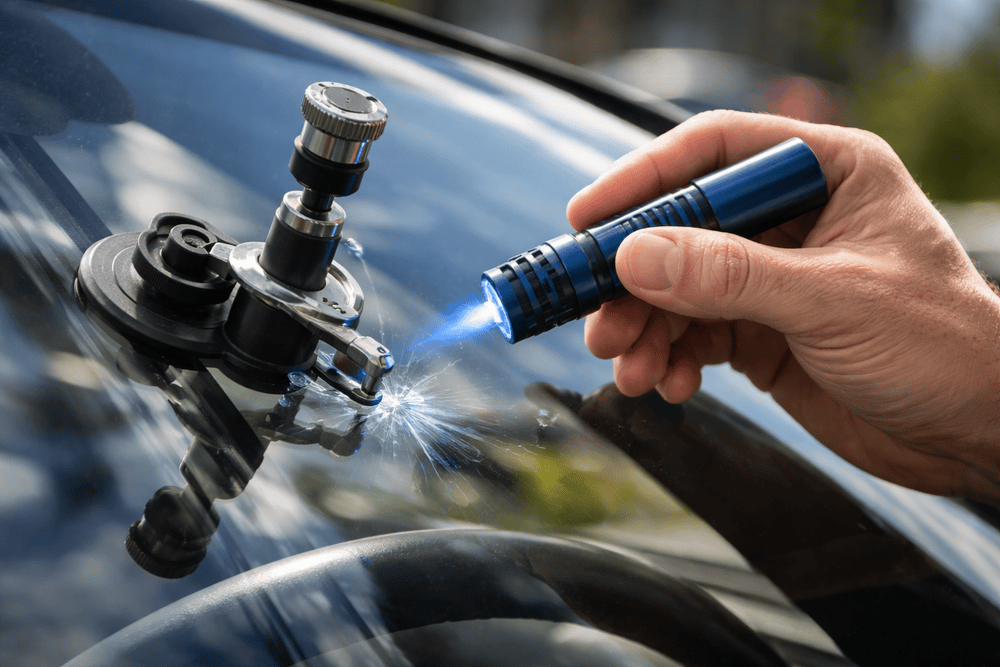
At Home Windshield Repair vs Local Repair Shops
A terrible chip is directly in your line of sight when a stray pebble pops up from the truck in front of you. It’s unpleasant, it’s unattractive, and if left alone, it can spiderweb into a big crack that demands a full windshield replacement. Now you confront a decision. Would you consider repairing it yourself in the driveway after purchasing a $15 repair kit online? Alternatively, do you take it to a qualified car glass shop? Both options have their benefits. While professional repairs offer experience and assurances, do-it-yourself kits are affordable and practical. This guide helps you choose the best option for your car (and your pocketbook) by weighing the benefits, drawbacks, expenses, and dangers of doing windshield repair at home versus going to a nearby business.
Get An Auto Glass Replacement Quote Now 866.278.7417

Windshield Replacement & Repair
Our competitors push you into going to their shop to get your glass fixed-making it cheaper for them. We make it easier for YOU to get back on the road by offering free mobile repairs at your home or work. With our free mobile services servicing the entire Orange County & Los Angeles area, we can often handle your windscreen replacement the same day! So the next time you need a windshield replacement, give us a call.
Talk to a Windshield Replacement Specialist Now 866.278.7417

Calibration
Calibration is the process of returning a vehicle’s ADAS to OEM specifications. Calibration is necessary after a new glass installation, particularly a windshield with a camera mounted to it, to ensure that the ADAS features continue to function properly despite having been moved during installation. If a car’s ADAS is not properly calibrated, the system may not function safely. A misaligned camera could jeopardize the functionality of the system and lead to dangerous driving or accidents, so it is crucial that the cameras are aligned perfectly, which is what windshield calibration ensures.
Talk to a Calibration Specialist Now 866.278.7417
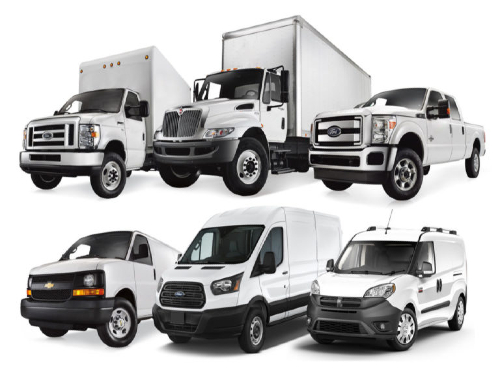
Fleet Auto Glass Repair
We provide expert auto glass repair and windshield replacement services for commercial fleets of all sizes. We are experienced with all manufacturers and machine types of domestic or foreign cars, trucks, vans, or commercial vehicles, including heavy equipment. Our same day mobile auto glass and windshield repair service will enable you to get back on the road faster and start saving you time and money instantly. Give us a call today! We are here to help!
Talk to a Fleet Auto Glass Specialist Now 866.278.7417
Knowing About Windshield Damage
You must know what you are mending before you can decide how to solve it. Certain problems are only for experts, and not all damage is created equal.
The “Fixable” Chips: Small chips are the most popular candidates for repair. These typically occur when debris strikes the glass and removes a little piece without getting through the inner protective layer. Typical kinds include:
Bullseye: A circular break with a pit in the center.
Star: A break with tiny cracks spreading outward from the core.
Half-Moon: Not exactly round, but equivalent to a bullseye. Damage is often repairable if it is less than a quarter in size and out of the driver’s direct line of sight.
When Replacement Is Your Only Choice: Repair is probably not an option if the damage extends to the windshield’s edge or if the crack is longer than three inches. The glass needs to be completely replaced because its structural integrity has been weakened. You need a professional in this situation; do-it-yourself kits won’t help.
At-Home DIY Windshield Repair: The DIY method has a lot of appeal. Fixing things yourself offers you a feeling of empowerment, and the cost is competitive.
How DIY Kits Operate
Most consumer-grade repair kits use a bridge device and a resin injector. You clean the region, center the device over the chip, and then inject a curable resin into the break. The resin fills the vacuum, gluing the glass together. You scrape off the excess resin when it has dried, which is often accomplished by exposure to sunlight or UV light.
The Benefits of Do-It-Yourself: Cost-Effective: This is the major draw. You may pick up a repair kit for $10 to $20 at an auto parts store or online. Compared to a retail visit, the savings are significant.
Convenience: You don’t need to wait in a lobby or make an appointment. You may execute the windshield repair on a Saturday morning in your driveway.
Speed: The actual procedure generally takes less than an hour from start to finish.
The Cons of DIY: Quality Variance: Consumer-grade resin is usually lower quality than what professionals use. It can darken with time or fail to attach as strongly.
User error: Applying the proper amount of pressure requires skill. Push too hard, and you can turn a small chip into a large crack.
No Warranty: If the fix fails a week later, you have no recourse. You’re out the money for the kit, and now you likely need a professional repair or replacement anyhow.
Visual Clarity: DIY repairs often leave a little apparent imperfection. Even though the glass is bonded, it may not appear perfectly clear.
Do you have a Question?
Get An Auto Glass Replacement Quote Now 866.278.7417
Professional Local Repair Shops
Taking your automobile to a professional auto glass business entails a bit more logistics, but it comes with peace of mind.
The Professional Process: Technicians utilize sophisticated equipment to generate a vacuum over the damaged area, sucking out all air and moisture before injecting high-grade resin. To ensure a solid, long-lasting bond, they also use UV lamps to immediately cure the resin.
The Benefits of Expert Repair: Skill: Every day, technicians repair dozens of windshields. They know just how to handle different types of chips and glass.
Better Materials: Compared to store-bought kits, stores employ commercial-grade resins that offer superior structural stability and are resistant to yellowing.
Repairing a windshield is often covered by insurance coverage, and there is typically no deductible associated with this coverage. A professional repair may often come with no out-of-pocket expenses.
Reputable stores offer warranties for their products. Whenever the chip becomes larger after they have repaired it, they will typically use the money that was spent on the repair toward the purchase of a new windshield.
The Drawbacks of Expert Repair: The cost of a professional chip repair, without insurance coverage, can range from $60 to $150.
Time Commitment: You must either make arrangements for a mobile technician to meet you (which may require paying a service fee) or drive to the business and wait.
The Verdict: Which Should You Pick? Your priorities, your financial situation, and your level of trust in your work will all influence your decision.
Don’t Wait to Decide: The most crucial element is speed, regardless of whether you decide to employ a professional or handle the repair yourself. A treatable chip can become an irrevocable crack overnight due to moisture, temperature changes, and driving vibrations.
If you suffer from glass coverage, it is imperative that you get in touch with a qualified specialist as soon as possible. It is imperative that you get a kit as soon as possible if you are prepared to pay for it yourself. That chip won’t fix itself, so don’t ignore it.
The Actual Price of Windshield Replacement
It’s a sound every driver dreads: the sharp crack of a pebble hitting glass on the highway. You watch helplessly as a tiny chip spiders out into a long, jagged line across your view. Your Tuesday afternoon has suddenly become a costly errand.
“How much is this going to cost me?” is nearly always the first thing you ask when searching for a replacement. Unfortunately, the solution is rarely simple. The make and model of your car, the kind of glass used, the intricacy of contemporary safety devices, and—most importantly—the supplier you select can all have a significant impact on windshield replacement costs.
We’ve gone into the data to give you a fair view of cost comparisons from major neighboring windshield providers. By understanding where the prices originate from and how different shops operate, you can make an informed selection that saves you money without compromising your safety.
The Elements That Affect the Price: Before comparing providers, it’s important to know why one quote is $250 and another is $900 for the same vehicle. Several variables are at play here.
OEM vs. OEE vs. Aftermarket Glass: The main pricing differentiator is the glass itself.
OEM stands for “original equipment manufacturer,” which refers to the same business that was responsible for the creation of the windshield that came with your vehicle. Everything about it is identical, even the branding of the product. It is the option that costs the most.
Original Equipment Equivalent, or OEE, is manufactured by a different manufacturer yet adheres to the same criteria as OEM. Although it lacks the car brand’s emblem, it fits and works just as well. The pricing is typically near the middle.
Aftermarket: Other businesses manufacture this glass. While it fulfills safety regulations, it can have subtle differences in tint, thickness, or fit. This type of glass is the most economical choice.
The Factor of ADAS
Advanced Driver Assistance Systems (ADAS) are a feature of modern cars. These include technologies like lane-keeping assist, automated braking, and rain-sensing wipers. The cameras and sensors that are often used by these systems are typically located directly behind the windshield.
Replacing the glass is insufficient if your vehicle has ADAS. The cameras must be recalibrated to ensure the safety systems work correctly. The cost of this recalibration can increase by $150 to $500 due to the need for certain tools and training.
Location and Mobile Service: Do you drive to the store, or do they come to you? Although mobile service is quite convenient, some providers include it in their regular pricing, while others charge a convenience fee for the journey.
Furthermore, regional differences in labor rates are substantial. Because of overhead expenses, a replacement in downtown San Francisco will inevitably cost more than one in rural Ohio.
Provider Pricing Comparisons: We have grouped the pricing models of the most prevalent types of providers you will come across, even though exact dollar amounts vary every day depending on supply chain factors.
The National Chains
The major players in the car glass industry are national chains. They have huge buying power and globally identifiable branding.
Pricing Tier: Mid-to-High
The Pros: They are everywhere. They have the machinery to manage intricate ADAS recalibration internally, and their scheduling systems are typically flawless. For frequent travelers, the fact that their warranties are typically countrywide is fantastic.
Cons: The infrastructure and marketing are your responsibility. Compared to local stores, their base quotes frequently start higher.
Common Cost Structure: Without sensors, a typical windshield may cost between $350 and $450. With calibration, you are generally looking at $800+.
The Local Independent Shops: These are the “Auto Glass & Tint” establishments in your community.
Pricing Tier: Low-to-Mid
Advantages: When it comes to prices, independent stores are frequently the most competitive. Compared to national chains, they have reduced overhead and are ready for your business. Many will give cash discounts or waive insurance deductibles (where permitted).
Cons: There are differences in capabilities. You might need to go to a dealership later because some smaller stores do not have the technology to adjust ADAS. Warranties are normally confined to that specific region.
Common Cost Structure: You might obtain bids for non-sensor windshields as cheap as $200 to $300.
Do you have a Question?
Get An Auto Glass Replacement Quote Now 866.278.7417
The Dealership
Returning to the dealer is often the first instinct for new automobile owners.
Tier of Pricing: High
Advantages: OEM glass is guaranteed. The technicians possess the necessary equipment for accurate sensor calibration and are experts in the particular brand of your car.
Cons: It is typically the most costly option. Dealerships have higher labor costs.
Common Cost Structure: You should budget between 20% and 50% more than independent stores. A sophisticated replacement on a luxury vehicle might easily reach $1,200.
Hidden Fees to Watch Out For: When you contact various companies for quotations, the first number you receive may not reflect the final amount on the invoice. Inquire about the following possible add-ons to obtain a real “apples-to-apples” comparison:
Molding and Clips: During installation, it’s frequently necessary to repair the rubber molding surrounding your windshield as well as the clips holding it in place. This is included in some quotations, but it can cost an additional $20 to $50 if it is added as a line item later.
Disposal Fees: It costs money to get rid of old, shattered glass. Some providers charge a disposal fee ranging from $10 to $25.
Fees for Mobile Services
If you are booking a mobile appointment, inquire expressly if there is a transport charge. Some companies offer “free mobile service,” but check if their base pricing is greater to compensate.
Insurance versus. Out-of-Pocket: Deciding whether to file a claim depends largely on your deductible and your unique policy. It frequently doesn’t make financial sense to file a claim for a normal windshield repair if you have a $500 or $1,000 deductible.
It will be on your record that you have filed a claim, and you will be liable for paying the whole cost of the repair. If, on the other hand, you reside in a state such as Florida, Kentucky, or South Carolina, the state regulations require that insurance carriers waive the deductible for windshield repairs if you have comprehensive coverage.
Going through insurance is the logical option in these situations. A $500 deductible is justified for complicated replacements, including ADAS recalibration, that exceed $1,000.
How to Get the Best Deal: You don’t have to accept the first price you see. Here is an approach for securing the best rate:
Gather Three Quotes: Call one national chain, one small independent business, and your dealership. This provides a starting point for the market rate.
Request “Out the Door” Cost: Make sure the quote covers labor, taxes, molding, disposal, and, if necessary, calibration.
Find Out About Discounts: Inquire about senior, military, or AAA discounts.
Look for coupons: Local stores frequently post promotions on their Facebook pages or websites.
Check the Warranty: If the windshield leaks the next time it rains, a cheap installation will cost a lot of money. Make sure the work is guaranteed against leaks and flaws.
Commonly Asked Questions
Would it be possible to patch a chip rather than having to replace the whole windshield? The majority of the time, yes. In most cases, the chip may be filled with resin if it is less than a quarter in size and is not directly in the line of sight of the driver. The resin costs substantially less (typically under $100 or free with insurance) and maintains the manufacturing seal of the original glass.
What’s the turnaround time for a replacement? About an hour is needed for the actual process. But it takes time for the adhesive to cure, or dry. Usually, you have to wait a further hour before operating the vehicle. If recalibration is necessary, extend the procedure by one to two hours.
Will my car’s resale value be impacted if I replace my windshield? Generally, no. A shattered windshield significantly lowers resale value compared to a new one. Non-OEM glass, however, may have a minor negative effect on the value for purist buyers if you own a high-end luxury or historic vehicle.
When using aftermarket glass, is it safe to do so? In point of fact. It is required by the Department of Transportation that all windshields sold in the United States fulfill certain safety standards.The variations are cosmetic or related to fit and finish, not crash safety.
Making the Right Choice for Your Vehicle: Ultimately, the “best” provider isn’t merely the cheapest one. It is the one that strikes a balance between price, practicality, and quality.
A local independent shop that uses aftermarket glass is a wonderful method to save money if you drive an older vehicle without safety sensors. Paying a little bit extra for a provider with authorized calibration equipment is an investment in your safety if you drive a brand-new SUV equipped with cameras and lane-assist technology.
Prevent a shattered windshield from ruining your week. Armed with this pricing knowledge, you can easily review the quotes and resume driving with a clear perspective.
Mobile Safe Auto Glass
14241 E Firestone blvd suite 400,
La Mirada, CA 90638
Phone: (562) 608-1154
Toll Free: 1 866 278 7417
Mail: sales@mobilesafeautoglass.com
Get a FREE QUOTE today! You can get a free quote and schedule 24/7 using this free quote wizard.
Mon – Fri 8am – 5pm
Saturday 8am – 1pm
Sunday Closed