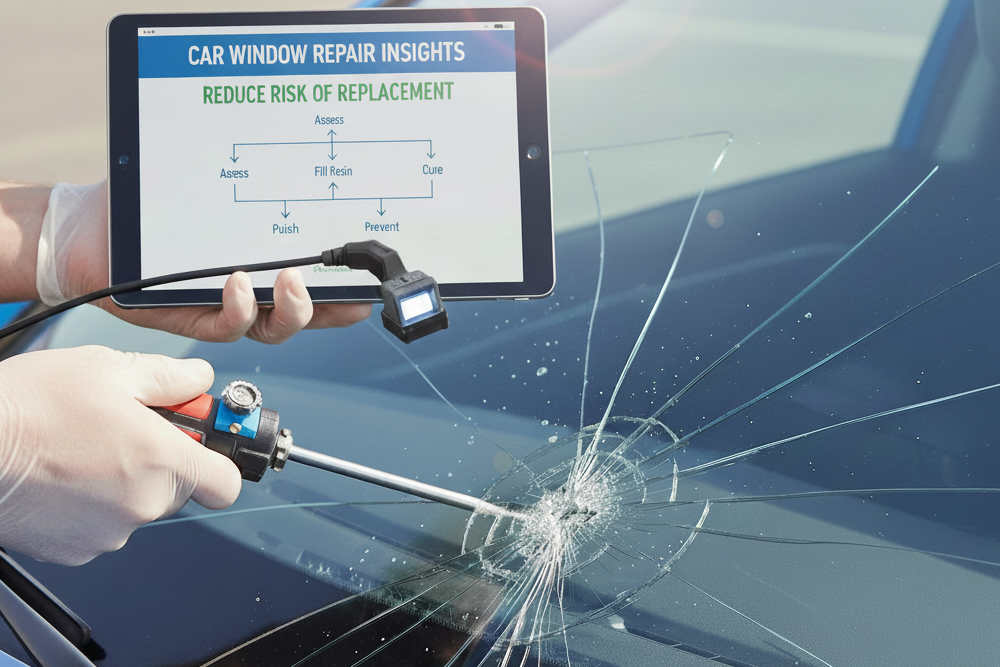
Window Repair Insights that Reduce the Risk of Replacement
If you choose to ignore a little chip on the windshield of your vehicle, it may appear to be a minor irritation; nevertheless, this might lead to more significant difficulties in the future. It is possible for that little fracture to swiftly widen, which would put both your visibility and the structural integrity of your car at risk. Assuming that a replacement is the sole alternative is a common misconception among drivers; nevertheless, a timely repair may frequently save you time, money, and frustration. The ability to recognize whether a repair is feasible is essential for each person who owns a vehicle. If you take prompt action, you can prevent a little problem from developing into a significant expenditure.
Get An Auto Glass Replacement Quote Now 866.278.7417

Windshield Replacement & Repair
Our competitors push you into going to their shop to get your glass fixed-making it cheaper for them. We make it easier for YOU to get back on the road by offering free mobile repairs at your home or work. With our free mobile services servicing the entire Orange County & Los Angeles area, we can often handle your windscreen replacement the same day! So the next time you need a windshield replacement, give us a call.
Talk to a Windshield Replacement Specialist Now 866.278.7417

Calibration
Calibration is the process of returning a vehicle’s ADAS to OEM specifications. Calibration is necessary after a new glass installation, particularly a windshield with a camera mounted to it, to ensure that the ADAS features continue to function properly despite having been moved during installation. If a car’s ADAS is not properly calibrated, the system may not function safely. A misaligned camera could jeopardize the functionality of the system and lead to dangerous driving or accidents, so it is crucial that the cameras are aligned perfectly, which is what windshield calibration ensures.
Talk to a Calibration Specialist Now 866.278.7417

Fleet Auto Glass Repair
We provide expert auto glass repair and windshield replacement services for commercial fleets of all sizes. We are experienced with all manufacturers and machine types of domestic or foreign cars, trucks, vans, or commercial vehicles, including heavy equipment. Our same day mobile auto glass and windshield repair service will enable you to get back on the road faster and start saving you time and money instantly. Give us a call today! We are here to help!
Talk to a Fleet Auto Glass Specialist Now 866.278.7417
Comprehending the Damage to Automobile Windows
It is not the case that every window damage is the same. In order to assess whether or not a repair is a realistic option, the major elements that are considered are the nature, extent, and location of the damage. In order to choose the most appropriate course of action, technicians evaluate these components.
Windshields are commonly made of laminated glass, which is composed of two layers of glass with a plastic interlayer. There are several types of damage that can occur to a protective windshield. The structure of the glass protects it from breaking into sharp shards when it is struck. Additionally, despite the fact that this design improves safety, it is still vulnerable to a variety of kinds of damage from road debris such as pebbles and gravel.
The following is a list of the most frequent forms of chips and cracks: Bullseye: This is a chip that is either round or cone-shaped, and it is often created by a direct hit from a round item such as a tiny stone. In the middle, it is black, and on the outside, it is transparent and round. In most cases, bullseye chips are simple to fix, provided that they are not very big.
Star Break: A star break is similar to a starburst in appearance and is characterized by a central impact point that is surrounded by minor fractures that radiate outwards. The repair of these can be more difficult than the restoration of bullseye chips, particularly if the radiating cracks are of a longer length.
Combination Break: This is a combination of a bullseye break and a star break, as the name of this type of break implies. It has a chip in the middle, and fractures radiate outward from that point. Due to the intricacy of a combination break, it is necessary to conduct a thorough evaluation in order to evaluate whether or not it is possible to repair it successfully.
A half moon, also known as a partial bullseye, is a chip that is round in shape and seems to be a bullseye that is only partially complete. It is often possible to fix them if they are of a small enough size.
A single line of separation in the glass is referred to as a crack. Although cracks might be little or long, they have a propensity to spread, particularly when there is a change in temperature or when there are vibrations from the road.
Regarding the procedure of repair, the nature of the damage is an important factor to consider. It is easy to repair chips that are straightforward and neat, such as a little bullseye. On the other hand, more intricate breakdowns that have several cracks require more specialized procedures.
How Often Is It Possible To Repair A Car Window?
Cost is not the only factor to consider when deciding between repair and replacement; safety and long-term durability are also important considerations. In order to arrive at this conclusion, specialists in the auto glass sector adhere to industry rules. They take into consideration the following three primary factors.
In the initial step of the repair process, a technician will determine the extent of the damage by analyzing the size of the chip or fracture. Chips: In general, a chip (such as a bullseye or star break) that is less than a quarter in diameter is an excellent candidate for repair. However, there are certain exceptions to this rule. During the process of restoration, a specialized resin is injected into the damaged region. This resin fills the void and restores the strength of the glass.
Cracks: Cracks that are shallow and solitary may frequently be mended. According to the general rule of thumb, a crack that is around six inches in length and shorter than a dollar note is likely to be able to be repaired. Because cracks that are longer are far more difficult to completely fix and frequently damage the structural integrity of the glass, it is safer to replace the windshield rather than attempt to repair it.
The Location of the Damage The location of the damage on the windshield is just as essential as the magnitude of the damage itself.
Line of Sight of the Driver All chips and cracks that are immediately in the line of sight of the driver are a big cause for worry. Even after a successful repair, there is still a possibility that the region that was fixed will have a tiny distortion or haze. This may cause the driver’s eyesight to be impaired, particularly when the weather is poor or when the driver is driving at night. For this reason, many car glass businesses will propose a complete replacement for any damage that occurs in this hazardous zone in order to guarantee the highest possible level of safety.
Damage that is placed close to the edge of the glass is an issue since it might cause the windshield to break. Cracks and chips in this region have the potential to undermine the overall structure of the glass, and they are more likely to spread rapidly as a result of the tension that is caused by the frame of the car. When it comes to reliability, replacement is typically the more dependable option. Repairs that are near to the edge may not be as effective or long-lasting.
It is also important to consider the extent of the damage caused by the hit. Polyvinyl butyral (PVB) is sandwiched between two layers of glass to form a windshield. The windshield is made up of three layers of glass. In order for a repair to be successful, the damage must have only pierced the exterior layer of the glass.
In the event that the impact was powerful enough to cause damage to both the exterior and inner layers of glass, or if it has damaged the PVB interlayer, it will not be able to restore those layers. To restore the windshield’s safety features, it is necessary to replace the complete windshield in certain circumstances.
Do you have a Question?
Get An Auto Glass Replacement Quote Now 866.278.7417
Reasons Why You Should Take Action Immediately
When it comes to a chipped windshield, time is of the essence, despite the fact that it is simple to put off car repairs that are not really significant. In the event that it is not handled, a little chip might develop into a significant problem.
A little chip creates a weak area in your windshield, which may be used to stop the spread of the disease. The tension that is caused by the glass as a result of everyday driving variables causes that minute fault to expand.
Changes in Temperature: The most significant cause of the problem is fluctuations in temperature. Using your air conditioner on a hot day will cause a temperature differential between the interior and outside of the glass, which will cause the glass to expand and contract because of the difference in temperature. Because of this tension, a chip may rapidly become a crack that is rather lengthy. When you use the defroster on your vehicle during the winter, the same thing happens for you in reverse.
Road Vibrations: Vibrations can be transmitted through the frame of your car by a variety of factors, including speed bumps, potholes, and even everyday driving on uneven roads. The windshield is subjected to pressure as a result of these vibrations, which encourages cracks to expand from the site of damage that was initially caused.
It is possible to prevent these variables from converting a minor problem that can be fixed into a problem that requires a complete replacement by mending a chip as soon as possible instead.
The risk of contamination is also present in an open chip, which is susceptible to contamination. It is possible for material such as dirt, dampness, vehicle wash chemicals, and other substances to enter the damaged region. Due to the presence of this pollution, it becomes significantly more challenging for the repair resin to effectively connect with the glass. A chip that is contaminated, regardless of how little it is, could not be repairable. If you act quickly, you may ensure that the chip will remain clean and fillable, which will increase the probability of a successful repair that will be almost undetectable.
What You Should Anticipate During the Process of Repair
It is a pleasant surprise that the process of repairing the windshield is so simple and quick. When performed by a professional expert, the task may often be finished in less than thirty minutes. Listed below is a detailed explanation of what takes place:
The first step in the preparation process is for the technician to clean the injured area, removing any debris, glass pieces, or moisture that may be present. Because of this, the resin will be able to attach correctly.
In order to create a vacuum, a specialized instrument is put over the chip. This apparatus generates a vacuum, which evacuates any air that may have become trapped within the crack. It is essential to continue with this step in order to ensure that the resin thoroughly fills the vacuum.
Injection of Resin: A transparent resin of superior grade is injected into the injured region while the area is under pressure. The resin fills the chip or fracture fully by flowing into every portion of it and filling it completely.
In order to cure and solidify the resin, the technician will utilize an ultraviolet (UV) light once the resin has been placed in its proper location. Restoring the strength and clarity of the windshield is accomplished through this procedure, which only takes a few minutes to complete and attaches the resin to the glass.
Putting the finishing touches on the resin: once the resin has set, any excess is scraped off the surface, and then the area is polished to give a smooth and transparent finish.
Restoring the structural integrity of the glass and making the damage almost completely vanish are both outcomes of a windshield repair that is performed correctly. There is a possibility that you will be able to make out a faint trace of the initial chip; however, it will be substantially less obvious and will no longer be a condition that might potentially spread.
The Reasons Why Delaying Auto Glass Repair Costs You a Lot of Money, From Chips to Cracks
It is the worst dread of any motorist to hear that definite and piercing crack sound. You are driving down the highway, going about your business, when a particle of gravel explodes from the vehicle in front of you and hits your windshield. You are completely unfazed by the incident. Examining the glass, you clench your teeth. After a cursory examination, it appears to be minuscule and of little consequence. It’s possible that you believe you can ignore it. When everything is said and done, it is hardly visible, and you have more significant expenditures to worry about at the moment.
However, despite the fact that this way of thinking is widespread, it is also financially risky. What may first appear to be a small irritation from a visual standpoint is, in reality, a ticking time bomb for your cash. Auto glass is subjected to continuous stress, and even a minor flaw can threaten the structural integrity of the entire pane. The problem will not disappear if you choose to ignore it; rather, you are allowing the damage to continue to spread.
The ability to act swiftly may turn a potentially catastrophic situation into a simple task. Between a speedy repair and a complete replacement, there is a substantial difference in the amount of money spent, the amount of time spent, and the seriousness of the hazards involved. If you have a better understanding of the mechanics behind auto glass damage, you will be able to make more informed decisions about both your vehicle and your finances.
How the Science of Spreading Explains Why Chips of a Small Size Grow
Glass has the appearance of being solid and immobile, yet in reality, it is highly temperamental. As a result of the influence of the surrounding environment, your windshield is continuously growing and contracting. When the glass is not broken, it is able to deal with these changes without any problems. After a rock chip has broken the surface tension, the environmental variables that were before destructive become destructive.
Thermal Stress: Differences in temperature are the most significant factor that can cause damage to automobile glass. On a morning when the temperature is below freezing, using your defroster will put strong heat onto the glass. This sudden change in temperature causes the glass to expand in a short amount of time. In the event that there is a chip, the tension will concentrate at that weak location, which will frequently result in the chip splitting into a lengthy fracture almost immediately. When it comes to the summer, the same concept applies; applying intense air conditioning to a windshield that has been roasted by the sun causes the same amount of stress.
In terms of physical vibration, every bump, pothole, and speed bump causes vibrations to travel through the frame of your vehicle. A significant portion of the energy is absorbed by your windshield, which is affixed to that frame. Should the windshield be damaged, it will not be able to transfer this energy adequately. With the passage of time, the vibrations that are experienced on a daily basis when driving will gradually (or occasionally abruptly) cause a little star to break into a web of fractures. After the crack has reached a certain length, which is typically equivalent to the size of a dollar bill, it is no longer possible to repair it.
Restoring versus Replacing: The Realistic Financial Situation
The price difference between repairing a chip in the glass and replacing the entire windshield is incomprehensible. Rock chips may be repaired in a straightforward manner by injecting a specialized transparent glue into the impact location. This glue will cure when exposed to ultraviolet light, which will join the pieces of glass back together and stop the break from growing further.
Chip repairs performed by a professional normally cost between $50 and $150, with the exact amount varying based on the business and the location of the customer. There are several insurance policies that offer extensive coverage, and many of them will even waive the deductible for repairs, which means that you will not have to pay anything out of pocket. Because they are aware that repairing an item is substantially less expensive for them than replacing it, insurance firms take this course of action.
The cost of replacement: in the event that the damage becomes more extensive, you will be required to replace the entire windshield. The price of the glass by itself might range anywhere from $200 to $500 for automobiles that are considered standard. On the other hand, the price can easily cross the $1,000 threshold for luxury automobiles or automobiles that have specialist glass (such as heated, acoustic, or rain-sensing glass).
The disparity in prices exemplifies the reason why delay is so very costly. The act of waiting a few weeks to see if the crack “gets worse” is practically the same as risking hundreds of dollars on the weather and the conditions of the road.
The Undetected Expenses of Contemporary Technology: ADAS Certification
Because of Advanced Driver Assistance Systems (ADAS), the penalty of delay is considerably higher for drivers of vehicles that are of a more recent model (specifically, those that were manufactured in 2016 or later). These are the safety features that direct you to stay in your lane, automatically apply the brakes in the event of an emergency, and change the speed of your cruise control system.
These systems often include cameras and sensors set right behind the windshield in order to monitor the vehicle. In the process of replacing the glass, you will relocate those cameras by a few millimeters at a time. Despite the fact that this may appear to be insignificant, a millimeter of misalignment can be quite hazardous for a computer that is computing distance at highway speeds.
When a windshield that is equipped with ADAS technology is changed, the system has to be recalibrated. This is why it is important for your wallet. Due to the complexity of this operation, specialist equipment and experts that have received training are required.
In order to do static calibration, a controlled environment and specified targets that are positioned at precise distances are required. Dynamic calibration requires the vehicle to be driven at predetermined speeds on roads that are clearly marked for a predetermined amount of time.
Additionally, the cost of the glass itself is increased by anywhere from $300 to $600 due to the obligatory calibration that is required. As a result of the fact that a chip repair does not disrupt the cameras, you can completely avoid this enormous additional price by repairing the damage before the glass has to be replaced.
Do you have a Question?
Get An Auto Glass Replacement Quote Now 866.278.7417
Your Windshield Is A Structural Component; Thus, Safety Should Always Come First
Safety needs to be the top focus, despite the fact that money is a significant motivation. The windshield serves a far wider purpose than simply preventing insects from getting into your mouth. It is an essential structural component of the safety cell that is installed in your car.
Up to sixty percent of the roof’s structural integrity is provided by the windshield in the case of an accident that causes the vehicle to roll over. If there is a substantial break in the glass, the probability of the roof collapsing is considerably increased since the glass is already fragile. Additionally, the passenger-side airbag will activate in the event of a front-end accident by rebounding off the windshield after it has deployed. In the event that the glass is damaged, the power of the airbag deployment might totally shatter the windshield. This would result in the airbag not being deployed correctly, which would result in the passenger not being protected.
Driving with broken glass also significantly reduces one’s visibility. Light can be refracted by cracks, which can result in a dazzling glare from the sun or from headlights approaching from behind at night. The loss of vision that occurs for a fraction of a second can be the deciding factor in whether or not an accident is successfully avoided.
Analysis of the Damage: When Should Repairs Be Made?
What is the best approach to determine if you can get away with a low-cost repair or whether you will have to bite the bullet and purchase a replacement? Glass technicians for automobiles often adhere to the following guidelines:
In terms of size, a chip or crack that is less than a quarter in size is usually always capable of being repaired. Depending on the technology that the shop employs, it is typically possible to repair anything that is around 6 inches in length and smaller than a dollar note. Replacement is often necessary for anything that is bigger.
It is required to repair the glass if the damage has pierced both the exterior and inner layers of the glass. This indicates that the structural integrity of the glass has been compromised.
When it comes to location, damage that is immediately in the line of sight of the driver typically requires replacement. Even when the repair is flawless, there is still a tiny distortion in the glass, which can be unpleasant to look at. Additionally, chips that are located on the extreme edge of the glass impair the link with the metal frame and have a tendency to spread rapidly throughout the windshield.
Questions That Are Frequently Asked:
If I get my windshield repaired, would I be able to drive my vehicle right away? In the majority of instances, yes. When exposed to ultraviolet light, the glue that is used for chip repairs cures very rapidly. The majority of mechanics will tell you that your vehicle is ready to be driven as soon as they offer you the keys to the vehicle. In order to prevent the windshield from shifting or leaking after a full replacement, it is often necessary to wait half an hour before driving in order to give the glue sufficient time to fully cure.
Is it possible that repairing the chip will entirely eliminate the damage? Not in every way. The restoration of structural integrity and the forestalling of further spread are the major objectives of a repair. In spite of the fact that the resin will substantially enhance the appearance—in many cases, it will make the imperfection 80–90% less noticeable—you could still notice a little hole or a mark that looks like a ghost where the rock impacted.
Does having a broken windshield make it unlawful to operate a vehicle? The laws differ from state to state and nation to country, but in general, the answer is yes. You may be issued a citation if a crack in your windshield obstructs the driver’s view or if it interferes with the operation of safety equipment (such as windshield wipers). In addition to the damage that has already been done, a ticket can sometimes cost as much as the actual repair itself.
Put An End To The Spread And Get Your Money Back
When it comes to vehicle glass, the economics are straightforward: timely action will repay you with savings. If you take the “wait and see” attitude, you are putting yourself in a position where you are vulnerable to increased costs, potential safety issues, and even legal difficulties.
Pay attention to the sound of the pebble hitting your glass the next time you hear it. Investigate the damage as soon as possible. Put in a repair appointment as soon as possible if you see a chip. Mobile glass services may frequently travel to your house or place of business, and the process of fixing the issue typically takes less than thirty minutes. If you take care of the problem while it is still relatively minor, you will be able to preserve the factory seal, maintain the calibration of your ADAS systems, and save the money you have worked so hard to earn.
Mobile Safe Auto Glass
14241 E Firestone blvd suite 400,
La Mirada, CA 90638
Phone: (562) 608-1154
Toll Free: 1 866 278 7417
Mail: sales@mobilesafeautoglass.com
Get a FREE QUOTE today! You can get a free quote and schedule 24/7 using this free quote wizard.
Mon – Fri 8am – 5pm
Saturday 8am – 1pm
Sunday Closed