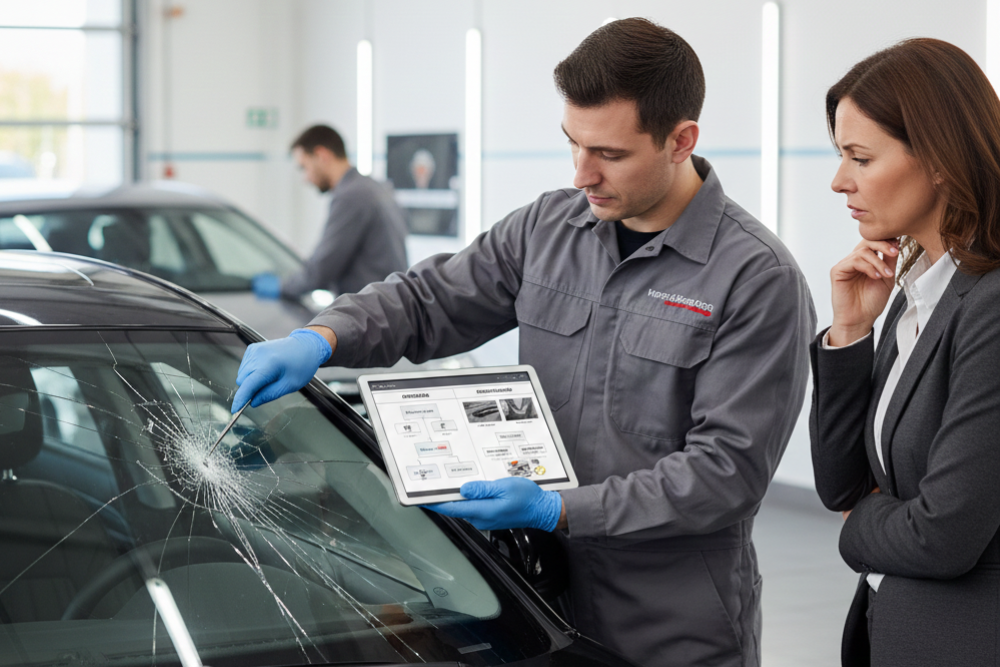
Window Repair Factors That Help Determine Fix or Replacement
More than just an eyesore, a broken or damaged window can jeopardize the comfort, energy efficiency, and security of your house. Many homeowners struggle with a crucial choice when they encounter window issues: should they replace the window entirely or just fix it? Occasionally a replacement is the more sensible and economical option in the long term, even though a temporary repair could seem like the simplest approach. You may save future difficulties, save money, and save time by knowing the difference. This guide will help you make an informed choice that best fits your house and budget by taking you through the key elements to consider when assessing your windows.
Get An Auto Glass Replacement Quote Now 866.278.7417

Windshield Replacement & Repair
Our competitors push you into going to their shop to get your glass fixed-making it cheaper for them. We make it easier for YOU to get back on the road by offering free mobile repairs at your home or work. With our free mobile services servicing the entire Orange County & Los Angeles area, we can often handle your windscreen replacement the same day! So the next time you need a windshield replacement, give us a call.
Talk to a Windshield Replacement Specialist Now 866.278.7417

Calibration
Calibration is the process of returning a vehicle’s ADAS to OEM specifications. Calibration is necessary after a new glass installation, particularly a windshield with a camera mounted to it, to ensure that the ADAS features continue to function properly despite having been moved during installation. If a car’s ADAS is not properly calibrated, the system may not function safely. A misaligned camera could jeopardize the functionality of the system and lead to dangerous driving or accidents, so it is crucial that the cameras are aligned perfectly, which is what windshield calibration ensures.
Talk to a Calibration Specialist Now 866.278.7417

Fleet Auto Glass Repair
We provide expert auto glass repair and windshield replacement services for commercial fleets of all sizes. We are experienced with all manufacturers and machine types of domestic or foreign cars, trucks, vans, or commercial vehicles, including heavy equipment. Our same day mobile auto glass and windshield repair service will enable you to get back on the road faster and start saving you time and money instantly. Give us a call today! We are here to help!
Talk to a Fleet Auto Glass Specialist Now 866.278.7417
Evaluating the Damage
Examining the damage in detail is the initial stage in your decision-making process. While straightforward remedies may resolve some issues, others point to a more significant, underlying problem that repair cannot resolve.
When to Think About Repairing Your Windows: Often, a simple fix can extend the life of your current window without requiring a complete replacement. Your window can probably be fixed if you observe:
Broken or Cracked Glass: One of the most frequent window issues is a single pane of broken glass. The majority of the time, a glazier can easily replace the broken glass without touching the frame, making the repair quick and inexpensive.
Small-scale frame damage It is frequently possible to fix small cracks, rot, or warping on a wooden window frame. To restore the frame’s integrity and beauty, a specialist can refinish it, fill up cracks, and smooth down rough areas.
Hardware Problems: Crank, latch, or lock issues are usually simple to resolve. It is typically possible to replace each of these parts separately rather than installing an entire new window unit.
Drafts from Worn Weatherstripping: Worn weatherstripping is frequently the cause of drafts. The energy efficiency of your window may be instantly increased by replacing this seal, which is an easy do-it-yourself project or a short effort for a professional.
When Replacing Windows Is the Better Choice
Sometimes, the damage is too extensive or severe for a successful repair. In these cases, it makes more sense to invest in a replacement. Think about getting a new window if you come across:
Significant Frame Rot or Damage: A straightforward fix won’t be sufficient if a vinyl or aluminum frame is badly deformed or cracked, or if a hardwood frame has substantial rot. The structural integrity of the window is jeopardized by widespread degradation, which can also result in other problems like water leaks.
Failure of a Double or Triple Pane Seal: Do your windows exhibit moisture accumulation between the panes, or do they appear foggy? This indicates that the seal has broken, letting the insulating gas leak out. It’s usually more feasible to replace the complete window, especially if it’s an older type, even though the glass unit can occasionally be changed.
Major Water Damage: There is a major issue if there is noticeable water leaking around the window, as evidenced by discolored walls, spongy drywall, or the growth of mold. To adequately fix the leak and shield your house from structural harm, a replacement is required.
Operating Difficulty: A warped frame, sinking foundation, or a damaged sash may be the cause of your window’s near-impossible opening and closing. These structural problems frequently call for a new window since they are too complicated to resolve.
Do you have a Question?
Get An Auto Glass Replacement Quote Now 866.278.7417
Efficiency in Energy Use and Your Utility Bills
The insulation of your house is greatly aided by your windows. Higher heating and cooling costs might result from energy loss from older, inefficient windows.
One of the best methods to increase the energy efficiency of your house is to replace your single-pane windows with contemporary double- or triple-pane units. Your house will stay warmer in the winter and cooler in the summer thanks to these windows’ Low-E coatings, which reflect heat, and insulating gases like argon.
An ancient window’s basic insulating qualities won’t be altered, even though a repair could stop a draft. Purchasing energy-efficient new windows is a smart move that will eventually pay for itself if your objective is to cut your energy use and utility costs.
Your Windows’ Age and General Condition
The age of a window is important, even if it has just slight damage. Like every component of a house, windows have a certain lifespan. The majority of windows are made to endure 15–20 years. Your windows have probably become less effective and more prone to issues if they are getting close to or have passed this age.
Investing in a replacement window is frequently more cost-effective than fixing an outdated window that could break again shortly. Modern technology, superior materials, and enhanced performance are all features of new windows that will last for many years.
Beauty and Property Value: Windows have a big influence on the overall aesthetics and curb appeal of your house. Replacing your windows may have a significant impact whether you’re wanting to improve the decor of your house or are planning a remodel. Your home’s look may be updated with new windows, which can also raise its market worth.
Repairing a window won’t change its appearance, but it can bring back its functionality. A replacement window gives you the chance to select new frames, colors, and designs that improve the aesthetics of your house if your existing windows are out of style or don’t fit your preferred architectural style.
Selecting the Best Option for Your House
A thorough assessment of the damage, cost, energy efficiency, and age of your windows is necessary to decide between window repair and replacement. A replacement is frequently the superior long-term option for significant damage, low energy performance, and old age, even while a repair is appropriate for small, isolated problems.
You can make a choice that safeguards your investment, improves the comfort of your home, and gives you peace of mind for years to come by taking the time to evaluate your circumstances and take into account all the relevant considerations. Speaking with a qualified window specialist might provide you the clarity you need to proceed if you’re still unclear.
Important Things to Look for Before Changing Your Car: Selecting the ideal solution or improvement for your car may be thrilling. The options are practically limitless, whether you want to add new technologies, increase performance, or enhance fuel efficiency. However, it’s important to make sure your car is in top shape before making any big adjustments. A comprehensive technical assessment may ensure that you get the most out of your investment, save you money, and avoid future difficulties.
The goal of a pre-modification check-up is to provide a baseline of health. Consider it similar to seeing a doctor before beginning a new exercise program. To track your development and prevent injuries, you must know where you are coming from. Ignoring this stage might result in unsatisfactory outcomes since new components may not function as intended due to underlying problems. In certain situations, it may potentially result in additional harm to your car.
Before you decide on a new solution for your car, this guide will take you through the crucial technical inspections that a trained technician should carry out. Knowing these procedures will help you choose the best vehicle and talk to your mechanic.
The health of the Engine and Powertrain
The engine is the most important component to check because it is the heart of your car. Any new performance solution will subject the engine and its associated parts to increased demands. You cannot compromise on keeping them in excellent condition.
DTCs, or diagnostic trouble codes: The first step should always be a thorough scan of the car’s On-Board Diagnostics (OBD-II) system. This system monitors almost all of your car’s essential components. When it detects an issue, it frequently activates the “check engine” light and generates a Diagnostic Trouble Code (DTC).
A technician will use a specialized scanning instrument to read any active or pending codes. These codes provide a starting point for troubleshooting issues that may not be immediately apparent. For instance, a misfire-related code (such as P0300) can point to issues with fuel injectors, ignition coils, or spark plugs.
When a performance tune is applied to an engine that has a misfire, it may fail to improve performance and exacerbate the underlying issue. Before continuing, these codes must be cleared and the underlying reasons must be fixed.
Analysis of Fluids: The fluids in your car are essential to its survival. Visual examination and study of the transmission fluid, coolant, and engine oil can infer the internal state of the powertrain.
A technician will inspect the condition and level of the engine oil. A coolant leak into the engine, possibly caused by a burst head gasket, may be indicated by milky or sludgy oil. Metal shavings serve as a serious warning indicator, signaling extensive internal engine damage.
Coolant: Make sure the coolant is clean and at the right amount. Rusty or contaminated coolant may indicate corrosion in the engine block or radiator, which can cause overheating, particularly when a performance improvement increases load.
Fluid for Transmission: The fluid for automatic gearboxes should smell pleasing and be bright crimson. Dark, burnt-smelling fluid indicates overheating and severe clutch wear.
Tests for Compression and Leak-Down
Anyone considering major performance enhancements such as a supercharger or turbocharger must conduct a compression test. This test measures the pressure that each cylinder can produce. A broken head gasket, malfunctioning valves, or worn piston rings could be the cause of inconsistent or low compression throughout cylinders.
The compression test is complemented by a more sophisticated diagnosis called a leak-down test. Compressed air is pumped into each cylinder, and the proportion of air that exits is measured.
This provides a more accurate evaluation of the engine’s internal health by identifying the specific location of pressure loss (e.g., past the intake/exhaust valves or piston rings). The extra stress of forced induction will be too much for an engine that cannot sustain pressure.
Systems for Fuel and Ignition
The ignition and fuel systems work together to provide the gasoline and spark your engine needs. Your car won’t operate well if either system isn’t working well, and whatever changes you make will be less successful.
Integrity of the Fuel System: A specialist should examine the entire fuel system to ensure optimal operation. This comprises:
Fuel Pressure: A fuel pressure test verifies that the fuel pump is supplying gasoline at the pressure recommended by the manufacturer. Low pressure might cause a lean operating situation, where insufficient fuel is available for the amount of air entering the engine. Because it can result in detonation and serious engine damage, the procedure is risky.
Fuel injectors: Clogged or malfunctioning fuel injectors can cause misfires, low fuel efficiency, and reluctant acceleration. To make sure each injector is supplying the right quantity of fuel, a technician can do a flow test.
Fuel Filter: A blocked fuel filter can put stress on the fuel pump by limiting fuel flow. It’s a cheap but important part to inspect and replace if needed.
Performance of the Ignition System: The air-fuel combination must be ignited at the exact appropriate time by the ignition mechanism. Important parts to verify are
Plugs for sparks: Poor performance is frequently caused by worn or clogged spark plugs. They will be examined by a technician for wear and appropriate gapping. Installing a new set of premium spark plugs prior to a performance tune is frequently a smart idea.
Starting a fire Wires and Coils: These components provide the high voltage necessary to generate a spark. To make sure the coils are generating a powerful spark, a technician can test them. Voltage leakage from deteriorated wires can cause misfires and a weak spark.
Do you have a Question?
Get An Auto Glass Replacement Quote Now 866.278.7417
Suspension, tires, and brakes
If you can’t control it or stop your car safely, power is meaningless. It is a surefire way to fail if you upgrade your engine without taking the chassis into account. The tires, suspension, and brakes must support any improvement in speed and performance.
Check the brake system. Testing the brake fluid for moisture content, looking for fractures or leaks in the brake lines, and examining the brake pads and rotors for wear are all important parts of a braking system checkup.
Because of its lower boiling point, contaminated brake fluid may cause brake fade when used extensively. Upgrading your brake pads to a higher-performance compound is frequently a smart investment if you intend to boost the power of your car.
Inspection of the Suspension and steering. Worn suspension parts, such as shocks, struts, bushings, and ball joints, can adversely affect handling and stability. A professional should inspect these parts for excessive play, cracks, and leaks. At any speed, but particularly with more power, a vehicle that is unsteady or erratic is dangerous. For stability and tire wear, a correct wheel alignment is also essential.
Condition of the Tires: Your sole link to the road is your tires. They should be damage-free and have a sufficient tread depth. Your intended use should also be reflected in the type of tire you choose. Although they may wear down more quickly, high-performance tires provide superior grip for aggressive driving. Make sure your tires are rated and filled appropriately for the speeds you may be able to achieve with your new improvements.
Your Road to an Improved Car
Making the time to carry out these technical inspections is an essential investment in the future of your car. It increases the return on your modification money, gives you peace of mind, and guarantees the dependability and safety of your vehicle. You may lay the ideal groundwork for any performance solution or improvement you have in mind by beginning with a robust, well-maintained platform.
Make an appointment with a reliable professional before you take any further action. Talk to them about your objectives and ask them to do a comprehensive examination. This cooperative approach will assist you in making an educated choice and guarantee the success of your transition to a better, more competent car.
Mobile Safe Auto Glass
14241 E Firestone blvd suite 400,
La Mirada, CA 90638
Phone: (562) 608-1154
Toll Free: 1 866 278 7417
Mail: sales@mobilesafeautoglass.com
Get a FREE QUOTE today! You can get a free quote and schedule 24/7 using this free quote wizard.
Mon – Fri 8am – 5pm
Saturday 8am – 1pm
Sunday Closed