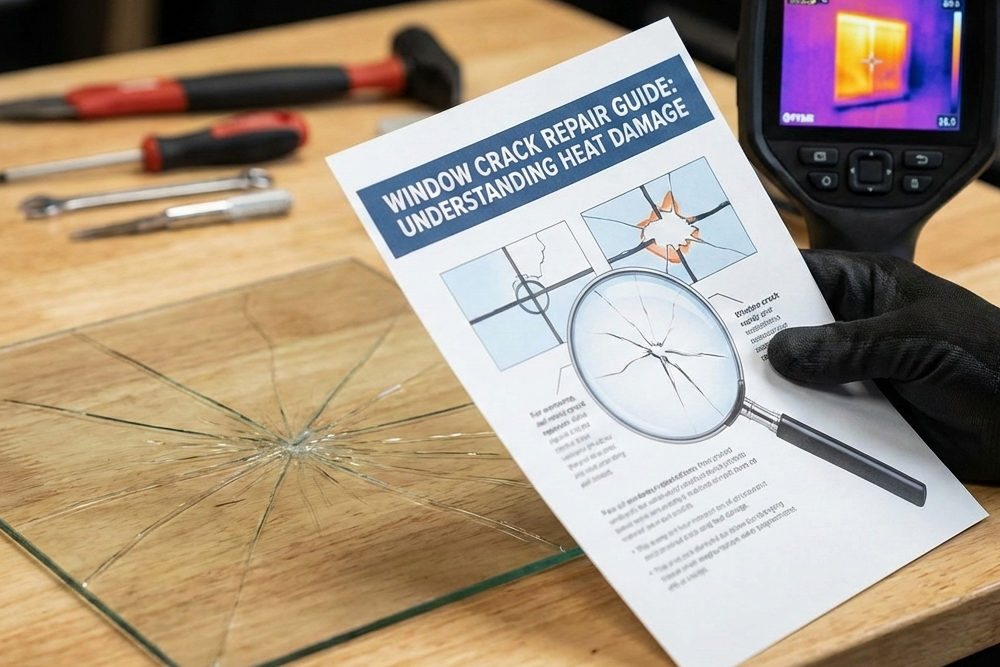
Window Crack Repair Guide For Understanding Heat Damage
When you find a crack in your window, it may be quite aggravating, especially if the reason for the fracture is not immediately apparent. It is simple to see hits made by errant baseballs or debris from storms, but cracks that are created by heat might be more difficult to spot. Thermal stress fractures are a formation that can occur when glass is subjected to extreme temperature variations, which can cause the glass to reach its breaking point. It is necessary to have a solid understanding of how to recognize and repair heat-induced cracks in order to keep the structural integrity of your house and to ensure that it works efficiently. If you choose to ignore them, you may end up with more serious issues, such as greater energy costs or a window that completely fails.
Get An Auto Glass Replacement Quote Now 866.278.7417

Windshield Replacement & Repair
Our competitors push you into going to their shop to get your glass fixed-making it cheaper for them. We make it easier for YOU to get back on the road by offering free mobile repairs at your home or work. With our free mobile services servicing the entire Orange County & Los Angeles area, we can often handle your windscreen replacement the same day! So the next time you need a windshield replacement, give us a call.
Talk to a Windshield Replacement Specialist Now 866.278.7417

Calibration
Calibration is the process of returning a vehicle’s ADAS to OEM specifications. Calibration is necessary after a new glass installation, particularly a windshield with a camera mounted to it, to ensure that the ADAS features continue to function properly despite having been moved during installation. If a car’s ADAS is not properly calibrated, the system may not function safely. A misaligned camera could jeopardize the functionality of the system and lead to dangerous driving or accidents, so it is crucial that the cameras are aligned perfectly, which is what windshield calibration ensures.
Talk to a Calibration Specialist Now 866.278.7417

Fleet Auto Glass Repair
We provide expert auto glass repair and windshield replacement services for commercial fleets of all sizes. We are experienced with all manufacturers and machine types of domestic or foreign cars, trucks, vans, or commercial vehicles, including heavy equipment. Our same day mobile auto glass and windshield repair service will enable you to get back on the road faster and start saving you time and money instantly. Give us a call today! We are here to help!
Talk to a Fleet Auto Glass Specialist Now 866.278.7417
Thermal Stress Cracks Are A Kind Of Crack
Cracks in a pane of glass can be caused by thermal stress when the pane of glass expands and contracts at various rates as a result of variations in temperature. This problem is especially prevalent in regions that have days that are hot and sunny and nights that are chilly.
When sunlight strikes a window, the center of the glass becomes heated and expands. This is how the phenomenon occurs. In spite of this, the edges of the glass continue to maintain a lower temperature since they are shielded by the window frame. Because of the difference in temperature, tension is created. In the event that the tension gets too much for the glass to bear, it will fracture in order to release the strain that it is under. There is a high probability that the crack will begin at the edge of the glass and then work its way within.
Cracks caused by thermal stress can be caused by a number of different reasons, including the following: Double- and triple-pane windows are more prone to damage than single-pane windows because the inside panes of these windows can get significantly hotter than the outer panes. Tints for windows: films with a darker hue absorb more heat, which results in a greater temperature difference between the two sides of the glass.
It is also possible for uneven warmth to be caused by the proximity of some heat sources, such as indoor heating vents or outdoor items, such as grills, that are situated too close to a window. Blinds and Shades: Blinds that are only partially drawn might allow one portion of the window to become substantially hotter than the shaded section, which can contribute to elevated levels of stress.
A Guide to Recognizing a Crack That Is Caused by Heat
You need to make sure that you are dealing with a crack that is caused by thermal stress rather than one that is caused by an impact before you can begin the repair process. In and of itself, the presence of the fracture is the most significant indicator.
Thermal cracks almost always begin near the edge of the windowpane, and after running perpendicular to it for a short distance, they will branch out in different directions. This is because thermal cracks are caused by heat. A stress fracture, which is the telltale evidence of a stress fracture caused by a rock or other item impacting the glass, will not leave a central point of impact, which you will not locate. In most cases, the crack line is clean and smooth, and it does not have the broken, web-like pattern that is associated with an impact.
Running your finger down the crack in a gentle manner will help you confirm your diagnosis. If it is smooth to the touch and comes from the edge of the frame, then you are most likely dealing with a crack that is caused by thermal stress.
Do you have a Question?
Get An Auto Glass Replacement Quote Now 866.278.7417
Detailed Instructions on How to Fix a Minor Crack in a Surface
DIY repairs may be an efficient and cost-effective choice for repairing tiny cracks that are not very complicated. For single-pane windows with cracks that are only a few inches long, this approach is the most effective course of action. Despite the fact that it will not make the fracture undetectable, it will stabilize the glass and stop it from spreading further.
Glass cleaner, microfiber cloths, a window crack repair kit that includes a clear resin and an applicator, a razor blade, safety gloves, and glasses are the items that you will require.
Clean the Window: To begin, ensure that the surface is clean. Apply a liberal quantity of glass cleaner to the window, and then use a microfiber cloth to wipe it down after every application. All dirt, dust, and debris must be removed from the crack itself. This is an extremely important step. In order to clean up the crevice, you may either use a tiny brush or compressed air if necessary. Before going on to the following step, do not proceed until the window has completely dried.
Put on your protective gloves and eyewear before beginning to prepare the resin. The vast majority of window repair kits include a two-part epoxy or resin that must be mixed together before use. As you create the glue, make sure you carefully follow the directions provided by the manufacturer. Be swift in your work, since the majority of resins start to harden within a few minutes.
Application of the Resin: Using the applicator that was included in your package, gently apply the resin straight into the crack. One of the objectives is to fill the fracture all the way through its length. Applying little pressure with the applicator will guarantee that the resin is able to penetrate the fracture to a significant depth. When you want to seal the fracture from the outside, apply a coating that is thin and even across the surface of the fissure.
Cure the Resin: The resin should be allowed to cure for the specific period of time that is mentioned in the instructions that came with the kit. Depending on the product and the temperature of the surrounding environment, this might take anything from a few hours to an entire day. In order to ensure that the resin is able to properly bind with the glass, you should refrain from touching or cleaning the window during this period.
When the resin has reached its full cure, use a razor blade that is sharp to gently scrape away any extra material from the surface of the glass. This step is performed after the resin has been completely cured. If you want to prevent scratching the glass, you should hold the blade at a low angle and make strokes that are smooth and steady. To get rid of any residue that may still be there, wipe the area down with a clean towel.
How to Know When to Call a Professional
Even while a do-it-yourself repair is appropriate for tiny cracks, there are certain circumstances that call for the skills of a professional. It is possible that you might cause further harm or injury if you attempt to patch a difficult crack on your own.
A window repair professional should be contacted in the following situations: the break is significant or complex: When the fracture is more than a few inches long or has several branches, a do-it-yourself kit will not be sufficient to make a repair that is sturdy and will survive for a long time.
This window has either double or triple panes of glass: Window repairs that include many panes of glass are more difficult. It’s possible that the seal that separates the panes has been destroyed, which might result in further condensation and fogging. It is possible for a trained specialist to determine whether or not the complete insulated glass unit (IGU) would require replacement.
Whether it be tempered or textured, the glass is: When it comes to glass, there are certain varieties that require certain repair methods and supplies that are not often included in do-it-yourself kits.
You are not satisfied with the results of the repair: In the event that you are uncertain about any stage of the procedure, it is usually safer to delegate the task to a professional. For the task to be done in a manner that is both safe and successful, a professional will have the appropriate tools and experience.
Safeguard Your Home And Your Windows At The Same Time
An ugly window that is cracked is more than just an eyesore; it is also a vulnerable spot in the thermal envelope of your home. Cracks that have been damaged by heat should be repaired as soon as possible in order to restore the integrity of your window, increase its energy efficiency, and avoid minor problems from developing into costly replacements. You will be able to confidently fix window cracks and maintain the safety and comfort of your house if you have a thorough grasp of the cause and are familiar with the appropriate repair process.
Never be afraid to get in touch with a local window repair contractor, especially if the damage is extensive or if you are ever unsure about something. You will have peace of mind as a result of their ability to conduct an experienced assessment and guarantee a repair that is long-lasting, secure, and almost undetectable.
Why Repairs to Window Cracks Do Not Work
If you choose to ignore a little crack in a window, it may appear to be a minor irritation; nonetheless, this might progress to more significant concerns. In spite of the fact that a speedy repair completed by the individual themselves or by a professional may appear to be a basic solution, the effectiveness of the repair frequently depends on elements that go beyond the adhesive itself. Despite the fact that they are frequently disregarded, climate and vibration are two of the most significant factors. To ensure that the repair will persist, it is essential to have a solid understanding of how these factors influence your windows.
A window that has been fixed correctly should be sturdy, transparent, and long-lasting. Nevertheless, there are instances in which repairs might fail prematurely, resulting in the fracture reappearing or expanding. In most cases, this is not the result of a defective product or improper application; rather, it is the result of the environmental stressors that the window is subjected to. It is possible for even the most meticulously placed resin to be compromised by the continual expansion and contraction that is brought on by variations in temperature, as well as by vibrations that are small but persistent.
The purpose of this essay is to investigate the scientific rationale behind why climate and vibration are among the most important components in the successful healing of window cracks. We will investigate the ways in which variations in temperature and everyday motions have an effect on glass and repair materials, and we will offer practical guidance on how to reduce these effects in order to achieve a fix that is both more long-lasting and more successful.
How the Weather Affects Window Repairs and Maintenance
In the same way that most other materials are, glass is vulnerable to thermal expansion and contraction effects. Expansion of glass occurs as the temperature is raised. As it cools, it will begin to contract. Despite the fact that these alterations are minute, they exert a considerable amount of stress on the material, particularly in the vicinity of a weak spot like a fracture.
When you repair a window that has been cracked, you are filling the fissure with a resin or glue that is meant to connect with the glass and restore its structural integrity. This is how temperature changes affect glass. Nevertheless, the coefficients of thermal expansion of the repair resin and the glass itself are frequently different from one another. Because of this, they experience varying degrees of expansion and contraction in response to variations in temperature.
Just picture a warm and beautiful day. Your window is subjected to the sun’s rays, which causes the glass and the repair resin to expand. When nighttime arrives and the temperature begins to drop, both of them begin to constrict. It is possible for the bond line to experience stress if the resin compresses more or less than the glass that is found around it. This constant tension can weaken the bond over the course of several cycles of heating and cooling—day after day, season after season—which can result in the repair failing and the crack reappearing.
In places that experience high temperature variations, this presents a particularly difficult challenge. A window in a desert region, for instance, may see a fluctuation in temperature of forty degrees in the span of a single day. Any repair is subjected to an enormous amount of strain as a result of this ongoing cycle of considerable expansion and contraction.
The Role of Humidity in the Failure of Repairs: A further environmental condition that might damage the integrity of a window repair is humidity. Due to the fact that the repair resin has not yet completely set, it is possible for moisture from the air to penetrate the microscopic pores that are contained inside it. There is a possibility that this will hinder the adhesive from properly attaching to the glass.
Over the course of time, moisture that is retained might potentially contribute to additional problems. Any water that is contained within the crack has the potential to freeze during a cold spell. When water freezes, it expands, which causes it to apply pressure from within the crack, which may cause it to force itself to get wider. The process that is known as ice jacking has the potential to rapidly transform a minor crack that has been fixed into a large fracture that necessitates the replacement of the whole window. Resins of high quality and resistance to water can be of assistance; nevertheless, it is essential to apply them correctly in a dry atmosphere in order to achieve long-term success.
How the Integrity of Windows Is Compromised by Vibration
Vibrations are a force that is always there yet undetectable, and they affect our dwellings. Even while we might not always be able to feel them, the cumulative effect that they have on structural elements, such as windows, can occasionally be quite significant. These vibrations can originate from a wide variety of sources and have the potential to cause injury on par with changes in temperature.
There are a number of common sources of vibration in the home. The vibrations that are felt through your windows might come from either the inside or the outside of your house.
Low-frequency vibrations are transmitted through the ground and into the structure of your home if you reside in close proximity to a busy road. These vibrations are caused by the frequent movement of vehicles such as automobiles, buses, and trucks.
Construction: Construction operations in the vicinity, with their heavy machinery and activities including ground-compacting, create a significant amount of vibrations that are quite severe.
Home appliances: Large home appliances such as washing machines, dryers, and even loud sound systems are capable of producing vibrations that can travel through floors and walls.
When it comes to doors and windows, the act of slamming a door or closing a window with force can cause a shockwave to go through the frame and immediately contact the glass.
When a window sustains a fracture, the structural integrity of the window has already been damaged, according to the science of vibrational stress. A pane of glass that is solid is constructed in such a way that it distributes tension equally throughout its surface. However, a crack generates a focus point for tension to be directed toward. Vibrations are magnified at the point where the fracture is located in the glass when they pass through the glass.
“Concentration of stress” is the term used to describe this occurrence. There is a small amount of force that is added to the tip of the crack by every slight vibration, whether it is from a passing truck or a washing machine that is spinning. This force encourages the crack to grow longer. One that has just been applied is particularly susceptible to damage. Such continuous vibrations have the potential to disturb the bonding process, resulting in the formation of weak patches or preventing the adhesive from setting correctly. This can occur before the resin has had the time to fully cure and achieve its optimum strength. This can result in a failure that occurs immediately or a failure that occurs later, in which the repair is successful for a brief period of time before failing under the influence of continuing vibrational stress.
Do you have a Question?
Get An Auto Glass Replacement Quote Now 866.278.7417
In Order To Guarantee A Successful Window Repair
If you are aware that the weather and vibration are working against your window repair, what steps can you take to increase the likelihood that it will be successful? Making sure that the environment is under control both before and after the process of restoration is essential.
If you want to avoid performing a repair during times of harsh weather, you should choose the right time to do it. A day that is dry and moderate is perfect. If you want the resin to cure completely without the additional stress of thermal expansion and contraction, you should make an effort to keep the temperature within the building steady for at least twenty-four hours after the repair has been completed.
You should choose a resin of high quality. You should make an investment in a repair kit that utilizes a resin of high quality that has a thermal expansion coefficient that is comparable to that of glass. These are typically referred to as “professional grade” and are intended to be more adaptable and resistant to variations in temperature.
After applying the repair, it is essential to allow it to cure in a stable environment for a period of time. Vibrations should be kept to a minimum throughout this process. The use of heavy appliances, slamming doors, and any other activities that might potentially cause vibrations should be avoided for at least twenty-four to forty-eight hours. It is especially vital that you do this step if you reside in an area that has a high vibration.
Before applying any resin, make sure that the crack is absolutely clean and dry. This is the first step in properly preparing the surface. In order to get rid of any dust or minuscule pieces of glass, you can use a vacuum or compressed air. Utilize rubbing alcohol to thoroughly clean the area in order to eliminate any oils or moisture that can impede the bonding process.
How to Know When to Call a Professional
There are several limitations to do-it-yourself repairs, despite the fact that they can be successful for extremely minor cracks. In the event that a crack is more than a few inches in length or has reached the edge of the glass, or if you reside in an area that experiences harsh weather or excessive vibration, the most prudent line of action would be to contact trained professionals.
A far stronger and more long-lasting connection can be created by professional glaziers since they have access to industrial-grade resins and specialized gear, like vacuum injectors, that are designed specifically for it. In addition to this, they have the expertise to evaluate the particular environmental elements that are impacting your window and to select the most appropriate materials and methods for each individual project. An initial investment in a professional repair may be higher, but it may save you the money and aggravation of attempting a do-it-yourself fix that does not work, as well as the possibility of having to replace the entire window in the future.
In Order To Safeguard Your Investment
A window that is cracked is more than simply a cosmetic problem; it is a weak point in the thermal envelope and security of your home. The first step in developing a solution that is more successful and long-lasting is to have an understanding of how external factors such as climate and vibration might cause a repair to fail instead of succeeding. You can better defend your house and guarantee that your windows will continue to be clear, sturdy, and secure for many years to come if you take control of the environment in which repairs are performed and take into consideration the constant stressors that your windows are subjected to.
Mobile Safe Auto Glass
14241 E Firestone blvd suite 400,
La Mirada, CA 90638
Phone: (562) 608-1154
Toll Free: 1 866 278 7417
Mail: sales@mobilesafeautoglass.com
Get a FREE QUOTE today! You can get a free quote and schedule 24/7 using this free quote wizard.
Mon – Fri 8am – 5pm
Saturday 8am – 1pm
Sunday Closed