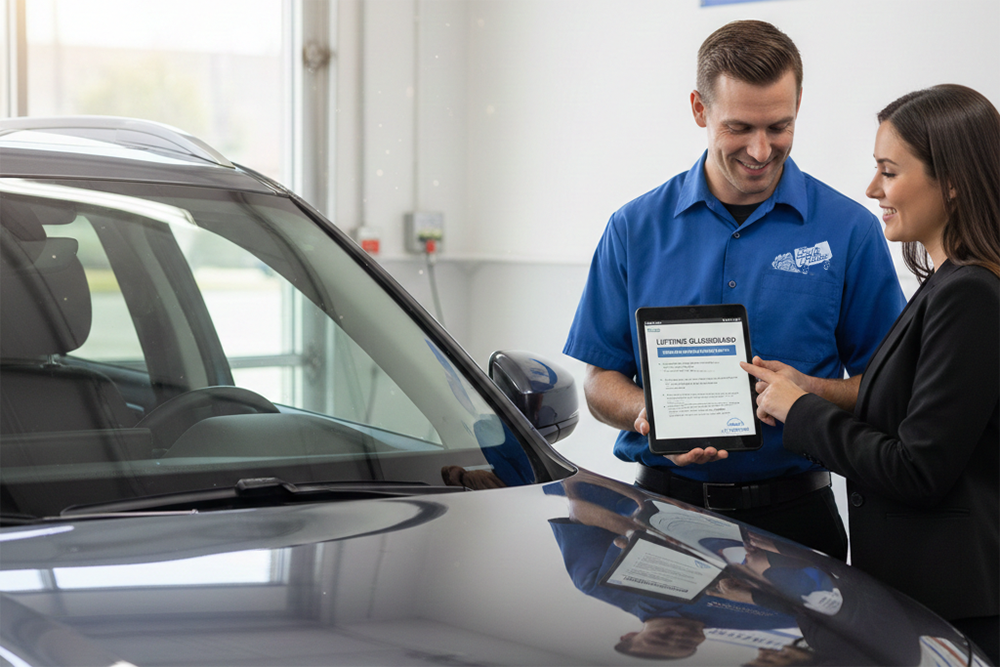
What Strong Warranty Coverage Means for Auto Glass Clients
A chipped or cracked windshield is an annoyance that most drivers eventually face. When that stray rock hits your glass on the highway, your immediate priority is usually getting it fixed quickly and affordably. You compare quotes, check availability, and schedule the appointment. However, in the rush to get back on the road, one crucial factor often gets overlooked: the warranty. While price and speed are important, the warranty coverage attached to your auto glass repair or replacement is the true indicator of quality. It is your safety net against future headaches, unexpected costs, and installation failures. A windshield is more than just a window; it is a structural component of your vehicle.
Get An Auto Glass Replacement Quote Now 866.278.7417

Windshield Replacement & Repair
Our competitors push you into going to their shop to get your glass fixed-making it cheaper for them. We make it easier for YOU to get back on the road by offering free mobile repairs at your home or work. With our free mobile services servicing the entire Orange County & Los Angeles area, we can often handle your windscreen replacement the same day! So the next time you need a windshield replacement, give us a call.
Talk to a Windshield Replacement Specialist Now 866.278.7417

Calibration
Calibration is the process of returning a vehicle’s ADAS to OEM specifications. Calibration is necessary after a new glass installation, particularly a windshield with a camera mounted to it, to ensure that the ADAS features continue to function properly despite having been moved during installation. If a car’s ADAS is not properly calibrated, the system may not function safely. A misaligned camera could jeopardize the functionality of the system and lead to dangerous driving or accidents, so it is crucial that the cameras are aligned perfectly, which is what windshield calibration ensures.
Talk to a Calibration Specialist Now 866.278.7417

Fleet Auto Glass Repair
We provide expert auto glass repair and windshield replacement services for commercial fleets of all sizes. We are experienced with all manufacturers and machine types of domestic or foreign cars, trucks, vans, or commercial vehicles, including heavy equipment. Our same day mobile auto glass and windshield repair service will enable you to get back on the road faster and start saving you time and money instantly. Give us a call today! We are here to help!
Talk to a Fleet Auto Glass Specialist Now 866.278.7417
What Does a “Strong” Warranty Actually Look Like
In the auto glass industry, warranties are not created equal. Some shops offer a “tail light guarantee”—meaning the warranty expires the moment they can no longer see your tail lights. Reputable providers, however, offer coverage that protects you for as long as you own or lease the vehicle. To determine if a warranty is robust, you need to look at three specific areas of coverage: Workmanship and Installation: This is the most critical aspect of any auto glass warranty. It covers the human element of the job. Even the highest quality glass will fail if it is installed incorrectly.
A strong warranty explicitly covers air leaks (often heard as a whistling noise) and water leaks. If it rains three months after your replacement and you find a puddle on your dashboard, a workmanship warranty ensures the shop fixes the seal at no cost to you. Manufacturer Defects: Sometimes, the glass itself is the problem. Manufacturer defects can manifest as distortion—where the road looks wavy or warped through the glass—or stress cracks.
A stress crack occurs without any impact from a rock or debris; it simply happens because of a flaw in the glass tempering or an irregularity in the shape. A solid warranty ensures that if the product is defective, it gets replaced. Molding and Parts: During a replacement, the molding (the rubber or plastic strip surrounding the auto glass) often needs to be replaced or reattached. Comprehensive coverage should extend to these parts as well, ensuring they don’t come loose or degrade prematurely.
The Critical Link Between Warranties and Safety
It is easy to view a warranty purely as financial protection, but it is also a safety document. Your windshield provides up to 60% of the structural integrity of the vehicle’s roof in a rollover accident. It also serves as the backstop for the passenger-side airbag. If the airbag deploys, it bounces off the windshield to cushion the passenger. If the adhesive bond fails because of poor installation, the windshield could pop out during a collision. This renders the airbag useless and allows the roof to collapse more easily.
When a company offers a lifetime warranty on installation, they are stating that they follow proper safety protocols. They are certifying that they used the correct primers, adhesives, and cure times. A shop that refuses to offer a strong warranty may be cutting corners on these essential safety steps. Therefore, demanding a strong warranty is effectively demanding a safe installation.
The Hidden Costs of Poor Coverage
Choosing a provider with weak or non-existent warranty coverage might save you twenty dollars upfront, but it can cost hundreds or thousands later. Consider the issue of water leaks. A poorly sealed windshield allows water to seep into the cabin. This doesn’t just wet your dashboard; it can flow down behind the firewall and damage expensive electronics, fuse boxes, and sensors. It can also soak into the carpet and upholstery, leading to mold and mildew growth that is difficult and expensive to remediate. If you have a strong warranty, the auto glass company is responsible for fixing the leak. Without one, you are paying for the glass reseal (or a totally new windshield if the old one breaks during removal) plus the cost of detailing and electrical repairs.
Do you have a Question?
Get An Auto Glass Replacement Quote Now 866.278.7417
Modern Complications: ADAS Calibration
Vehicles manufactured in the last decade often come equipped with Advanced Driver Assistance Systems (ADAS). These include features like lane departure warning, automatic emergency braking, and rain-sensing wipers. These systems rely on cameras mounted directly to the windshield. It is necessary to recalibrate these cameras whenever a windshield is replaced in order to guarantee that they have an accurate view of the road. A misalignment of just a few millimeters can cause the system to fail or engage at the wrong time. A modern, comprehensive auto glass warranty should address this. If the calibration fails or if the camera comes loose due to improper mounting during the glass installation, you need to know you are covered. As cars become more complex, the warranty needs to cover not just the glass, but the technology attached to it.
Red Flags and Exclusions to Watch For
While looking for what is covered, you must also pay attention to what is excluded. All warranties have limitations, but some are reasonable while others are evasive. Reasonable Exclusions: Rust: If the pinch weld (the metal frame where the glass sits) is rusted, no adhesive will bond correctly. Most shops cannot warranty work done on rusted frames because the failure is inevitable. Impact Damage: No warranty covers a new rock hitting your new windshield. That is a new insurance claim or out-of-pocket expense. Vandalism or Theft: This falls under your comprehensive auto insurance, not the auto glass shop’s workmanship warranty.
Unreasonable Red Flags: Short Time Limits: A warranty limited to 30 or 90 days suggests the shop lacks confidence in their adhesive or technicians. Non-Transferable Limitations: While most warranties apply only to the current owner, some extremely restrictive policies void the warranty if you move to a new state or change insurance carriers. No Mention of Mobile Service: If you used a mobile service for the repair, ensure the warranty covers a mobile tech coming back out to fix it. You shouldn’t have to drive a leaking car to a shop across town if you paid for mobile convenience.
The Value of Nationwide Coverage
For those who travel frequently or drive for a living, a local warranty might not be enough. Large, national auto glass networks often offer a nationwide warranty. This means if you get your windshield replaced in Ohio, but notice a wind noise while driving through Florida, you can visit an affiliate shop in Florida to have it corrected. This portability offers significant peace of mind. It ensures that you aren’t tethered to a single geographic location to get justice for a faulty repair. If you are planning a road trip or moving soon, asking about nationwide coverage is a must.
Drive Away with Confidence
The next time you need a windshield repair or replacement, look beyond the bottom line of the price quote. Ask to see the warranty policy in writing before you hand over your keys. Ask specific questions about leakage, air noise, and stress cracks. A strong warranty is the mark of a professional business that values its reputation and its clients’ safety. It ensures that your investment is protected and that your vehicle remains safe to drive. By prioritizing coverage over the lowest possible price, you ensure that once the glass is fixed, it stays fixed, letting you focus on the road ahead.
Is Your Windshield Warranty Worth the Paper It’s Printed On
Unmistakable is the sound they make. That sharp, sudden crack as a piece of gravel ricochets off your windshield. In an instant, your pristine view is marred by a spiderweb fracture, and your mind immediately jumps to the logistics: How much will this cost? How fast can I get it fixed? When shopping for auto glass replacement, the price tag often dominates the conversation. It is natural to look for the most affordable quote, especially for an unexpected expense. However, there is a crucial element that often gets overlooked in the rush to save a few dollars: the warranty.
A warranty is not just a safety net for future defects; it is a direct reflection of the service quality you are receiving today. In the auto glass industry, the robustness of a guarantee serves as a proxy for the confidence a shop has in its technicians, its materials, and its workmanship. Understanding the link between protection and quality can save you from recurring headaches, water leaks, and safety hazards down the road. Here is why your auto glass warranty is the most important feature you shouldn’t ignore.
The Connection Between Confidence and Coverage
Think about why a company offers a warranty. It is a financial liability for them. If their work fails, they have to pay for labor and materials a second time without generating new revenue. Therefore, a business will only offer a comprehensive, long-term warranty if they are statistically certain their work will stand the test of time. When an auto glass shop offers a “tail-light warranty”—meaning the guarantee expires as soon as they can’t see your tail lights anymore—it suggests they are cutting corners.
They might be using inferior urethane (glue) that doesn’t bond quickly, low-quality aftermarket glass that distorts your vision, or inexperienced technicians who skip critical safety steps. Conversely, a shop offering a lifetime warranty against leaks and workmanship defects is signaling that they follow Original Equipment Manufacturer (OEM) standards. They invest in high-quality primers and adhesives, and they take the time to prep the pinch weld correctly. They are betting on their own excellence.
Workmanship vs. Manufacturer Defects
To understand the value of your protection, you need to distinguish between the two main types of coverage usually bundled into an auto glass warranty. Manufacturer Warranty: This covers the glass itself. It protects you against distortion (waves in the glass that make things look weird), stress cracks that appear without impact, or delamination (where the layers of glass separate). While important, these defects are relatively rare with reputable glass brands. Workmanship Guarantee: This is where the real value lies. Workmanship refers to the human element of the installation. If the technician fails to clean the frame properly or applies the urethane unevenly, you will have problems.
Common workmanship failures include: Air leaks: A whistling sound at high speeds. Water leaks: Moisture entering the cabin, which can ruin upholstery and sensitive electronics. Loose molding: Trim pieces flapping or flying off on the highway. Rust: Caused by a technician scratching the paint on the vehicle’s frame and not priming it, leading to corrosion under the glass. A high-quality service provider will cover workmanship for as long as you own the vehicle. If a shop limits workmanship coverage to 30 or 90 days, be wary. A water leak caused by a bad seal might not show up until the next heavy rain season, months after a short-term warranty has expired.
The Safety Implications of a “No-Guarantee” Install
Windshields are not just cosmetic; they are structural safety components. As much as sixty percent of the roof’s crush protection is provided by the windshield in the event of a rollover accident. If the airbag deploys, it uses the windshield as a backstop to position itself correctly to save your life. If the auto glass was installed poorly—using cheap glue or without proper drive-away time—the windshield could pop out during a collision. A shop that refuses to guarantee their work is essentially refusing to guarantee your safety.
The Role of ADAS: Modern vehicles are equipped with Advanced Driver Assistance Systems (ADAS). These are the cameras and sensors mounted behind your rearview mirror that control emergency braking, lane-keep assist, and adaptive cruise control. When a windshield is replaced, these cameras must be recalibrated. A comprehensive warranty should cover this calibration. If the camera is slightly off because of a bad install or low-quality glass, your safety systems may not react when you need them to. A strong warranty ensures the shop stands behind the technical complexity of modern installations, not just the physical glass.
Do you have a Question?
Get An Auto Glass Replacement Quote Now 866.278.7417
The Economics of Doing It Right
Choosing the lowest bidder often results in the “pay twice” phenomenon. You might save $50 on the initial installation, but if the windshield leaks three months later, the original cheap shop might refuse to fix it. Now, you are paying a reputable shop full price to remove the bad windshield, clean up the mess (which takes extra labor), and install a new one. The cheaper option has now become significantly more expensive. Furthermore, a transferable warranty can add value when you sell your vehicle. Being able to hand a buyer a receipt showing a lifetime warranty on the windshield installation demonstrates that the car has been well-maintained.
Identifying a Quality Warranty
Before handing over your keys, ask to see the warranty policy in writing. A verbal promise is difficult to enforce. Here are the specific clauses you should look for that indicate high service quality: Nationwide Coverage: If you choose a large provider or a network, does the warranty travel with you? If your windshield leaks while you are on a road trip three states away, a local-only warranty won’t help you. Drive-Away Time Adherence: Does the guarantee mention safety standards? Reputable shops will guarantee they use adhesives that meet federal safety standards for “safe drive-away time.” Leak Repair: The policy should explicitly state that they will repair air and water leaks at no cost to you. Stress Cracks: Look for coverage on cracks that appear with no point of impact (no rock chip). This proves they trust the auto glass quality.
Questions That Are Frequently Asked
Does a warranty cover rock chips? Yes, in most cases. A replacement warranty covers the installation and the glass quality, but it is not insurance against future road hazards. If a rock hits your new windshield a week later, that is bad luck, not bad workmanship. However, some premium providers offer limited “road hazard” protection plans that offer free or discounted repairs for a set period. What voids an auto glass warranty? The most common warranty void is pre-existing rust on the vehicle’s pinch weld (the frame where the glass sits). If the metal is rusted, the adhesive cannot bond safely. A reputable shop will refuse to install the glass until the rust is fixed by a body shop. If a shop agrees to glue glass over rust, they will likely make you sign a waiver voiding the warranty.
Can I choose who repairs my auto glass if I go through insurance? Indeed. By law in most places, you have the right to choose your service provider. Insurance companies often have “preferred” networks, but if you find a shop with a better warranty and reputation, you can insist on using them. How long should I keep my paperwork? Keep your receipt and warranty document for as long as you own the car. Digital records are common now, but having a physical copy in your glovebox is the smartest move.
Don’t Compromise on Coverage
When you look at a quote for auto glass replacement, look beyond the bottom line. That warranty document is a window into the company’s soul. It tells you if they value speed over safety, or profit over precision. A strong warranty is the ultimate badge of quality. It means the technicians are trained, the materials are premium, and the business intends to be around long enough to honor its promises. When it comes to the structural integrity of your vehicle and the clarity of your view, peace of mind is worth the investment.
Mobile Safe Auto Glass
14241 E Firestone blvd suite 400,
La Mirada, CA 90638
Phone: (562) 608-1154
Toll Free: 1 866 278 7417
Mail: sales@mobilesafeautoglass.com
Get a FREE QUOTE today! You can get a free quote and schedule 24/7 using this free quote wizard.
Mon – Fri 8am – 5pm
Saturday 8am – 1pm
Sunday Closed