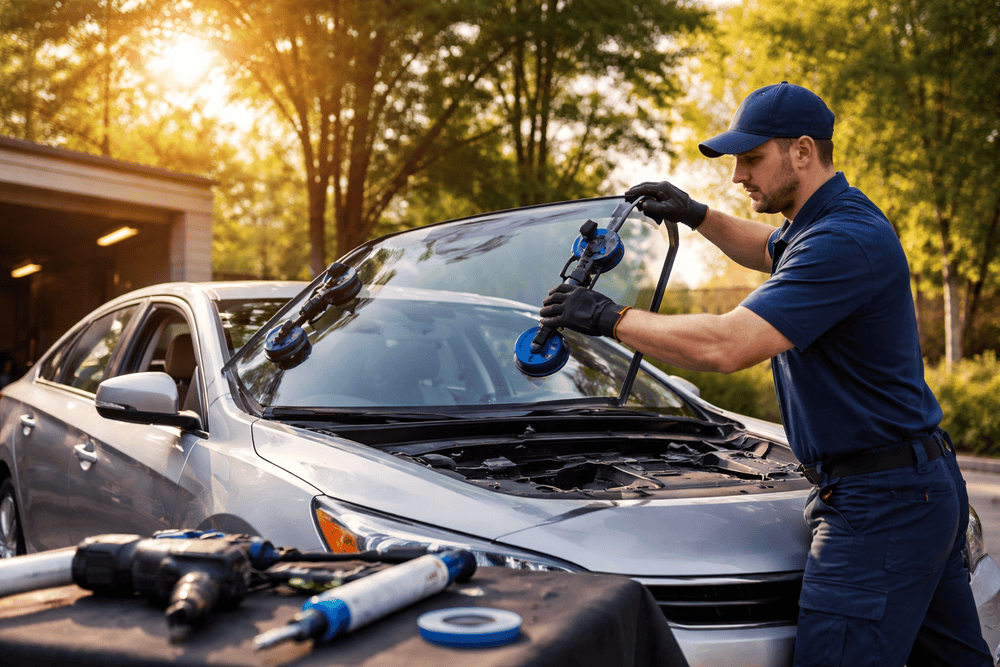
Secrets to Passenger Insurance Windshield Replacement
The semi-truck in front of you kicks up a little rock from its tire. A jagged line starts to slowly move across your field of vision as soon as you hear a harsh smash on the glass. Nearly all drivers experience windshield damage at some point, but how to remedy it is still mostly unknown. Fearing large out-of-pocket expenses or an increase in their monthly insurance rates, many drivers are reluctant to repair a chipped or cracked windshield. Others just think that their regular vehicle insurance would take care of the whole price without any more inquiry. Beneath layers of state-specific legislation and policy language, the truth lies somewhere in the center. You may avoid serious safety risks and save hundreds of dollars by knowing how passenger insurance handles windshield repairs.
Get An Auto Glass Replacement Quote Now 866.278.7417

Windshield Replacement & Repair
Our competitors push you into going to their shop to get your glass fixed-making it cheaper for them. We make it easier for YOU to get back on the road by offering free mobile repairs at your home or work. With our free mobile services servicing the entire Orange County & Los Angeles area, we can often handle your windscreen replacement the same day! So the next time you need a windshield replacement, give us a call.
Talk to a Windshield Replacement Specialist Now 866.278.7417

Calibration
Calibration is the process of returning a vehicle’s ADAS to OEM specifications. Calibration is necessary after a new glass installation, particularly a windshield with a camera mounted to it, to ensure that the ADAS features continue to function properly despite having been moved during installation. If a car’s ADAS is not properly calibrated, the system may not function safely. A misaligned camera could jeopardize the functionality of the system and lead to dangerous driving or accidents, so it is crucial that the cameras are aligned perfectly, which is what windshield calibration ensures.
Talk to a Calibration Specialist Now 866.278.7417

Fleet Auto Glass Repair
We provide expert auto glass repair and windshield replacement services for commercial fleets of all sizes. We are experienced with all manufacturers and machine types of domestic or foreign cars, trucks, vans, or commercial vehicles, including heavy equipment. Our same day mobile auto glass and windshield repair service will enable you to get back on the road faster and start saving you time and money instantly. Give us a call today! We are here to help!
Talk to a Fleet Auto Glass Specialist Now 866.278.7417
Comprehending Collision vs. Comprehensive Coverage
Knowing which section of your insurance policy really covers vehicle glass is the first step towards unlocking the mysteries of windshield replacement. A common misconception among drivers is that basic liability or collision coverage will cover windshield damage.
What comprehensive insurance truly covers: Comprehensive coverage almost usually includes coverage for auto glass damage. This level of coverage is intended to shield your car from situations other than typical traffic accidents.
Comprehensive coverage steps in if a tree limb falls on your vehicle, a vandal breaks your window, or a stray piece of highway debris damages your glass. Your insurance company won’t pay for your windshield repair if you merely have liability insurance, which covers the harm you do to other drivers.
The cost will be solely your responsibility. The very first step in making sure your car has comprehensive coverage is to check your insurance declarations page.
Why windshields are included in this category: Rock chips and weather-related glass damage are considered traffic hazards or inevitable acts of nature by insurance carriers.
These incidents are classified differently from a collision with another vehicle because they are thought to be beyond the driver’s control. This difference is crucial because insurance underwriters handle comprehensive claims much more leniently than they do at-fault accident claims.
The Secret of Zero Deductible Windshields
You may not need to pay your deductible in order to get your windshield replaced, which is one of the car insurance industry’s best-kept secrets. The replacement may be entirely free, depending on your location and the details of your insurance.
State regulations requiring free replacements: A number of states have particular legislation aimed at motivating drivers to quickly repair broken windshields.
States like Florida, Kentucky, and South Carolina have laws requiring insurance carriers to waive the comprehensive deductible for windshield repairs since driving with a broken windshield poses a serious safety risk. In certain “zero deductible” jurisdictions, your insurer is legally required to reimburse the whole cost of the replacement if you have comprehensive coverage.
Separate glass coverage is available as an optional policy add-on in several jurisdictions, including Massachusetts and New York. You can get a glass waiver that totally removes your out-of-pocket expenses for windshield claims for a few more dollars every month.
How to verify the specifics of your policy: Your insurance company may provide a customized glass deductible even if you do not reside in a state where glass waivers are required.
A policy may sometimes have a $500 deductible for general comprehensive claims but just a $50 deductible for vehicle glass. Ask your insurance agent to clarify the precise glass provisions included in your existing policy by giving them a call.
OEM vs. Aftermarket Glass: What Your Insurer Doesn’t Tell You: When an insurance adjuster authorizes the replacement of your windshield, they often base the estimate on the price of aftermarket glass. This is where a lot of drivers are unprepared since they think their automobile will be fixed using the same parts that were used to build it.
Original Equipment Manufacturer (OEM) glass is created by the same firm that built your car’s original windshield, which makes a difference in both quality and safety. It frequently has the automaker’s emblem embossed in the corner and has the exact same thickness, hue, and durability.
A third-party manufacturer produces aftermarket glass. Aftermarket glass may differ somewhat in form, acoustic damping, or optical clarity, but it must adhere to minimum federal safety regulations.
Do you have a Question?
Get An Auto Glass Replacement Quote Now 866.278.7417
Negotiating for Original Equipment Manufacturer Glass
Because aftermarket glass is far less expensive, insurance firms like it. You should definitely push for OEM glass if you drive a newer automobile or if your car is leased.
Many dealerships require that OEM components be used for all repairs, so check your lease. You might ask your repair shop to make the case for you in order to have OEM glass authorized.
Technicians may sometimes demonstrate that an aftermarket windshield interferes with the car’s internal sensors or does not fit properly. You always have the option to pay the margin out of pocket to get the OEM windshield if the insurance company flatly refuses to cover the difference.
Will Your Insurance Rates Increase Due to a Windshield Claim? Drivers disregard a shattered windshield mostly out of fear of rate increases. Fortunately, glass claims are handled quite differently by the insurance business than regular accidents.
The reality of no-fault claims: A single glass claim is very unlikely to raise your insurance rates since a pebble hitting your windshield is seen as a no-fault occurrence. Road debris is an inherent danger of driving, and insurers are aware of this. Rate hikes for solitary comprehensive glass claims are specifically prohibited by internal regulations of the majority of large suppliers.
How the frequency of claims affects your premium: While making a single windshield claim is safe, filing many in a short time frame may raise an alarm in the insurance company’s system. The insurance may label you as a high-risk driver if you replace your windshield three times in a single year.
They may believe you often go through dangerous construction zones or on dirt roads. Your next policy renewal may result in a small change to your comprehensive premiums in certain uncommon circumstances.
The Calibration Catch for ADAS
In essence, modern cars are rolling computers. Your automobile uses an Advanced Driver Assistance System (ADAS) if it features adaptive cruise control, automated emergency braking, or lane departure alerts.
The cameras and lasers that drive your ADAS features are often installed just behind the rearview mirror, looking out through the windshield glass, which is why current windshields need to be recalibrated. These same camera views are disrupted when a technician replaces the damaged windshield.
Your automated braking system may misjudge the distance of the vehicle in front of you if there is even a millimeter difference. The camera system has to be recalibrated using very sophisticated diagnostic software after a replacement.
Making sure the tech alignment is covered by your insurance: Recalibration adds a substantial cost to a windshield repair, sometimes doubling the job’s overall cost. Initially, the recalibration price may not be included in the repair estimate by some insurance adjusters.
Examine your estimate carefully, and make sure the claim includes the ADAS recalibration. You and your passengers are at serious danger when you drive a contemporary automobile without recalibrating the safety sensors. Reputable car glass stores will charge your insurer immediately for this essential safety measure.
Step-by-Step Guide to Filing a Windshield Claim: If you take the proper actions as soon as the damage happens, your claim will be handled efficiently and promptly.
Accurately Recording the Damage
Pull over safely as soon as you see the chip or crack, then snap crisp, well-lit pictures of the damage. To provide a sense of size, place a penny next to the fracture. When deciding whether to replace the glass entirely or repair it with resin, insurers often consider the extent of the damage. A complete replacement is usually necessary if the crack is larger than a dollar note or if it blocks the driver’s direct line of sight.
Selecting your own repair business against the insurer’s network: The insurance agent will probably suggest a certain glass repair chain when you file the claim. They may even offer to put you through to the scheduling department of that business over the phone.
Using the insurance company’s chosen provider is not required by law. In order to get lower labor costs, insurance companies establish alliances with large glass chains.
Nonetheless, you are free to choose any reputable, licensed car glass shop. Look at independent, neighborhood stores. Local specialists are more likely to negotiate for OEM glass and correct ADAS calibration on your behalf, and they often provide better customer care.
Common Questions Regarding Windshield Claims: Can I be forced to replace my windshield rather than fix it? Your insurance provider will actively advocate for a resin repair if the damage is less than a quarter and occurs outside the driver’s main seeing area.
Repairs preserve the original manufacturing seal and are less expensive. However, you may often ask for a complete replacement once a repair fails or leaves a noticeable flaw.
Are windshield cracks covered by my warranty? Road debris-induced glass damage is seldom covered by new automobile warranties. Only if you can demonstrate that the glass shattered as a result of a manufacturing defect—such as incorrect installation at the factory or a structural stress fracture—will a dealership warranty repair a windshield.
How much time does it take to repair a windshield? It often takes an hour to replace the glass physically. But it takes time for the urethane glue that was used to attach the glass to the automobile frame to cure.
Before the automobile is safe to drive, you will usually have to wait an extra hour or two. The whole consultation should take three to four hours if your car has to have its ADAS recalibrated.
Rules for Insurance Windshield Replacement Described
On the roadway, a little rock may easily become a big problem. Suddenly, a spiderweb of broken glass blocks your eyesight as you hear a piercing snap. Finding a way to pay for a broken windshield shouldn’t be as difficult as dealing with one.
Many drivers believe that a replacement windshield is automatically covered by their regular vehicle insurance. The truth is much more nuanced. Your state’s rules, the kind of insurance you have, and the extent of the damage all affect your coverage. Unforeseen out-of-pocket costs may result from navigating the claims procedure without being aware of these variables.
This tutorial explains how windshield damage is handled by motor insurance. You will discover the distinctions between replacement and repair standards, how vehicle glass deductibles work, and your rights when selecting a repair facility.
How Windshield Damage Is Covered by Auto Insurance: There are several types of auto insurance. Collision insurance protects your automobile in the event that you collide with another vehicle, while liability insurance covers harm you do to other persons. When you encounter a stray rock on the roadway, neither of these common coverages will assist you.
Comprehensive Coverage is Essential: You almost always need comprehensive coverage in order to get insurance to cover windshield damage. This level of coverage shields your automobile from mishaps other than collisions with other vehicles.
It includes weather-related incidents, animal collisions, fallen items, theft, and vandalism. Comprehensive coverage kicks in to pay the cost if a piece of debris hits your windshield while you’re driving.
Remember that unless you are leasing or financing your car, comprehensive coverage is often optional. You will be responsible for covering the whole cost of the windshield replacement if you just have state-minimum liability insurance.
Do you have a Question?
Get An Auto Glass Replacement Quote Now 866.278.7417
Add Ons for Complete Glass Coverage
Full glass coverage is a particular add-on offered by some insurance companies. This endorsement is available for purchase in addition to your comprehensive insurance. The deductible for glass claims is eliminated. In the event that your windshield breaks, the insurance provider will cover every penny of the replacement.
What Will Insurance Cover: Replacement vs. Repair? Whenever feasible, insurance companies would rather have a windshield repaired. The cost of repairs is far lower than that of a complete replacement. Additionally, they preserve the manufacturer’s safety seal and need less time. But repairs aren’t always a secure or practical choice.
When a Repair Is Sufficient: When determining whether a windshield may be fixed using a particular resin, insurance adjusters often follow a few fundamental guidelines.
Your insurance provider will probably approve a repair if your damage satisfies these requirements. If you accept a repair rather than insist on a replacement, many insurers may forgive your deductible in full.
When a Complete Replacement Is Needed: A complete replacement is necessary if the damage is severe, jeopardizes the glass’s structural integrity, or impairs the driver’s vision. The safety system of a car is intricately linked to modern windshields.
They aid with the proper deployment of airbags and support the roof in the event of a rollover. If a repair is unable to return the glass to its initial level of safety, insurance companies will cover the cost of a complete replacement.
A contemporary car’s windshield replacement often entails more than simply replacing the glass. Advanced driver assistance systems (ADAS) are often installed behind the windshield in modern cars.
These include rain detectors, automated brake sensors, and lane departure alerts. These sensors need to be recalibrated by experts when the new glass is installed. The required recalibration expenses are usually covered by insurance plans that include windshield replacement.
Comprehending Auto Glass Deductibles
The amount you have to pay out-of-pocket before your insurance coverage begins is known as your deductible. Your insurance won’t cover anything if the cost of replacing your windshield is $400 and your comprehensive coverage has a $500 deductible. The whole bill will be paid by you.
If the replacement costs $800, the insurance company will reimburse the remaining $300 after you pay your $500 deductible. Many drivers choose to pay cash instead of filing a claim since windshields might sometimes be less expensive than a typical deductible.
Zero-Deductible States: The laws governing windshield replacement greatly depend on where you reside. Insurance companies are required by law in a few states to waive the deductible for windshield replacements. These states are sometimes called “zero-deductible.”
If you have comprehensive coverage, state law in Florida, Kentucky, or South Carolina requires insurers to pay the whole cost of replacing your windshield without incurring a deductible. Although it is not always included for free, insurance companies are required by law in several jurisdictions, including Massachusetts and New York, to provide drivers the choice to purchase windshield coverage with no deductible.
Will Your Premium Go Up If You File a Windshield Claim? Because they worry that their monthly rates would soar, drivers are often reluctant to submit a glass claim. Thankfully, windshield damage is often regarded as a “no-fault” claim. The rock that fell from the dump truck in front of you was not caused by you.
It is quite unlikely that a single windshield claim would raise your insurance premiums since the damage is reported under comprehensive coverage. However, if you file many detailed claims in a short period of time, your provider may consider you to be a greater risk, which might ultimately affect your rate.
Mobile Safe Auto Glass
14241 E Firestone blvd suite 400,
La Mirada, CA 90638
Phone: (562) 608-1154
Toll Free: 1 866 278 7417
Mail: sales@mobilesafeautoglass.com
Get a FREE QUOTE today! You can get a free quote and schedule 24/7 using this free quote wizard.
Mon – Fri 8am – 5pm
Saturday 8am – 1pm
Sunday Closed