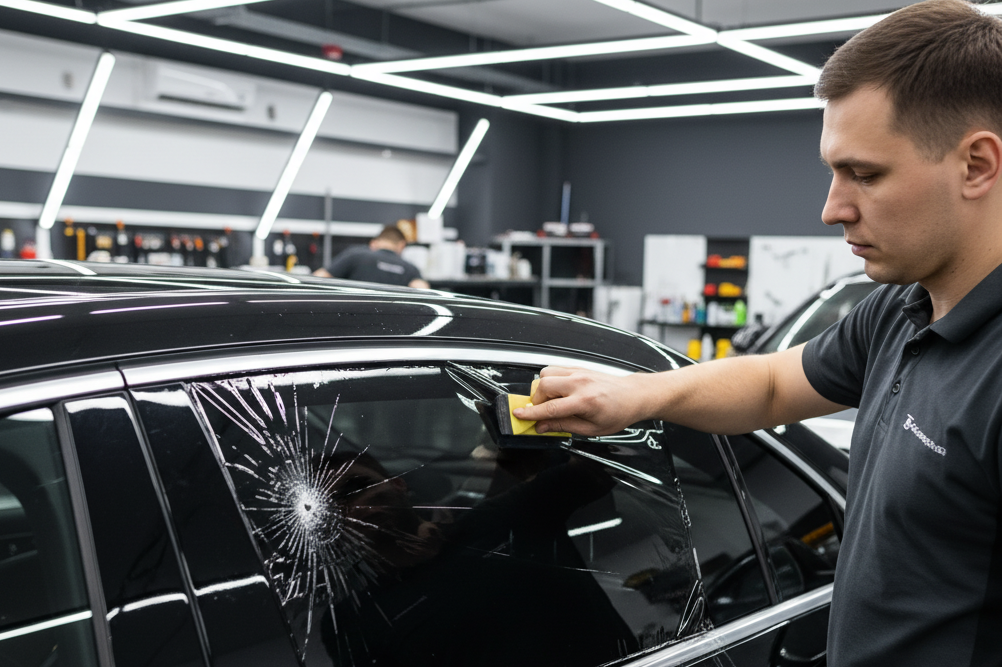
Restoring Privacy to Damaged Auto Glass
More than just an annoyance, a broken or cracked automobile window can seem like a direct assault on your personal space. The damage is more severe than a mere crack for cars with privacy glass. It jeopardizes the privacy and security you’ve become accustomed to from your car. When your side glass or tinted rear window is broken, you lose the feeling of being in a private bubble while driving. The repair procedure might be difficult to understand. Is a complete replacement required, or would a basic repair be adequate? We will discuss the various types of privacy glass, the differences between repairs and replacements, and the expectations for the restoration process.
Get An Auto Glass Replacement Quote Now 866.278.7417

Windshield Replacement & Repair
Our competitors push you into going to their shop to get your glass fixed-making it cheaper for them. We make it easier for YOU to get back on the road by offering free mobile repairs at your home or work. With our free mobile services servicing the entire Orange County & Los Angeles area, we can often handle your windscreen replacement the same day! So the next time you need a windshield replacement, give us a call.
Talk to a Windshield Replacement Specialist Now 866.278.7417

Calibration
Calibration is the process of returning a vehicle’s ADAS to OEM specifications. Calibration is necessary after a new glass installation, particularly a windshield with a camera mounted to it, to ensure that the ADAS features continue to function properly despite having been moved during installation. If a car’s ADAS is not properly calibrated, the system may not function safely. A misaligned camera could jeopardize the functionality of the system and lead to dangerous driving or accidents, so it is crucial that the cameras are aligned perfectly, which is what windshield calibration ensures.
Talk to a Calibration Specialist Now 866.278.7417

Fleet Auto Glass Repair
We provide expert auto glass repair and windshield replacement services for commercial fleets of all sizes. We are experienced with all manufacturers and machine types of domestic or foreign cars, trucks, vans, or commercial vehicles, including heavy equipment. Our same day mobile auto glass and windshield repair service will enable you to get back on the road faster and start saving you time and money instantly. Give us a call today! We are here to help!
Talk to a Fleet Auto Glass Specialist Now 866.278.7417
Comprehending Privacy Glass
Prior to exploring repair possibilities, it’s critical to comprehend the definition of privacy glass. Factory privacy glasses are made by coloring the glass while it is being manufactured, rather than aftermarket window tints, which are films that are put on the interior of the glass.
The glass itself has a colored look due to the addition of a black pigment. SUVs, trucks, and vans typically feature this type of glass on their side and back windows. The main advantage of manufacturing privacy glass is its longevity. The tint won’t bubble, peel, or scrape over time as an aftermarket film may since it is a natural part of the glass.
It keeps the interior of the car cooler, gives off a constant appearance, and protects against UV rays. However, certain methods are needed to restore this specialty glass when it is broken.
Would it be possible to Repair Damaged Privacy Glass
The kind, extent, and location of the damage will determine whether your damaged vehicle glass can be fixed. Repairing minor chips or cracks, especially on the windshield, is frequently feasible. The glass’s structural integrity is restored, and the flaw is far less obvious when a technician injects a unique resin into the damaged region, where it dries and hardens.
Repairs are usually restricted to windshields, though. Tempered glass, which is intended to break into tiny, granular fragments upon contact for safety, is typically used to make side and back windows. Repairing your tempered privacy glass is not an option if it is broken or has a large fracture. It will be necessary to replace the complete pane of glass.
A repair may be possible for small chips in a laminated side glass (less frequent yet present in some premium automobiles), but it’s important to get expert advice. They may evaluate the damage and decide if a repair can be made securely and successfully without weakening the glass.
Do you have a Question?
Get An Auto Glass Replacement Quote Now 866.278.7417
The Premier Privacy Glass Solution
A complete replacement is the only practical fix for most cases of broken privacy glass on side or rear windows. This procedure guarantees the complete restoration of your car’s safety, security, and appearance.
Finding the Correct Glass: Selecting the appropriate glass is essential to a successful replacement. Auto glass experts will locate glass for your car that is Original Equipment Manufacturer (OEM) or OEM-equivalent.
This guarantees that the new window will be the same size, shape, and—above all—tint level as your original manufacturing glass. By using the correct component, you can ensure a smooth fit with the other windows and preserve the consistent, high-quality look of your car.
The Process of Replacement
A qualified technician should perform the exacting process of replacing an automobile’s glass. Typically, the steps consist of
Removing the Damaged Glass: The technician carefully clears the window frame and the inside of the automobile of any last bits of shattered glass.
Cleaning the Area: To guarantee a good fit and a tight seal for the new glass, the window frame and surrounding seals are meticulously cleaned.
Setting up the New Window: Carefully, the new privacy glass pane is inserted into the window channel. To guarantee proper operation, the technician will also inspect and adjust the window regulator for side windows.
Final Inspection: The technician makes sure your car looks brand new by cleaning the glass and testing the window’s operation after installation.
How About Aftermarket Tint
If you’ve replaced the factory privacy glass in your car with an aftermarket window tint, the procedure differs slightly.
Fixing Tinted Windows: Careful repair is necessary if an aftermarket tinted window develops a chip or crack. The technician will need to work around the film. In certain situations, it could be necessary to remove a tiny amount of pigment to inject the resin. Even while talented technicians can reduce the visual impact, the final product may have some flaws.
Changing Tinted Windows: The previous tint and any damaged glass will be removed if the window has to be replaced. After installing a fresh, untinted glass, a fresh coat of tinting film has to be put on.
Matching the tint level of your other windows becomes essential at this point. To provide a uniform appearance across your car, a trustworthy tinting business can assist you in choosing a film that closely resembles the hue and shade of your current tint.
Getting Your Mind Back in Balance
Having to deal with broken car glass may be frustrating, particularly if it compromises your feeling of security and privacy. Working with experts and being aware of your alternatives can help you make sure the issue is handled effectively and accurately. You may drive with confidence and peace of mind once again after a thorough replacement with factory-spec privacy glass restores your car’s original appearance and functionality.
Don’t wait if your privacy glass is broken. To evaluate the damage and suggest the best course of action, get in touch with a reputable car glass service. From finding the ideal glass to doing an impeccable installation, they can take care of everything, putting you back on the road in a discreet and safe manner.
Film & Frosting: Applying ornamental or useful films to the window can completely transform the look and privacy of a car. Whether you prefer a custom-designed film or a smooth, frosted appearance, the application procedure demands care and accuracy. The entire purpose of applying the film might be undermined by a poor application, which can result in bubbles, peeling, and an amateurish finish.
The fundamental methods for putting frosting and other coatings on car glass will be covered in this book. This book will cover everything from glass surface preparation to the finishing touches that ensure a perfect, long-lasting outcome. You can get a high-quality finish that looks fantastic and lasts over time by following these procedures.
Getting the Glass Ready for Use
The most important phase in the film application process is preparation. To guarantee that the film adheres properly and smoothly, the surface must be clean and free of contaminants. The most common reason for bubbles, rising edges, and other flaws is skipping or speeding up this step.
Step 1: Complete Cleaning. First, give the glass a thorough cleaning. Even tiny particles of oil or dust might become lodged behind the layer, resulting in unsightly imperfections.
First Wash: Wash the glass with a gentle soap and water solution. A basic dish soap is effective. To get rid of all the filth and grime, use a rubber squeegee or a soft, lint-free cloth.
Finding Stubborn Debris by Scraping: A fresh, single-edge razor blade is your best bet for removing any tough residue, such as paint particles, tree sap, or old glue. Gently scrape away the debris while holding the blade at a low angle (about 30 degrees) to the glass. While scraping, keep the glass moist with your cleaning solution to lubricate the surface and avoid scratches. Observe the corners and edges carefully.
Final Rinse and Wipe: To get rid of any soap residue and loose particles, rinse the glass well with clean water after scraping. To prevent reapplying dirt, wipe the blade after each pass of the squeegee to dry the glass. Lastly, to make sure that no dirt may get onto the glass while applying, use a fresh, moist cloth to wash the surrounding window gaskets and frames.
Step 2: Establishing a Clean Workplace. Your surroundings have a big impact on the result. Windy or dusty areas will contaminate the adhesive side of the film and your glass.
Work Indoors: Try to work in a garage or other enclosed, well-lit area. This will shield you from elements that might cause the application solution to dry too fast, such as wind, dust, and direct sunshine.
Reduce Air Movement: Shut off fans and air conditioners that can spread dust.
Spritz the Air: A professional suggestion is to use a spray bottle to softly spritz the air in your office. This technique weighs down dust particles in the air, preventing them from falling on your work area.
Do you have a Question?
Get An Auto Glass Replacement Quote Now 866.278.7417
The Method of Wet Application
The “wet application” technique is common for the majority of car glass films, including icing. Applying a specific solution allows you to position and modify the film on the glass before it fully attaches.
To begin, please prepare your application solution. Often referred to as a “slip solution,” the application solution is what enables the wet approach. It produces a transient, slick coating between the glass and the adhesive of the film.
The Proper Blend: Usually, water and a tiny bit of a wetting agent are combined to create the solution. A few drops of clear, mild baby shampoo or dish soap (without degreasers) may be added to a spray bottle of distilled water to create your own solution, or you can buy premixed ones. A quarter teaspoon of soap to one quart of water is a typical ratio.
Why Use Distilled Water? It is advised to use distilled water, as it is devoid of the minerals present in tap water, which might produce deposits beneath the film after the water evaporates.
Step 2: Prepare the film by measuring and cutting it precisely. Precise cutting and measuring are essential. Always cut once and measure twice.
Measure the glass. Take precise measurements of the glass area that you wish to cover.
Cut the movie: Place the film, liner side up, on a spotless, level surface. Cut the film to the desired size with a sharp utility knife and a straightedge, leaving an inch or so of extra on all sides. This additional margin, which will be removed later, allows for some inaccuracy.
Remove the liner: To avoid leaving fingerprints on the adhesive, mist your hands with the slip solution before handling the film. Peel the protective liner from the rear of the film with caution. Apply your slip solution liberally to the freshly exposed adhesive side as you peel. If at all feasible, use an assistance spray while peeling to keep the film from curling up and clinging to itself.
Putting on and finishing the Film
You’re ready for the big moment, with your glass and video ready. Take your time and work methodically.
Step 1: Setting Up the Movie. Mist the glass: Apply your application solution to the glass surface in a thick layer. Make sure the glass is totally moist.
Put the Film on: The wet film should be carefully lifted and placed, adhesive side down, onto the wet glass. You may slip the film into the proper position using the solution. Ensure that the excess film is uniformly spaced around the corners of your one-inch border.
Squeeze the solution out in Step Two. To establish a solid connection with the glass, this stage eliminates the application solution and air bubbles beneath the coating.
Anchor the Movie: To secure the film in place, lightly push the middle.
First Pass: Apply steady, overlapping strokes with a squeegee from the center out to the edges. For the top half, use a horizontal motion; for the bottom half, use a vertical motion. Most of the air and water bubbles are forced out from beneath the layer as a result. On the initial pass, don’t push too strongly since you can cause the film to move.
Second Pass: You can use the squeegee to exert extra pressure once the film is anchored and the majority of the solution has been removed. To eliminate any last traces of bubbles and solution, repeat the procedure, moving outward from the center. To absorb the water being forced to the edges, wrap a paper towel around your squeegee.
Step 3: Final Touches and Trimming. Cut the edges: Trim the extra film gently around the glass’s edges with a steady hand and a sharp utility knife. For a neat, straight cut, use the glass’s edge or the window gasket as a reference. Allow a very little space (about 1/16 of an inch) between the window frame and the edge of the film. When the film gradually shrinks throughout the drying process, this spacing stops it from lifting.
Final Squeegee: To make sure the film edges are securely bonded, squeegee them one final time after cutting. For this, you can use a specialist corner tool or cover your squeegee in a sturdy card.
Curing Duration: It takes time for the film to cure. The remaining moisture will evaporate, and the adhesive will create its final bond during this time, which can range from a few days to a few weeks, depending on the film and environment.
During this period, you could detect a tiny cloudiness or haziness, which is typical and will go away as the film dries. During the curing period advised by the film manufacturer, refrain from washing the automobile or rolling down the windows.
Obtain a Skillful Finish
The application of frosting or film to the glass of a car demands a significant amount of labor, but the end effect is well worth the effort. Putting a high premium on maintaining a clean environment, performing the wet application process appropriately, and taking your time at each stage are all things that may help you achieve a flawless and glossy finish. This modification not only enhances the privacy and aesthetic appeal of your vehicle, but it also gives you the satisfaction of a job well done.
Mobile Safe Auto Glass
14241 E Firestone blvd suite 400,
La Mirada, CA 90638
Phone: (562) 608-1154
Toll Free: 1 866 278 7417
Mail: sales@mobilesafeautoglass.com
Get a FREE QUOTE today! You can get a free quote and schedule 24/7 using this free quote wizard.
Mon – Fri 8am – 5pm
Saturday 8am – 1pm
Sunday Closed