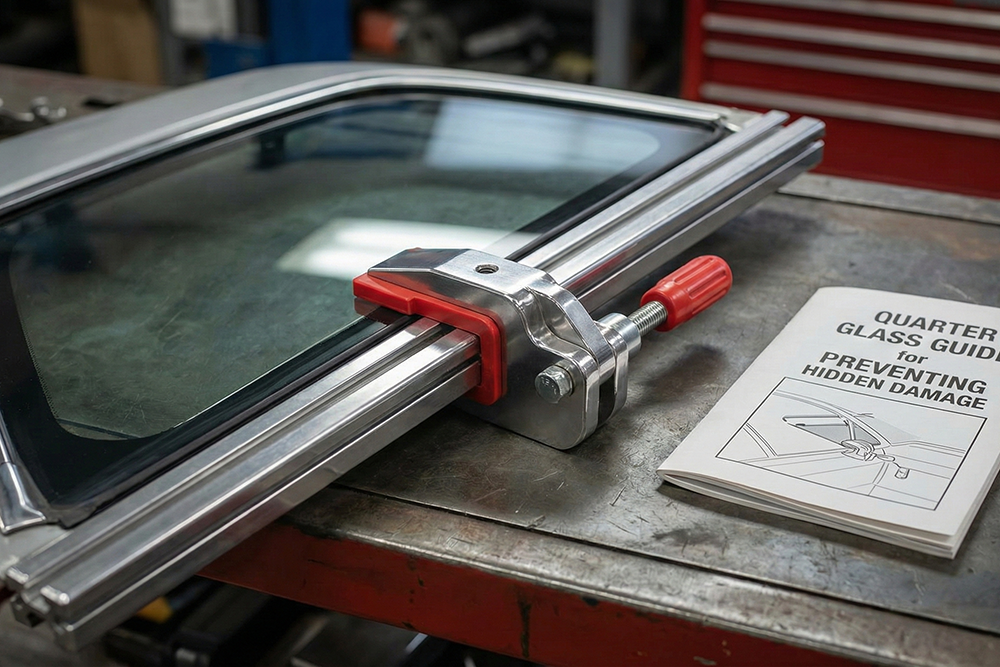
Quarter Glass Guide for Preventing Hidden Damage
The majority of drivers are familiar with their car’s side windows and windshield. They are big, noticeable, and necessary for visibility. However, what about the smaller, frequently disregarded glass panes? The structural integrity and general safety of your automobile are significantly impacted by the quarter glass, which is hidden close to the back of the car or occasionally built into the front doors. Damage to your quarter window may appear little, but if ignored, it can cause serious issues. A cracked or poorly sealed quarter glass is more than just an aesthetic problem; it can lead to interior damage from water leaks to security flaws.
Get An Auto Glass Replacement Quote Now 866.278.7417

Windshield Replacement & Repair
Our competitors push you into going to their shop to get your glass fixed-making it cheaper for them. We make it easier for YOU to get back on the road by offering free mobile repairs at your home or work. With our free mobile services servicing the entire Orange County & Los Angeles area, we can often handle your windscreen replacement the same day! So the next time you need a windshield replacement, give us a call.
Talk to a Windshield Replacement Specialist Now 866.278.7417

Calibration
Calibration is the process of returning a vehicle’s ADAS to OEM specifications. Calibration is necessary after a new glass installation, particularly a windshield with a camera mounted to it, to ensure that the ADAS features continue to function properly despite having been moved during installation. If a car’s ADAS is not properly calibrated, the system may not function safely. A misaligned camera could jeopardize the functionality of the system and lead to dangerous driving or accidents, so it is crucial that the cameras are aligned perfectly, which is what windshield calibration ensures.
Talk to a Calibration Specialist Now 866.278.7417

Fleet Auto Glass Repair
We provide expert auto glass repair and windshield replacement services for commercial fleets of all sizes. We are experienced with all manufacturers and machine types of domestic or foreign cars, trucks, vans, or commercial vehicles, including heavy equipment. Our same day mobile auto glass and windshield repair service will enable you to get back on the road faster and start saving you time and money instantly. Give us a call today! We are here to help!
Talk to a Fleet Auto Glass Specialist Now 866.278.7417
Quarter Glass
A vehicle’s quarter glass, often referred to as a valance window or quarter lite, is a tiny pane of glass that is usually triangular or trapezoidal in shape. Depending on the car’s design, its placement may change.
Older cars, especially two-door coupes, frequently have quarter glass in front of the rear window and behind the primary side doors. Separate from the main roll-down window, a tiny, fixed piece of glass is frequently built into the back door of contemporary four-door cars and SUVs. To enhance driver vision, some cars even place them in front, close to the side-view mirrors and A-pillar.
Although the majority of contemporary quarter glass is fixed and cannot be opened, its basic functions remain vital. In the past, these tiny windows were frequently hinged and could be opened to offer more air, a characteristic that gave them the moniker “vent windows.” It enhances the vehicle’s overall structural strength and aerodynamic design, helps to remove blind spots, and lets more natural light into the cabin. Quarter glass is frequently made differently than regular side windows due to its distinct shape and location, necessitating particular maintenance and replacement techniques.
The Purposes of Quarter Glass
Despite its modest size, quarter glass has a number of important functions that enhance the comfort, safety, and design of a car. Your driving experience may suffer in a number of ways if you disregard its significance.
Increased Safety and Visibility: One of quarter glass’s most important functions is to increase driver visibility. It lessens blind spots caused by the car’s structure when positioned in the front of the vehicle next to the A-pillars, which are the vertical supports on each side of the windshield. This is especially helpful while changing lanes or negotiating crossroads.
Similarly, C-pillars (the supports behind the rear doors) or quarter glass in the rear doors provide the driver a better vision while checking blind areas or glancing over their shoulder, making parking and reversing safer. It guarantees that the driver gets a more comprehensive view of their surroundings by expanding the overall glass surface.
Structural Integrity: The structural structure of a car is mostly composed of automotive glass. Like the windshield and other windows, the quarter glass makes the car’s structure more stiff. In the event of a rollover accident, it is crucial to support the roof and preserve the passenger cabin’s structural integrity.
A quarter glass panel that is correctly placed and undamaged guarantees that the car’s structure functions as intended in an accident, safeguarding the occupants. The entire structure may become weaker due to a damaged or missing panel, making it less resilient to impact pressures.
Interior Comfort and Environment: Quarter glass makes the interior of the car feel brighter and more airy by letting in more natural light. This can lessen claustrophobia, which can improve the passenger experience, particularly on lengthy trips.
Operable vent windows allowed fresh air to circulate in earlier cars without making the buffeting noise that comes with opening the main window quickly. The fixed panels nevertheless help create a more spacious and airy cabin environment, even if this feature is uncommon nowadays.
Aerodynamic and aesthetic design: Quarter glass is a crucial component that shapes a car’s profile from a design standpoint. It is used by automotive designers to provide streamlined, flowing lines from the car’s front to back. Large metal surfaces, such as the C-pillar, can be broken up with it to give the design a more attractive and balanced appearance.
Additionally, the vehicle’s aerodynamics are enhanced by the quarter glass’s smooth integration. It can lessen drag and wind noise by producing a smoother surface for air to pass across, which could result in somewhat improved fuel economy.
Do you have a Question?
Get An Auto Glass Replacement Quote Now 866.278.7417
Typical Reasons for Damage to Quarter Glass
Tempered glass, the material used to make quarter glass, is intended to break into tiny, granular fragments when struck in order to lower the possibility of harm. But this also implies that it may be susceptible to different kinds of harm.
Impact from road material: Rocks, gravel, and other material thrown up by passing cars can cause damage to quarter glass, just like they do to your windshield. A direct strike from a stone at high speed can easily result in a chip or crack, albeit this is less likely because of its placement. Highways, country roads, and areas close to building sites where there is loose debris on the road surface are more prone to experience this.
Vandalism and Break-Ins: Thieves may target quarter glass due to its tiny size and frequently hidden placement. Some people believe it to be a simpler or less noticeable entrance than a bigger side window. The tempered glass may be broken by a strong hit with a pointed tool, enabling a thief to open the door from the inside. The panel must be completely replaced due to this kind of deliberate damage.
Extreme Temperature Fluctuations: Auto glass may be stressed by abrupt and drastic temperature fluctuations. For instance, the glass may expand and shrink when heated by the strong summer sun or when a frozen automobile is de-iced in the winter with hot water.
This heat stress can accelerate the progression of damage or even trigger spontaneous shattering if there is already a tiny, undetectable chip or crack in the glass. This is particularly prevalent in areas with strong temperature fluctuations.
Stress Cracks and Installation Problems: Stress cracks can occur without any direct contact; however, they are less common. These may be brought on by driving over a big pothole or getting in a little collision, which can put too much strain or torsion on the car’s structure. Another possible reason is improper installation. Incorrect installation of the quarter glass panel or improper application of the adhesive seal may result in stress spots that ultimately cause cracking. The glass may be further stressed if moisture seeps in through a weak seal and freezes and expands.
Accidents & Collisions: A quarter glass panel may be damaged or dislodged by even a little fender-bender. A collision might cause the vehicle’s structure to twist, applying tremendous pressure to the glass. Even in low-speed hits, it’s crucial to check all glass for indications of fresh damage or a weakened seal. In more serious accidents, the quarter glass will probably break as it is designed to shield people.
The Importance of Paying Attention to Quarter Glass Damage
Even though a tiny chip or fracture in your quarter glass may not seem like much, ignoring it might result in more significant and expensive problems.
Vehicle Security Vulnerability: A quarter glass panel that is cracked or missing invites theft. It gives thieves a simple way to get inside your car and take things. The security of a closed door may be circumvented by simply punching out even a cracked panel. Making sure all of your car’s openings, including the tiny windows, are secure and undamaged is the first step in securing it.
Risk of Water Leaks and Interior Damage: Water leaks are one of the most frequent effects of a broken quarter glass seal. Moisture and rain can enter the car’s interior and cause a number of issues. This moisture may soak headliners, upholstery, and carpets, fostering the growth of mold and mildew. This may eventually lead to offensive smells and possible health issues. Additionally, water can harm delicate electronic parts found in the dashboard or doors, necessitating costly and intricate electrical repairs.
Decreased Structural Integrity: As was previously said, automobile glass is a part of the structural support system of your vehicle. This system is weakened by a quarter glass panel that is fractured or not securely sealed. A damaged glass panel will not give the roof the proper amount of support in the case of a rollover or side-impact collision, thus raising the risk of passenger injuries. Maintaining the vehicle’s intended safety requirements requires that all of the glass be in perfect condition.
Increased Wind Noise: When you drive, air may enter the cabin through a hole created by a malfunctioning seal around the quarter glass. This causes audible wind noise, which can be bothersome and distracting, particularly when driving on highways. A little whistle may grow into a loud roar, making your trip less comfortable and making it harder to listen to music or have discussions.
Possibility of Additional Damage: The stability of tempered glass may be jeopardized by a tiny chip or break. A defect in tempered glass might cause the entire panel to abruptly shatter, in contrast to laminated windshield glass, which is intended to keep together when broken. A cracked quarter glass may shatter entirely with only a quick shock from a pothole or the act of forcefully shutting a door, causing a mess and an unexpected safety risk.
Arrange an Inspection to Safeguard Your Investment
Every component, no matter how big or little, is a part of the intricate mechanism that is your car. This also applies to the quarter glass. It is crucial for your comfort, safety, and security when driving. Ignoring damage, no matter how small, can result in a series of issues that are far more costly and difficult to resolve than the original problem.
Avoid waiting for a little leak to develop into a significant mold issue or for a slight crack to become a broken window. Take proactive measures to maintain the health of your car. It’s time to get expert assistance if you’ve observed a chip, fracture, or defective seal on your quarter glass—or any other window. A skilled vehicle glass expert may find hidden damage and avoid more problems with a rapid check.
To arrange an examination, get in touch with a reputable car glass service right now. Safeguarding your car and maintaining your peace of mind is a tiny action that has a significant impact.
The Reasons Regular Vehicle Inspections Cannot Be Negotiated
The majority of us use our automobiles on a daily basis. We rely on them to transport us to and from work and school. However, when was the last time you looked more closely at your car before getting behind the wheel? Many people believe that everything is OK as long as the automobile starts and takes them from point A to point B. However, this kind of thinking ignores a vital component of automobile ownership: the significance of regular inspections.
Car enthusiasts and mechanics are not the only people who should have regular vehicle checks. Every motorist should develop these easy-to-follow yet effective habits. Making these inspections can make the difference between a risky, expensive breakdown and a safe, dependable trip. When it comes to safeguarding your investment and, more crucially, your passengers’ and your own life, they are your first line of protection against any mechanical breakdowns.
This tutorial will explain the importance of these regular checks. We’ll go over the particular inspections you should be doing on a regular basis and explain how each one improves your safety, helps you avoid costly repairs, and preserves the value of your car over time. By the end, you’ll have a concise, doable checklist to maintain your vehicle in top shape and feel at ease each time you turn on the ignition.
The Basis for Automobile Safety
Safety is the strongest argument in favor of regular car inspections. Because an automobile is a complicated mechanism with thousands of interrelated pieces, even a little issue can have disastrous results. You may find and fix any risks before they become major issues by routinely checking important parts.
Safeguarding Your Most Valuable Property: Consider the people you drive with, including your loved ones, friends, and coworkers. It is crucial that you and they be secure. Devastating accidents can result from a sudden tire rupture on the highway, brake failure at a major crossroads, or malfunctioning headlights at night. These are frequently the consequence of basic maintenance being neglected; they are not only sporadic, unforeseen occurrences.
Being proactive instead of reactive is made possible by routine checks. For example, identifying a gradual tire leak or worn brake pads allows you to address the problem before it becomes harmful. It involves taking charge of your car’s condition to make every journey as safe as possible. For the enormous security they offer, the few minutes it takes to go around your automobile and inspect these crucial systems are a minor investment.
How Easy Checks Prevent Catastrophic Incidents: A lack of basic maintenance is often the cause of catastrophic incidents that could have been avoided. Let’s examine a few typical situations:
Tire Blowouts: One of the main causes of blowouts is underinflated tires. They degrade the tire structure because they wear unevenly and overheat more quickly. This may be avoided with a straightforward weekly check using a pressure gauge. Brake Failure: Over time, brake fluid may leak or get polluted, decreasing its efficiency. Brake pads that are worn out can no longer hold onto the rotors. You can detect an issue early by listening for odd noises or sensing a shift in the response of the brake pedal.
Loss of Visibility: It is difficult for you and other drivers to see you when your headlights, taillights, or turn signals are burned out. Before driving at night, a brief visual inspection is essential. In a similar vein, your eyesight may be seriously compromised by worn wiper blades during a downpour. These illustrations show how apparently insignificant mistakes can escalate into potentially fatal situations. You have the chance to identify these problems during routine inspections when they are still minor, controllable, and much less hazardous.
Do you have a Question?
Get An Auto Glass Replacement Quote Now 866.278.7417
Maintaining the Value and Health of Your Car
Regular automobile inspections have a significant impact on your car’s long-term health and financial worth in addition to its immediate safety advantages. When it comes time to sell or trade in a car, a well-maintained vehicle not only performs better and lasts longer, but it also sells for more money.
The Relationship Between Maintenance and Longevity: An automobile needs routine maintenance to operate correctly for many years, just like the human body. Ignoring frequent inspections speeds up wear and tear and causes important components to break too soon. Running your automobile on little oil, for instance, might harm your engine irreparably, requiring a costly engine replacement instead of just an oil change.
Checking engine oil, coolant, and other fluids on a regular basis guarantees that the engine is adequately lubricated and cooled, preventing overheating and internal damage. This is one way that routine inspections can prolong the life of a vehicle. Transmission Performance: Grinding gears, sliding, and ultimately transmission failure—one of the most costly repairs—can be avoided by monitoring the levels and quality of transmission fluid.
Steering and Suspension: Examining power steering fluid and suspension parts guarantees quick handling and a smooth ride, which lessens strain on the chassis and other components. You are actively prolonging your car’s useful life by keeping up with these simple maintenance chores. You’ll enjoy more dependable performance, have fewer problems, and postpone the need to buy a new vehicle.
Increasing Resale Value: Although an automobile is a substantial financial commitment, it is also a depreciating asset. The amount that it depreciates, however, is mostly beyond your hands. An automobile with a track record of consistent upkeep and care is far more appealing to prospective purchasers.
A thorough service history that demonstrates frequent tire rotations, oil changes, and other inspections is proof of responsible ownership when you decide to sell your vehicle. It indicates to a buyer that the vehicle has been well-maintained and is less likely to have undetected issues. Its resale value may rise dramatically as a result, giving you a bigger return on your original investment. A well-maintained automobile stands out and frequently sells faster and for a higher price in a competitive used car market.
Your Crucial Auto Inspection Schedule
Let’s concentrate on the how now that we know the why. The secret to consistency is to establish a basic, repeating routine. To make these checks easier to do, we may divide them into weekly, monthly, and seasonal duties.
The Weekly Walk-Around: Every week, or even before a lengthy journey, this brief 5-minute check-in should become a habit. Examine each of the four tires visually for any indications of damage, such as cuts, bulges, or embedded items. Make sure that the inflation level is in line with the suggested PSI shown on the sticker inside the driver’s door jamb by using a tire pressure tester. Remember to bring the spare tire!
Lights: Activate your brake lights (you might require assistance from a second person), turn signals, taillights, and headlights (both high and low beams). To make sure all the bulbs are functioning, walk around the vehicle. When driving at night or in bad weather, this is extremely crucial.
Wipers and Fluid: Look for indications of ripping or cracking on your wiper blades. Check to see whether they successfully remove streaks from the windshield. To be ready for a muddy or dirty splash, fill up the washer fluid reservoir. General Inspection: Quickly check underneath the vehicle for any fresh drips or puddles that could point to a fluid leak.
The Monthly Beneath-the-Hood Inspection: Spend 15 to 20 minutes looking beneath the hood once a month. This is best done when the engine is cool. Engine Oil: To check the oil level, take out the dipstick, clean it, put it back in completely, and then take it out again. It ought to be situated between the “Add” and “Full” symbols. Take notice of the color of the oil as well. Amber is the usual color of healthy oil; if it’s milky, grainy, or dark black, it’s time for a change.
Coolant (Antifreeze): Find the coolant reservoir, which is often a transparent plastic tank. The “Min” and “Max” lines are where the coolant level should be. When the engine is hot, never open the radiator cap. Brake Fluid: The reservoir for the brake fluid is usually transparent as well. Verify if the fluid level is close to the “Max” line. The ideal brake fluid color is pale amber to clear. It must be changed if it is black or dark brown.
Power Steering Fluid: You will have a reservoir for this fluid if your vehicle has hydraulic power steering. Use the dipstick that is fastened to the cap to check the level. Battery: Look for corrosion (a white, powdery material) on the battery terminals. You can use a wire brush to remove any that you see. Make sure the cables are attached firmly.
Seasonal and Semi-Annual Checks: It’s a good idea to do a few more thorough checks twice a year, maybe during the summer or winter season. Brakes: When you apply the brakes, listen for any screeching, grinding, or clicking noises. Observe whether the automobile pulls to one side or whether the pedal is soft or spongy. Get a professional brake inspection if you see any of these symptoms.
The “penny test” may be used to determine the tread depth of your tires. With Lincoln’s head upside down, insert a penny into the tread. Your tires need to be replaced if you can see the top of his head. Additionally, it’s an excellent time to rotate your tires, which prolongs their life and encourages even wear.
Belts and Hoses: Examine the rubber hoses visually for leaks, bulges, or cracks. Look for indications of fraying or cracking on the timing belt and serpentine belt, if they are visible.
Choosing a Path to Auto Confidence
An essential component of proper auto ownership is routine vehicle inspections. They are about being a proactive and cautious driver, not about being a mechanic. You may have a better grasp of your car and its requirements by devoting a few minutes each week and month. Because you are taking concrete measures to safeguard your passengers, avoid expensive repairs, and maintain the worth of your vehicle, this practice instills trust.
Begin now. Establish periodic checks as a mandatory part of your routine, establish a basic checklist, and put reminders on your phone. No matter where the road leads you, you’ll be able to enjoy the peace of mind that comes from knowing that you’re in charge of your travel, and your automobile will repay you with dependable performance.
Mobile Safe Auto Glass
14241 E Firestone blvd suite 400,
La Mirada, CA 90638
Phone: (562) 608-1154
Toll Free: 1 866 278 7417
Mail: sales@mobilesafeautoglass.com
Get a FREE QUOTE today! You can get a free quote and schedule 24/7 using this free quote wizard.
Mon – Fri 8am – 5pm
Saturday 8am – 1pm
Sunday Closed