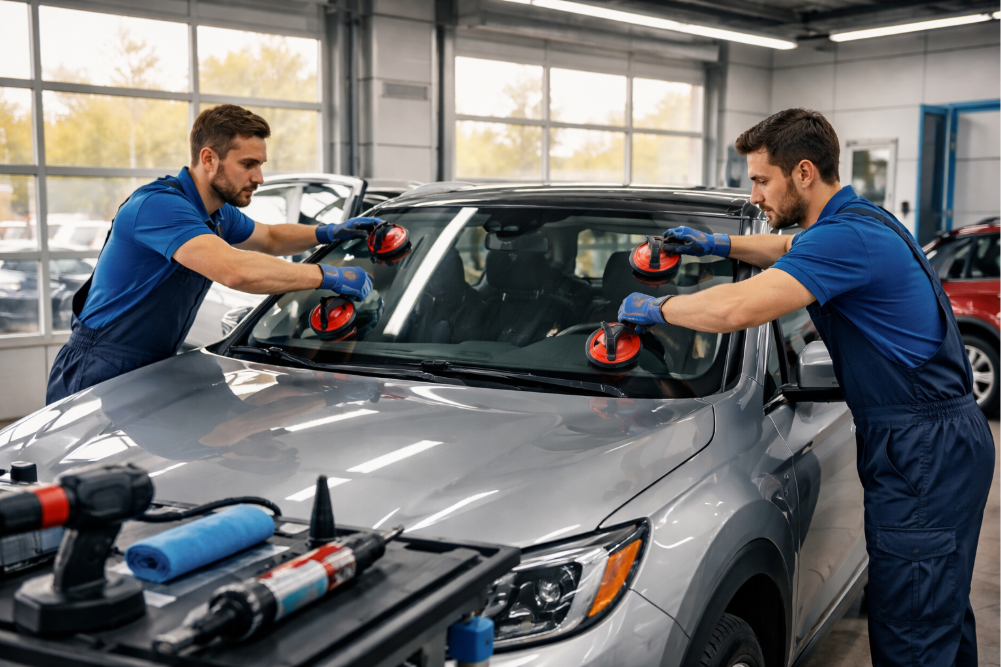
Latest Trends in Insurance Windshield Replacement
Ten years ago, a damaged piece of car glass just required a short drive to a nearby repair shop and a very straightforward insurance claim. The broken glass would be removed by mechanics, replaced with a new one, and you would be sent on your way. Since then, vehicles have seen significant change. A sophisticated nexus of sensors, cameras, and heating components makes up modern car glass. The way insurance companies manage windshield damage has completely altered as a result of this development in vehicle engineering. The procedure calls for costly technology, highly specialized knowledge, and an updated method of processing claims.
Get An Auto Glass Replacement Quote Now 866.278.7417

Windshield Replacement & Repair
Our competitors push you into going to their shop to get your glass fixed-making it cheaper for them. We make it easier for YOU to get back on the road by offering free mobile repairs at your home or work. With our free mobile services servicing the entire Orange County & Los Angeles area, we can often handle your windscreen replacement the same day! So the next time you need a windshield replacement, give us a call.
Talk to a Windshield Replacement Specialist Now 866.278.7417

Calibration
Calibration is the process of returning a vehicle’s ADAS to OEM specifications. Calibration is necessary after a new glass installation, particularly a windshield with a camera mounted to it, to ensure that the ADAS features continue to function properly despite having been moved during installation. If a car’s ADAS is not properly calibrated, the system may not function safely. A misaligned camera could jeopardize the functionality of the system and lead to dangerous driving or accidents, so it is crucial that the cameras are aligned perfectly, which is what windshield calibration ensures.
Talk to a Calibration Specialist Now 866.278.7417

Fleet Auto Glass Repair
We provide expert auto glass repair and windshield replacement services for commercial fleets of all sizes. We are experienced with all manufacturers and machine types of domestic or foreign cars, trucks, vans, or commercial vehicles, including heavy equipment. Our same day mobile auto glass and windshield repair service will enable you to get back on the road faster and start saving you time and money instantly. Give us a call today! We are here to help!
Talk to a Fleet Auto Glass Specialist Now 866.278.7417
The Rise of Advanced Driver Assistance Systems
Advanced Driver Assistance Systems (ADAS) are being packed into cars by automakers. The adaptive cruise control, automatic emergency braking, and lane departure alarms are some of the functions that are included in this technology. Typically, the cameras and sensors that drive these safety features are fixed directly to the windshield.
Why recalibration is required: The camera is physically relocated when a technician replaces a windshield with ADAS. The precision of the system may be affected by even a millimeter of movement.
In an attempt to “correct” your location, a lane-keep assist camera may guide you into oncoming traffic if it points slightly too far to the left. After the new glass is installed, technicians must carry out an exact recalibration procedure.
Specialized target boards, diagnostic software, and a controlled environment are needed for this. The cost of a typical windshield repair has increased dramatically because of the additional work and equipment.
How insurance pays for recalibration: In order to account for ADAS recalibration, insurance firms have had to modify their comprehensive coverage levels. These days, a replacement that used to cost $300 might easily cost more than $1,500.
In order to completely cover both the glass and the required calibration, the majority of major insurance companies have changed their policies. Policyholders are being actively referred by providers to certified network shops that have shown they have the appropriate calibrating technology.
AI Damage Assessment and Automated Claims
There used to be days of waiting for an adjuster to see the damage, phone calls, and holding music when filing a car insurance claim. Automation is being used by the insurance sector in an effort to reduce expenses and enhance client satisfaction.
Taking a picture to submit a claim: A lot of premium insurance providers now provide AI-powered smartphone applications. You can just launch the app and snap a photo of the crack when a rock strikes your windshield. The AI quickly determines whether the glass requires a complete replacement or can be fixed with resin after scanning the picture to assess the extent and location of the damage.
Faster scheduling and approvals: Wait times are being significantly reduced by this automated assessment trend. The software instantly links the motorist with a nearby network auto glass shop when the AI confirms the claim.
The policyholder may use their phone to choose an appointment time. This smooth integration lowers the insurance carrier’s administrative costs while removing dangerous cars off the road more quickly.
Mobile Windshield Replacement Services: Customers want convenience in all facets of their life, and vehicle maintenance is no different. From being a specialized service, mobile windshield replacement has become the norm in the business.
Convenience in your driveway: Nowadays, repair businesses send out fleets of specially designed vans with all the equipment required to do a complete replacement in a home driveway or office parking lot.
This indicates that you do not need to take time off from work or sit in a waiting room for a significant amount of time. The technician arrives, completes the task, and collaborates directly with the insurance company on the documentation required for the claim.
The problem with mobile recalibration: Although mobile replacement is quite practical, it poses a problem for cars with ADAS. Driving the vehicle at predetermined speeds on well indicated routes is necessary for dynamic calibration, which may be accomplished via mobile service.
On the other hand, regulated illumination, a level floor, and precise distances from the targets are necessary for static calibration. While some auto glass manufacturers are creating sophisticated mobile calibration equipment, others still demand that drivers bring their vehicles to a physical location for the last safety inspection. To make sure that safety requirements are fulfilled, insurers keep a careful eye on these mobile capabilities.
Do you have a Question?
Get An Auto Glass Replacement Quote Now 866.278.7417
Glass Policies OEM vs Aftermarket
The argument between aftermarket and Original Equipment Manufacturer (OEM) glass has become more heated as car technology has advanced. The same company that created the original windshield also produces OEM glass. Third-party firms manufacture aftermarket glass.
Recognizing the variations in quality and safety: Automakers contend that only OEM glass ensures the precise curvature, clarity, and thickness needed for ADAS sensors to operate flawlessly. At a fraction of the price, aftermarket producers assert that their goods either meet or surpass the same Department of Transportation requirements.
What the majority of insurance plans really cover: Because it lowers their payment costs, insurance firms prefer to cover aftermarket glass. Clauses indicating that they would only cover “like kind and quality” aftermarket replacement parts are included in many conventional car plans.
You may have to pay the difference out of pocket if you drive a newer car and insist on OEM glass. For an extra price, several insurers now provide a particular “OEM endorsement” that ensures factory glass in the event that you ever need a replacement.
Legislative Impacts and Zero-Deductible States: The way insurance companies handle windshield replacements is greatly influenced by state legislation. A number of states have enacted laws intended to keep drivers safe by lowering the cost of glass repairs.
States that waive the deductible: Insurance companies must waive the comprehensive deductible for windshield replacements in states including Florida, Kentucky, and South Carolina.
In these states, there is no out-of-pocket expense for a replacement windshield if you have comprehensive coverage. Because driving with a broken windshield is very hazardous, lawmakers passed these regulations because they did not want individuals to put off repairs because they could not pay the $500 deductible.
How this impacts premium pricing: Insurance companies still have to pay the repair businesses, even if free windshield replacement sounds fantastic to consumers. Insurers often boost the baseline cost of comprehensive coverage for the whole state in order to meet these expenses. In order to pay for this required benefit, drivers in jurisdictions with zero deductibles often pay somewhat higher total rates.
Eco Friendly Auto Glass Disposal
There is growing pressure on the automobile sector to implement eco-friendly procedures. In the past, all of the millions of windshields that are replaced each year ended up in landfills.
Recycling laminated glass: Laminated glass, which is used to make windshields, is composed of two glass layers joined by a durable plastic interlayer (PVB). In the case of an accident, this material keeps the glass from breaking inside the cabin. Additionally, it makes recycling windshields quite difficult.
Technologies to extract the glass from the PVB plastic have recently been developed by specialist recycling plants. The recovered glass is crushed and used into reflective roadway paint or fiberglass insulation.
Flexible adhesives or carpet backing are made from the removed plastic. In order to include an eco-friendly component to their claims procedure, progressive insurance firms are starting to only collaborate with car glass networks that promise to recycle broken windshields.
FAQ on Insurance Windshield Replacement: Will my insurance rate increase if I file a windshield claim? A single glass claim won’t usually cause your premium to increase.
Comprehensive coverage, which covers events beyond your control, such a rock falling off a dump truck, includes windshield damage. However, your insurer can mark you as a high-risk client and change your premiums when it comes time for renewal if you submit many claims quickly.
Because they have pre-negotiated prices and validated the shop’s calibration equipment, insurance companies will strongly advise utilizing their “network” shops. You may have to pay in full up front and provide the receipt for refund if you choose an out-of-network store.
What is the duration of a contemporary replacement? After that, a further hour is required for the urethane glue to fully dry so that the vehicle may be driven safely. The whole consultation should take three to four hours if your vehicle needs static ADAS recalibration.
Safeguard Your Car and Your Money
The car glass business is developing quickly. The delicate technology that keeps you safe while driving is housed in windshields, which are essential structural elements. Insurance companies are depending on AI, mobile convenience, and stringent network regulations to control costs as repairs get more complicated and costly.
Examine your coverage for vehicle insurance now. Find out whether your insurer gives an OEM glass endorsement and check your comprehensive deductible. Knowing your coverage before a rock strikes your windshield guarantees a high-quality, safe repair without unanticipated out-of-pocket costs.
The Future of Auto Glass: Insurance Windshield Replacement Insights: As modern cars change quickly, so does the glass that shields drivers. These days, a windshield is more than simply a curved piece of clear glass that protects your face from the wind.
Packed with sensors, cameras, and heating components, it is a highly developed part of your car’s safety ecology. The way vehicle insurance companies handle glass claims is being drastically changed by this technological advancement.
The conventional windshield repair procedure is going to be seriously disrupted as automobile technology develops. Chips and cracks should be fixed quickly and smoothly, according to drivers.
However, what was once a straightforward roadside repair is now complicated by the incorporation of Advanced Driver Assistance Systems (ADAS). Insurance companies must adjust to these developments by striking a balance between the requirement for reasonable client premiums and the growing expenses of smart glasses.
For car owners, it is essential to comprehend these changes in the business. In a few years, your insurance policy’s handling of a damaged windshield may look quite different. Drivers may better plan for the future and make sure they have the appropriate coverage for their high-tech cars by looking at current developments in auto glass technology and claims processing.
How ADAS is Changing Windshield Claims: The majority of new cars come equipped with advanced driver assistance systems. The cameras and sensors installed just behind or on the windshield are a major component of these systems. A crisp, precisely aligned vision of the road is necessary for features like adaptive cruise control, automated emergency braking, and lane departure alerts.
The Development of Smart Glass Technology
Automakers are making significant investments in smart glass. Heads-up displays (HUD) that show speed and navigational information straight into the driver’s field of vision fall under this category. Some more recent windshields also include electrochromic materials that automatically tint to prevent glare or integrated acoustic damping to lessen cabin noise.
It might be difficult to obtain an appropriate aftermarket replacement when this specialty glass is damaged. To make sure all internal technologies work properly, insurance firms often need to purchase Original Equipment Manufacturer (OEM) glass.
Insurance Payouts and Calibration Costs: Replacing a contemporary windshield entails much more than just changing the glass. To make sure the ADAS cameras and sensors aim precisely where the manufacturer intended, technicians must readjust them.
A safety device might malfunction at a crucial time due to even a millimeter of misalignment. Highly skilled specialists, regulated lighting conditions, and costly diagnostic equipment are needed for this calibration procedure.
The average cost of replacing a windshield has increased dramatically as a result. In order to account for this required calibration, insurance firms are modifying their payment models, which greatly raises the total claim amount.
The Transition from Repair to Replacement: For many years, insurance companies strongly encouraged drivers to fix minor chips instead of replacing the whole windshield. Using resin to fix a tiny star-break is quick, inexpensive, and preserves the original manufacturing seals.
Do you have a Question?
Get An Auto Glass Replacement Quote Now 866.278.7417
When a Basic Chip Becomes a Significant Fix
Windshield repair regulations are evolving. Many manufacturers specifically prohibit fixing an ADAS camera if a rock chip appears right in front of it. The camera’s image may be distorted by the glue used to fill a chip, which might prevent lane-keep assistance or automated braking.
For small damage that might have been readily repaired ten years ago, insurance adjusters are now recommending complete replacements. This change raises the number of expensive replacement claims, which compels insurers to reconsider their deductible policies in order to provide complete coverage.
AI and Automated Claims Processing: Insurance companies are using artificial intelligence to manage the increasing number and complexity of vehicle glass claims. The whole claims process is being streamlined by AI, making it quicker and more precise.
Computer Vision in Damage Assessment: Using a smartphone app, policyholders may now take a picture of their broken windshield. Computer vision algorithms instantaneously examine the picture in the background. The crack’s position, size, and form are all determined by the AI.
It automatically determines if the glass can be fixed or requires a complete replacement by cross-referencing the vehicle’s identification number to check for ADAS equipment. This removes the need for a human adjuster to conduct an in-person inspection.
Accelerating Approval Times: Insurance companies may accept claims in seconds as opposed to days by automating the first damage assessment. The claim may be sent right away by the AI system to a certified auto glass shop that has the precise OEM glass and calibration instruments needed for that particular car. This smooth connection significantly lowers vehicle downtime and raises customer satisfaction levels.
How Driver Premiums Are Affected
Eventually, consumers pay more for repairs. Insurance companies are keeping a careful eye on their loss rates for comprehensive claims as smart windshields grow more common.
Will Your Prices Increase? The comprehensive element of auto insurance prices may gradually rise for drivers who own cars with a lot of ADAS systems.
To lessen the financial risk, some carriers are implementing certain glass deductibles or providing optional glass buy-back endorsements. Drivers should review their policies annually to ensure their coverage limits adequately protect them against the high cost of smart glass replacement and sensor calibration.
FAQ: Is ADAS calibration covered by insurance? Yes, the required ADAS calibration is usually covered if you have complete coverage that covers glass replacement. Insurance companies understand that calibration is not an optional enhancement but rather a necessary safety measure.
Why is replacing a contemporary windshield so costly? Rain sensors, heating components, and heads-up displays are examples of the sophisticated technology included in modern windshields. The ultimate cost is further increased by hundreds of dollars due to the effort needed to adjust the safety cameras affixed to the glass.
Will AI reject my claim for a windshield? Based on predetermined criteria, AI systems are made to speed up clear-cut approvals. A claim is often sent to a human adjuster for a final evaluation if an AI identifies it as suspicious or ambiguous. Instead of making final decisions on denials, AI serves as a helper to expedite the process.
Managing the Future of Auto Glass Claims
The relationship between insurance policy and vehicle engineering is changing. Although smart windshields increase driving safety, they also make dealing with regular road debris damage more difficult.
Keeping up with your insurance coverage is crucial as AI simplifies the claims procedure and glass technology develops. Examine the specifics of your comprehensive coverage, be familiar with the technology in your particular car, and know precisely what insurance provider will cover when that unavoidable pebble smashes your glass.
Mobile Safe Auto Glass
14241 E Firestone blvd suite 400,
La Mirada, CA 90638
Phone: (562) 608-1154
Toll Free: 1 866 278 7417
Mail: sales@mobilesafeautoglass.com
Get a FREE QUOTE today! You can get a free quote and schedule 24/7 using this free quote wizard.
Mon – Fri 8am – 5pm
Saturday 8am – 1pm
Sunday Closed