Guide to Passenger Insurance Windshield Replacement
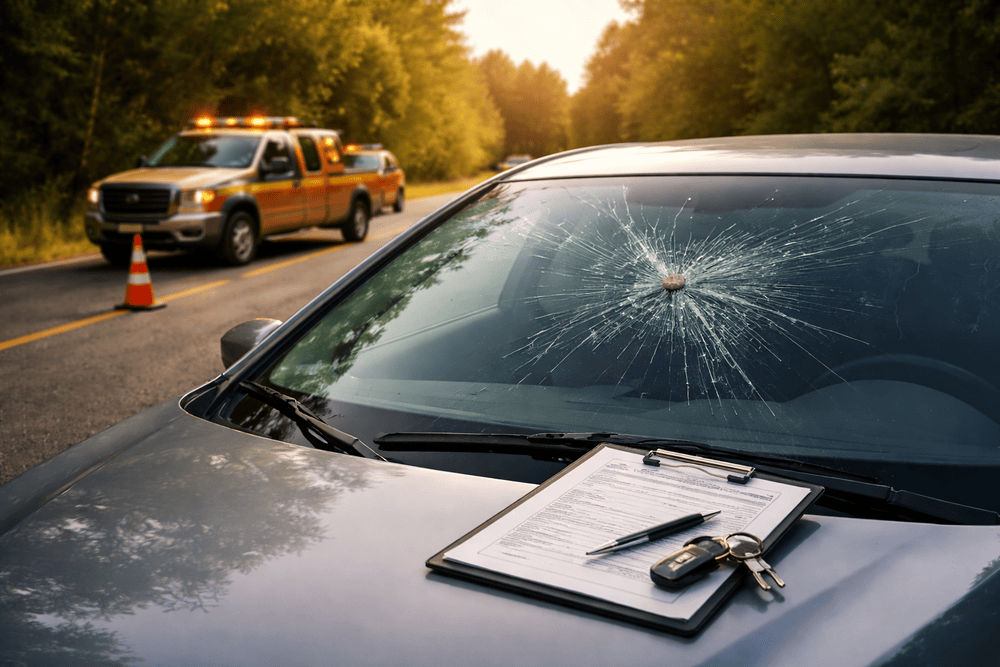
It may be enjoyable to drive along the highway until a passing truck’s tires unleash a wayward pebble. A noticeable chip or spiderweb fracture appears right in front of you as the violent snap reverberates throughout the cabin. One of the most frequent problems that drivers have is windshield damage, but many individuals are unclear about how their passenger vehicle insurance would cover the replacement or repair. A damaged windshield poses a major risk to public safety. It guarantees that the airbags will properly deploy in the case of an accident and gives the car’s roof essential structural support. When temperatures change or your vehicle encounters potholes, ignoring a little crack may swiftly result in a huge fracture, converting a simple irritation into a serious safety danger.
Get An Auto Glass Replacement Quote Now 866.278.7417

Windshield Replacement & Repair
Our competitors push you into going to their shop to get your glass fixed-making it cheaper for them. We make it easier for YOU to get back on the road by offering free mobile repairs at your home or work. With our free mobile services servicing the entire Orange County & Los Angeles area, we can often handle your windscreen replacement the same day! So the next time you need a windshield replacement, give us a call.
Talk to a Windshield Replacement Specialist Now 866.278.7417

Calibration
Calibration is the process of returning a vehicle’s ADAS to OEM specifications. Calibration is necessary after a new glass installation, particularly a windshield with a camera mounted to it, to ensure that the ADAS features continue to function properly despite having been moved during installation. If a car’s ADAS is not properly calibrated, the system may not function safely. A misaligned camera could jeopardize the functionality of the system and lead to dangerous driving or accidents, so it is crucial that the cameras are aligned perfectly, which is what windshield calibration ensures.
Talk to a Calibration Specialist Now 866.278.7417

Fleet Auto Glass Repair
We provide expert auto glass repair and windshield replacement services for commercial fleets of all sizes. We are experienced with all manufacturers and machine types of domestic or foreign cars, trucks, vans, or commercial vehicles, including heavy equipment. Our same day mobile auto glass and windshield repair service will enable you to get back on the road faster and start saving you time and money instantly. Give us a call today! We are here to help!
Talk to a Fleet Auto Glass Specialist Now 866.278.7417
Knowing How Glass Is Covered by Your Policy
Almost often, some portions of a passenger vehicle insurance policy cover windshield damage. The first step to restoring your car to safe driving condition is understanding which portion of your coverage applies.
The Function of Comprehensive Coverage: Your vehicle insurance policy’s comprehensive coverage portion handles the majority of windshield claims. Comprehensive insurance covers damage to your car that isn’t caused by a collision with another vehicle.
Incidents involving falling items, vandalism, extreme weather, animal attacks, and road debris come under this category. Comprehensive coverage is the appropriate protection in the event that a rock is kicked up on the highway and fractures your glass.
It is crucial to remember that, whether you are presently financing or leasing your car, full coverage is sometimes optional. You will have to pay for any damage to your own windshield out of pocket if you just have basic liability insurance.
When Collision policy Applies: Windshield damage may sometimes be covered by collision policy. The repair or replacement of your windshield will be included in the bigger collision claim if you are in a car accident with another vehicle or a fixed object and the impact breaks it.
Add-ons for Full Glass Coverage: Some insurance companies provide full glass coverage as an optional add-on. By removing the deductible for glass claims, this particular endorsement improves your regular comprehensive coverage. Adding complete glass covering might be a very affordable option to safeguard your car if you reside in an area that is vulnerable to severe weather or road debris.
What Will Insurance Cover: Replacement vs. Repair? When deciding whether to cover the cost of replacing the whole piece of glass or repairing a broken windshield, insurance companies follow stringent rules. Their objective is to safely and effectively repair the vehicle’s structural integrity.
Requirements for Windshield Repair
For minor damage, repairs are often the best option since they are quicker, less costly, and preserve the original factory seal. Insurance companies often approve repairs if the damage meets the following requirements:
The chip is not as big as a cent. Depending on the particular supplier, the crack is less than three to six inches. It is not possible for the motorist to see the damage directly in front of them. The windshield’s outside border has not yet been affected by the fracture.
A specific transparent resin is injected into the damaged region by a specialist during a repair. The resin restores the glass’s strength and stops the break from expanding once it has been cured under UV light. If you choose a repair rather than a complete replacement, many insurance providers may waive your deductible entirely.
Requirements for a Complete Replacement: A complete windshield replacement is required if the damage surpasses the repair parameters. It is dangerous to attempt to repair large fractures, which also puts the structural integrity of the glass at jeopardy.
Furthermore, any damage that is immediately in front of the driver has to be replaced since repair resin may result in minor optical distortions that make it difficult to see while driving. In certain situations, the insurance will approve the installation of a new windshield and the removal of the old one.
Managing Deductibles and State Laws: Your policy’s deductible and the state in which you live have a significant impact on the cost of repairing a windshield.
Do you have a Question?
Get An Auto Glass Replacement Quote Now 866.278.7417
Typical Comprehensive Deductibles
You often have to pay your deductible before the insurance company pays the remaining amount if your comprehensive coverage calls for a complete windshield replacement. For instance, the insurance company will only pay $100 if your windshield repair costs $600 and your comprehensive deductible is $500.
States with zero deductibles: Some states have passed legislation encouraging drivers to swiftly repair broken windshields. In some areas, including as Florida, Kentucky, and South Carolina, the deductible for windshield repairs must be waived by the insurance company if the driver has comprehensive coverage.
The policyholder receives a replacement at no cost in these jurisdictions. Some jurisdictions, including Massachusetts and New York, mandate that insurers provide zero-deductible glass coverage as a reasonably priced add-on.
The Intricacy of Contemporary Windshields: ADAS Recalibration: Replacing a windshield now involves more than simply replacing a piece of glass. Advanced Driver Assistance Systems (ADAS) are found in the majority of contemporary cars.
Adaptive cruise control, automated emergency braking, and lane departure alerts are some of these technologies. Usually, the cameras and sensors that drive these functions are fixed straight to the windshield.
These very sensitive cameras need to be calibrated when the glass is changed to guarantee optimal performance. Safety systems may malfunction due to even a millimeter of misalignment.
Recalibration significantly increases the time and expense of replacing a windshield. Fortunately, the required ADAS recalibration will be covered provided your insurance coverage covers the replacement of the glass. Make sure the auto glass business you choose has the specific tools needed to carry out this calibration precisely.
Selecting Between Aftermarket and OEM Glass
There are two varieties of glass to choose from when installing a new windshield: Original Equipment Manufacturer (OEM) and aftermarket.
OEM glass is produced by the same business that was responsible for the original glass that was installed in your vehicle. The dimension, color, and shape are all identical to one another. Glass for the aftermarket is manufactured by third-party companies.
It may vary somewhat from the original specs, but it must adhere to certain Department of Transportation safety regulations. In order to reduce repair costs, the majority of typical insurance plans provide that the business will pay for aftermarket glass.
You would have to cover the cost difference out of pocket if you particularly want OEM glass. However, the insurance could accept OEM parts if your automobile is relatively young or if the manufacturer demands OEM glass for the ADAS sensors to work properly.
A Step-by-Step Guide to making a Claim In general, the process of making a claim for the replacement of a windshield is a straightforward one. A seamless experience may be ensured by following these steps:
Evaluate the Damage: As soon as a chip or crack appears, take crisp pictures of it. To assist the insurance assess if the damage can be fixed, place a penny next to it.
Examine Your Coverage: Verify your comprehensive deductible and look for any particular glass endorsements in your insurance documentation.
Speak with Your Insurance Company: You may often submit a glass claim over the phone, online, or via a mobile app. There are specialized glass claim departments at several large insurance firms.
Choose a Repair Shop: An associated network of glass repair businesses is probably what your insurance would suggest. Although you are free to choose the store of your choice, utilizing an in-network supplier often ensures the quality of the service and expedites the invoicing procedure.
Make an Appointment: A technician may repair the windshield in your driveway or at your place of employment since many auto glass firms provide mobile services.
Common Questions Concerning Windshield Replacement
Will my insurance premiums go up if I file a glass claim? A broken windshield is unlikely to result in a large premium rise since it is often handled as a comprehensive claim, which indicates that the damage happened beyond your control. However, your insurer may change your rates if you file many comprehensive claims in a short amount of time.
Does my insurance company’s recommended repair shop have to be used? No. You are legally entitled to choose the repair facility of your choosing. You are free to hire a reputable local mechanic or specialist glass expert, however insurers often suggest certain stores since they have pre-negotiated pricing and billing arrangements.
What is the duration of the replacement procedure? It typically takes an hour to physically install a new windshield. But it takes time for the urethane glue that was used to hold the glass in place to cure.
After the installation, you should anticipate leaving the vehicle still for at least an hour. The whole appointment duration may be up to three or four hours if your car needs an ADAS recalibration.
Protect Your Car and Your Peace of Mind: Although a broken windshield might be a frustrating disturbance, it can be resolved much more easily if you are aware of how your passenger vehicle insurance handles the matter.
Being knowledgeable guarantees that you are never taken by surprise, from negotiating deductibles and current sensor recalibration to comprehending the distinction between comprehensive and collision coverage.
Examine your existing vehicle insurance coverage for a few minutes now. Examine your comprehensive deductible and confirm whether you are in a state that has particular advantages for glass coverage. You’ll be able to see clearly and your car will be secure for all the miles ahead if your coverage meets your demands.
Knowing Your Options for Insurance Windshield Replacement
Your daily journey may be easily ruined by a wayward pebble on the roadway. Suddenly, a spiderweb of broken glass is blocking your vision as you hear a piercing snap. It’s always annoying to deal with car damage, and figuring out the best solution may be stressful.
The first concern of many drivers is the out-of-pocket expenses related to vehicle glass repair. Due to incorporated sensors, heating components, and sophisticated driver-assistance systems, replacing a contemporary windshield may be costly. Fortunately, the whole cost may be covered by your vehicle insurance policy.
You may save a lot of money and time by being aware of your insurance’s windshield replacement alternatives. This document outlines your options for replacing the glass in your car, when to make a claim, and how various kinds of coverage relate to glass damage.
Is Windshield Replacement Covered by Auto Insurance? In a nutshell, the answer is yes, however it completely depends on the kind of coverage you have. Windshield damage usually comes under two of the many categories that make up auto insurance plans.
Comprehensive Coverage: If your vehicle sustains damage as a result of situations that are beyond your control, comprehensive insurance offers coverage for such damage. Among them are rocks that were thrown up by other vehicles, incidents involving animals, fallen branches, and acts of vandalism. Your comprehensive coverage will usually cover the cost of replacing your windshield if a piece of debris fractures it while you’re driving.
Collision Coverage: If your windshield sustains damage in an automobile accident involving another car or a fixed object, collision coverage is applicable. Your collision insurance will cover the cost of fixing the whole automobile, including the windshield, if you rear-end another vehicle and the impact breaks your glass.
Your coverage won’t cover damage to your own automobile if you simply have liability insurance. In this case, you would have to cover the whole expense of replacing your windshield out of pocket.
Complete Replacement vs. Windshield Repair: Whenever feasible, insurance companies would rather fix a windshield than replace it. Repairs are far less expensive and need a lot less time to do.
Do you have a Question?
Get An Auto Glass Replacement Quote Now 866.278.7417
When Repair Is a Choice
Minor damage may often be repaired by a glass specialist. Generally speaking, a specific resin may be used to fill a chip smaller than a quarter or a fracture smaller than a dollar note. In order to encourage drivers to address minor problems before they worsen, insurance companies often completely eliminate the deductible for windshield repairs.
In the event that the windshield has to be replaced, the structural integrity of the windshield is put in jeopardy if the fracture is more than a few inches, is directly in the line of sight of the driver, or extends all the way to the edge of the glass. For your protection, a complete windshield replacement is required in certain situations. In a rollover, modern cars depend on the windshield to hold the roof and guarantee that the passenger airbags deploy properly.
Having Knowledge of Your Deductible Your deductible is the amount of money that you are responsible for paying out of pocket before the beginning of your insurance coverage. Deductibles for windshield replacements vary depending on your particular coverage and state regulations.
Standard Deductibles: If your comprehensive deductible is $500 and the cost of a replacement windshield is $400, then filling out a claim would not make any sense from a financial standpoint. You would have to pay the whole $400 out of pocket. On the other hand, you would pay your $500 deductible and the insurance company would reimburse the remaining $700 if the replacement costs $1,200 because of sophisticated camera recalibration.
States with Zero Deductibles: In some states, insurance providers are required to provide windshield replacements with no deductible.
Should you be a resident of a state such as Florida, Kentucky, or South Carolina and possess comprehensive coverage, your insurance company is obligated to fix your damaged windshield without requiring you to pay a deductible. For a few more dollars per month, you may add optional glass coverage riders to your policy in other states, which similarly eliminate the deductible for glass claims.
OEM vs. Aftermarket Glass: You will often have to decide what kind of glass to use when your insurance company authorizes a windshield replacement.
Original Manufacturer of Equipment
The same company that created your original windshield also makes OEM glass. It is identical to the thickness, color tint, and specs of the glass that was sent with your vehicle.
Because OEM glass assures a flawless fit and all safety sensors work properly, many drivers prefer it. OEM glass is more costly, however, and unless your vehicle is brand-new, some insurance plans will only pay for aftermarket substitutes.
Aftermarket Options: Third-party businesses produce aftermarket glass. It may vary somewhat from OEM glass in terms of thickness or hue, but it must adhere to the Department of Transportation’s minimal safety criteria.
Because aftermarket glass is more affordable, insurance companies strongly prefer it. You could have to pay the difference out of pocket if your coverage only covers aftermarket glass and you insist on OEM glass.
How to File a Windshield Claim: Making a glass claim is often a simple procedure. To speed up the procedure, the majority of large insurance companies employ specialized glass claim departments.
Mobile Safe Auto Glass
14241 E Firestone blvd suite 400,
La Mirada, CA 90638
Phone: (562) 608-1154
Toll Free: 1 866 278 7417
Mail: sales@mobilesafeautoglass.com
Get a FREE QUOTE today! You can get a free quote and schedule 24/7 using this free quote wizard.
Mon – Fri 8am – 5pm
Saturday 8am – 1pm
Sunday Closed