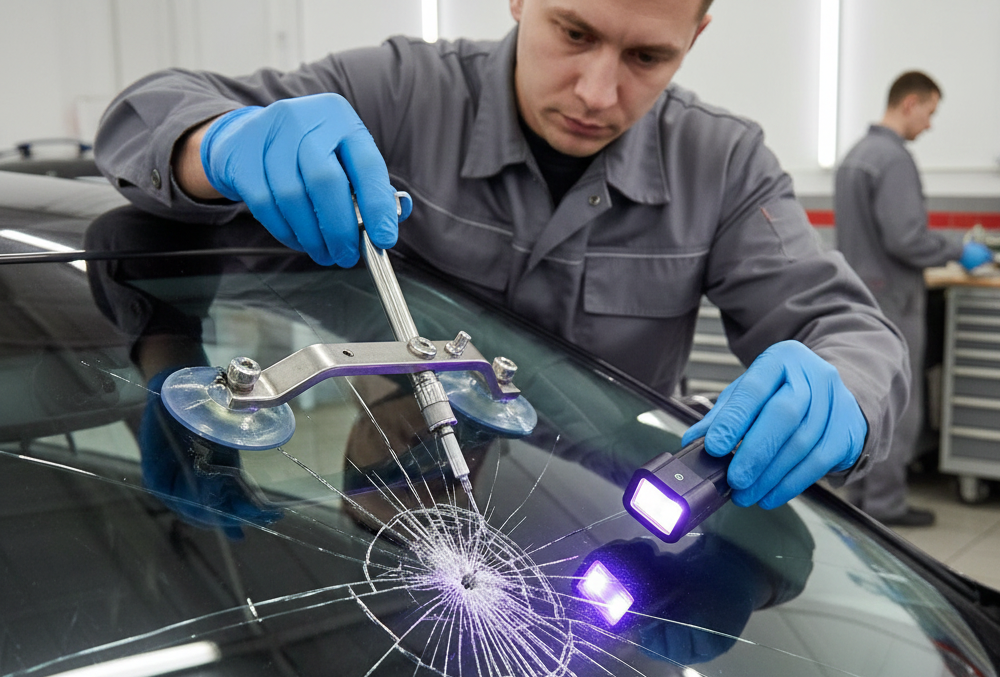
Essential Car Glass Crack Repair Techniques You Should Know
A little scratch in your windshield may not seem like much, but it may quickly grow into a serious safety hazard. That little fracture has the potential to grow, impede your vision, and potentially jeopardize the structural soundness of your vehicle. Knowing the fundamentals of auto glass crack repair is crucial for both preserving the look of your automobile and guaranteeing your safety while driving. In many cases, fixing a cracked windshield is quicker, less expensive, and better for the environment than replacing it entirely. This article will help you choose whether a repair is the best option, lead you through the different forms of windshield damage, and explain how the repair process works.
Get An Auto Glass Replacement Quote Now 866.278.7417

Windshield Replacement & Repair
Our competitors push you into going to their shop to get your glass fixed-making it cheaper for them. We make it easier for YOU to get back on the road by offering free mobile repairs at your home or work. With our free mobile services servicing the entire Orange County & Los Angeles area, we can often handle your windscreen replacement the same day! So the next time you need a windshield replacement, give us a call.
Talk to a Windshield Replacement Specialist Now 866.278.7417

Calibration
Calibration is the process of returning a vehicle’s ADAS to OEM specifications. Calibration is necessary after a new glass installation, particularly a windshield with a camera mounted to it, to ensure that the ADAS features continue to function properly despite having been moved during installation. If a car’s ADAS is not properly calibrated, the system may not function safely. A misaligned camera could jeopardize the functionality of the system and lead to dangerous driving or accidents, so it is crucial that the cameras are aligned perfectly, which is what windshield calibration ensures.
Talk to a Calibration Specialist Now 866.278.7417

Fleet Auto Glass Repair
We provide expert auto glass repair and windshield replacement services for commercial fleets of all sizes. We are experienced with all manufacturers and machine types of domestic or foreign cars, trucks, vans, or commercial vehicles, including heavy equipment. Our same day mobile auto glass and windshield repair service will enable you to get back on the road faster and start saving you time and money instantly. Give us a call today! We are here to help!
Talk to a Fleet Auto Glass Specialist Now 866.278.7417
Knowing About Windshield Damage
It’s crucial to determine the kind of damage your windshield has received before thinking about repair choices. It is determined by the size, depth, and position of the fracture which line of action is the most appropriate. Technicians often categorize damage into a few basic types.
Typical Crack Types
Chip: This occurs when a tiny fragment of glass separates from the windshield, typically following impact with a rock or other debris on the road. It frequently serves as the first point of impact.
A bullseye is a target-like circular fracture. It is crystal evident that the outermost layer of the glass has the form of a cone.
Star Break: This kind of damage is distinguished by a number of tiny, radial cracks that radiate outward from a central point of impact, giving the appearance of a star.
Combination Break: As the name implies, this is a combination break that is a mix between a bullseye break and a star break. It has a central impact point with spreading cracks and a circular pattern.
A crack is a single line that may be extensive (covering a sizable area of the windshield) or short (less than a few inches). A point of impact close to the glass’s edge is frequently where cracks begin.
As important as the sort of damage is its placement. Repairing a fracture in the Driver’s Primary Viewing Area (DPVA), which is the driver’s direct line of sight, is frequently challenging. Even a slight deformation caused by the repair glue might be dangerous and distracting. Furthermore, damage close to the windshield’s edge may weaken the seal and endanger the structural stability of the glass.
The Science of Repairing Windshields
Repairing a windshield involves more than simply patching a fracture; it’s an intricate procedure meant to rebuild the glass’s structural integrity. Laminated safety glass, which is utilized in contemporary windshields, is made up of two layers of glass with a thin film of polyvinyl butyral (PVB) plastic positioned in between the layers of glass. When the glass is struck, it will not shatter into sharp shards because of the design of the glass product.
Usually, just the outer layer of glass is harmed when a rock or other debris strikes your windshield. The PVB and inner glass layers are unaffected by the healing process, which concentrates on this outer layer.
How Resin Repair Operates: An excellent injectable resin is essential to a successful repair. An description of the procedure’s operation is provided in the following detail:
As part of the preparation process, the technician will first clean the affected area, removing any dirt and any broken glass that may be present. This guarantees a good adhesion between the resin and the glass. To enable the resin to completely penetrate the fracture, a tiny hole may occasionally be drilled into the middle of the impact spot.
A specialized equipment is positioned above the fissure in order to perform the injection and vacuum procedures. This piece of apparatus creates a vacuum, which allows it to remove all of the air from the area that has been wounded. A specially prepared liquid resin is injected under pressure to fill each microscopic fracture fissure once the air has been eliminated.
Curing: An ultraviolet (UV) light is utilized to cure and solidify the resin after injection. The resin is chemically changed during this process, which causes it to harden and bind with the glass. In most cases, the curing procedure is little more than a few minutes long.
After the resin has had time to dry, any excess resin is removed from the surface using a scraper. After that, a smooth, transparent finish is restored by polishing the region.
A resin repair may restore up to 95% of the windshield’s original optical clarity and 100% of its structural strength when done properly by a qualified technician. The ultimate result is a repair that is so subtle that it is practically impossible to see, and it prevents the fracture from getting worse.
Do you have a Question?
Get An Auto Glass Replacement Quote Now 866.278.7417
Fix vs. Replace
Even while cutting-edge restoration methods are quite successful, not all windshield damage is repairable. It’s critical for your safety to know whether to choose a repair over a complete replacement.
The Guidelines for Repair: In general, a windshield is an ideal candidate for repair if the damage meets certain parameters, which are as follows:
Size: The diameter of a chip should not exceed a quarter. The optimal length for a single crack is less than six inches, or around the length of a dollar note.
Depth: The damage must only reach the glass’s outermost layer. A replacement is required if it has penetrated the inner glass or the PVB layer.
Location: If the damage cannot be fixed without distorting the view, it should not be in the driver’s direct line of sight. Because they can undermine the entire structure, cracks that extend to the windshield’s edge are likewise not good choices for repair.
Conditions That Call for Replacement
The following circumstances necessitate a complete windshield replacement:
Extensive Damage: A replacement is typically necessary for several lengthy cracks or for a single crack that is longer than 6 to 12 inches.
Inner Layer Damage: The entire windshield is at risk if the impact has broken through the PVB layer and harmed the inner layer of glass.
Contamination: A crack may get contaminated with moisture and dirt if it is not addressed for an extended period of time, which will hinder the proper bonding of the resin.
Location on Edge or in Sightline: According to safety regulations, complicated breaks that are directly in the driver’s line of sight or large fractures that extend to the edge of the glass are frequently irreparable.
To evaluate the damage, it is usually preferable to speak with a qualified car glass specialist. They are qualified to choose the best and safest course of action for your car.
The Prospects for Automobile Glass Technology
The automotive glass industry is always changing. Emerging technologies will increase the strength, intelligence, and repairability of windshields.
Glass that has the ability to heal itself is rapidly becoming one of the most fascinating new technologies. Scientists are testing polymers that, when exposed to heat or sunshine, may automatically patch minor fractures. Minor chips could eventually become obsolete as a result.
Additionally, modern cars are increasingly featuring augmented reality (AR) screens. Information including speed, navigation, and safety alerts may be projected straight onto the glass via these smart windshields.
Professional servicing is more crucial than ever since repairing this kind of sophisticated glass calls for certain skills and equipment. The line separating a basic piece of glass from a sophisticated electronic component will continue to fade as these technologies become increasingly integrated.
Do Something to Keep Your Windshield Safe
No matter how innocuous it may appear at first, a little crack in your windshield is a safety danger that should never be disregarded. Temperature variations, road vibrations, or abrupt collisions can cause even the smallest chip to spread unanticipatedly, transforming a cheap patch into a complete replacement before you realize it.
Many sorts of damage may be repaired quickly, cheaply, and reliably over time—often in less time than it takes to get a cup of coffee—thanks to current procedures and innovative repair technology. However, taking action early is crucial. Don’t wait for a little imperfection to weaken your windshield’s structural integrity or spiderweb across your field of view.
Get a qualified specialist to examine the damage so they can assess its extent, go over your alternatives, and suggest the best and safest course of action. Their knowledge guarantees that you receive an appropriate repair that preserves vision and strengthens the integrity of the glass in your car.
By being proactive, you’re protecting everyone inside the car, not just your windshield. Safe driving requires both a physically good windshield and clear sight. Early problem solving keeps you confident and secure on the road, provides you peace of mind, and ultimately saves money.
Expert Advice for Car Safety and Visibility
The cornerstone of safe driving is clear visibility. Any impediment on the road, from a cloudy side mirror to a windshield stained with rain, can greatly raise your danger. Professional techniques provide a greater degree of safety and clarity that lasts longer and performs better under duress, even if simple auto care like cleaning your car is an excellent place to start.
Many motorists are unaware of the sophisticated options for preserving the glass, lights, and reflecting surfaces of their cars. These are important safety improvements rather than merely aesthetic ones. To ensure that you can see and be seen in any situation, professional-grade treatments can repel water, lessen glare, and return lights to their previous brilliance.
This post will show you how to improve vehicle visibility using tried-and-true methods employed by car experts. We will go over everything from appropriate mirror and camera maintenance to sophisticated glass coatings and headlamp repair.
You may significantly enhance your driving experience, gain more confidence behind the wheel, and—above all—improve safety for both yourself and other people by comprehending and using these techniques.
Expert Glass Cleaning and Maintenance
A clean windshield serves as your main window to the road ahead and is more than simply aesthetically beautiful. To guarantee flawless clarity and get the glass ready for more complex treatments, professional detailers do more than just spray and clean.
Thorough Cleaning and Sanitization: The glass has to be thoroughly cleaned before any protective coating can be put on. Regular cleaning won’t get rid of the stains that collect on your car’s windows over time. These consist of embedded dirt, road tar, mineral deposits from hard water, and tree sap.
To get rid of surface-level grime, experts start with a premium car glass cleaner. Using a clay bar to decontaminate is the next step. A clay bar softly lifts and eliminates bound impurities from the glass pores, leaving the surface hygienic and flawless, just like automobile paint does. In order to ensure that any subsequent coatings adhere to the glass in the proper manner, it is necessary to complete this step.
Using Hydrophobic Coatings in Step Two: After the glass is spotless, the next step is to apply a hydrophobic coating, often known as a “glass sealant” or “ceramic coating for glass.” These products provide your windshield and windows an imperceptible, very smooth layer.
How does it operate? By raising the glass’s surface tension, hydrophobic coatings make it easier for water droplets to roll off the surface and bead up. Rain can occasionally be swept away by wind alone at highway speeds, negating the need for wipers. When it rains a lot, this impact significantly decreases visibility.
Hydrophobic coatings’ advantages
Increased Visibility in Rain: This significantly enhances your view while it’s raining.
Cleaning is made considerably easier since dirt, ice, and insects are less likely to adhere to the treated surface.
Decreased Wiper Usage: Wipers might last longer if they are used less often.
Rain-X Professional, CarPro, and Gtechniq are a few well-known brands of professional-grade products. Professional application guarantees equal coverage and appropriate drying for optimal durability, frequently lasting a year or more, even though do-it-yourself versions are available.
Do you have a Question?
Get An Auto Glass Replacement Quote Now 866.278.7417
Protection and Restoration of Headlights
Although they are a typical sight on older cars, dim, yellowed headlights pose a severe safety risk. Modern headlight lenses are made of plastic that oxidizes over time from UV exposure, scattering and absorbing light. Evening visibility may be reduced by as much as 80 percent as a consequence of this.
The Significance of Headlight Restoration: Restoring your headlights is about recovering lost light production, not just improving the appearance of your vehicle. The oxidized coating is removed, and the lens is polished back to its original clarity using a professional restoration procedure. This makes it possible for your lights to shine at their maximum brightness, lighting up more of the road and increasing the visibility of your car to other motorists.
The Expert Restoration Procedure: For a long-lasting solution, a multi-phase strategy is needed.
Sanding: The headlight lens is first wet sanded. The yellowed, oxidized coating will be meticulously removed by a professional using increasingly finer grits of sandpaper (beginning at around 600 grit and progressing to 2000 grit or higher).
Polishing: The lens will seem fuzzy after sanding. It is possible to restore the clarity by using a machine polisher that is equipped with a cutting compound and a final polish. This produces a crystal-clear surface by eliminating the tiny scratches that the sanding procedure left behind.
The most important stage for lifespan is protecting. The lens will begin to oxidize once more in a matter of months if it is not protected. A specialist will apply a ceramic coating made especially for plastics or a long-lasting, UV-resistant transparent finish. By shielding the lens from the sun’s damaging rays, this protective coating keeps the headlights bright for many years to come.
Making the Most of Your Mirrors and Cameras
Modern backup cameras, side mirrors, and rearview mirrors are crucial instruments for situational awareness. Maintaining them is as crucial as keeping your windshield clear and in good working order.
Handling Side Mirrors: The same dirt and water stains that affect your other windows might also affect your side mirrors. It might be quite helpful to apply a hydrophobic coating to your side mirrors after they have been well cleaned.
When it rains, water will roll off and bead, keeping a sheet of water from covering the surface. This guarantees that you can always see the lanes next to you.
Some experts apply anti-fog coatings to mirrors’ and windows’ insides for even better effectiveness. These items keep condensation from developing, which is very helpful in chilly winter months or humid areas.
Keeping 360-degree cameras and backups up to date. A growing number of contemporary cars use cameras for navigating and parking. These costly safety devices may become ineffective due to a filthy or blocked camera lens. The tiny lens is in contact with muck, dirt, and road spray.
Use a mild cleaner and a delicate microfiber cloth to clean your camera lenses on a regular basis. A tiny bit of a spray-on ceramic coating or a special lens sealer can be used for long-lasting clarity. By producing an oleophobic (oil-repelling) and hydrophobic surface, these coatings help the lens remain cleaner for longer and make it simpler to remove any dirt that does build up.
Last Minute Safety Checks for Driving
You’ve already made significant progress toward improving the overall performance and safety of your car by having your glass, lighting, and mirrors properly treated. These are not only aesthetic improvements; each treatment has a significant impact on your ability to see the road and how well other drivers perceive you. By using these expert techniques, you’re making the decision to spend money on control, clarity, and confidence each time you step behind the wheel.
One of the fundamental tenets of safe driving is clear visibility; it is neither a bonus nor an optional benefit. You significantly lower your chances of missing dangers or responding too late when your windshield repels water, your headlights shine through the dark without haze, and your mirrors remain clear and unobstructed. The cumulative effect of these very tiny enhancements is to make driving safer and more comfortable in a range of circumstances.
No matter what obstacles the road or the weather presents, these treatments assist in guaranteeing that you always have the best vision possible, whether you’re driving in heavy rain, at night, in early morning fog, or on sandy backroads. You’ll be better equipped for any travel, whether it’s usual or unexpected, short or long, if you follow these measures to keep that visibility.
Mobile Safe Auto Glass
14241 E Firestone blvd suite 400,
La Mirada, CA 90638
Phone: (562) 608-1154
Toll Free: 1 866 278 7417
Mail: sales@mobilesafeautoglass.com
Get a FREE QUOTE today! You can get a free quote and schedule 24/7 using this free quote wizard.
Mon – Fri 8am – 5pm
Saturday 8am – 1pm
Sunday Closed