Chips or Long Cracks Impact Windshield Repair Cost
When you see the damage—a blemish on your windshield—your heart drops. Many drivers’ first emotion is frustration, which is quickly followed by financial concern. Will it only take twenty minutes to fix, or will you have to pay a charge that’s equivalent to your monthly auto insurance premium? The type of damage will primarily determine the response. Glass may appear straightforward, but in terms of safety and the final bill, the difference between a tiny stone chip and a long, spreading crack is substantial. A small irritation might become a significant expense if that tiny blemish is ignored. You can choose the best option for your car and your budget if you know how auto glass shops set their prices.
Get An Auto Glass Replacement Quote Now 866.278.7417

Windshield Replacement & Repair
Our competitors push you into going to their shop to get your glass fixed-making it cheaper for them. We make it easier for YOU to get back on the road by offering free mobile repairs at your home or work. With our free mobile services servicing the entire Orange County & Los Angeles area, we can often handle your windscreen replacement the same day! So the next time you need a windshield replacement, give us a call.
Talk to a Windshield Replacement Specialist Now 866.278.7417

Calibration
Calibration is the process of returning a vehicle’s ADAS to OEM specifications. Calibration is necessary after a new glass installation, particularly a windshield with a camera mounted to it, to ensure that the ADAS features continue to function properly despite having been moved during installation. If a car’s ADAS is not properly calibrated, the system may not function safely. A misaligned camera could jeopardize the functionality of the system and lead to dangerous driving or accidents, so it is crucial that the cameras are aligned perfectly, which is what windshield calibration ensures.
Talk to a Calibration Specialist Now 866.278.7417

Fleet Auto Glass Repair
We provide expert auto glass repair and windshield replacement services for commercial fleets of all sizes. We are experienced with all manufacturers and machine types of domestic or foreign cars, trucks, vans, or commercial vehicles, including heavy equipment. Our same day mobile auto glass and windshield repair service will enable you to get back on the road faster and start saving you time and money instantly. Give us a call today! We are here to help!
Talk to a Fleet Auto Glass Specialist Now 866.278.7417
The Distinction Between Cracks and Chips
You must first determine what you are looking at in order to comprehend the pricing. Experts in auto glass classify damage into two primary categories, and there are significant differences in the repair procedures for each.
Chips of stone: When debris strikes glass, a tiny gouge is made in the outer layer, resulting in a windshield chip. These are often limited and do not immediately jeopardize the windshield’s overall structural integrity. Typical kinds include:
Bullseye: A circular fracture in the outer layer of glass that has a split cone. A center impact point with small cracks extending outward is called a “star break.”
Pit: A little fragment of glass that is absent from the surface.
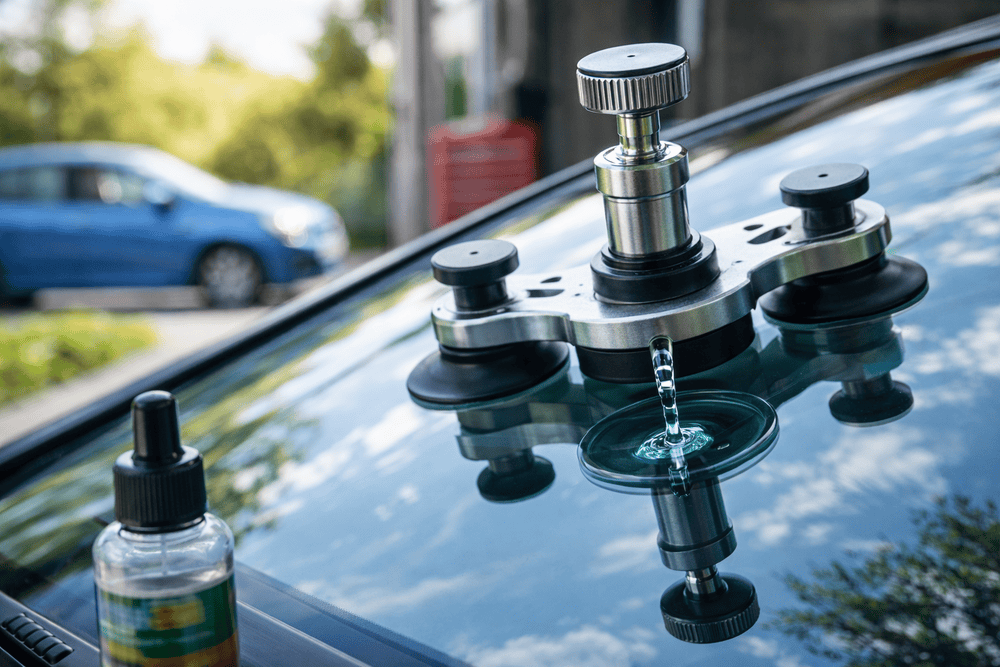
In general, chips are the least expensive damage to repair. A technician can inject a transparent resin into the impact point because the damage is limited. In order to stop the damage from spreading, this glue cures, fills the gap, and fuses the glass back together.
Extended Cracks: Where the glass has truly parted, there are noticeable lines called cracks. These can form when a chip is left untreated or as a result of a violent impact.
The adversary of a cracked windshield is temperature changes. The glass expands and contracts when you turn on the air conditioner on a sweltering afternoon or blast the defroster on a freezing morning, instantly creating a tiny crack that runs the length of the windshield.
Cracks are more intricate. Repairing small cracks (less than three to six inches) is possible, but anything larger typically compromises the glass’s structural integrity. Repair is rarely a possibility in these situations, and expenses increase dramatically.
The Impact of Damage Type on the Bill
The cost of auto glass repair is not arbitrary. It makes sense in terms of labor, materials, and safety regulations.
The Price of Repairing Chips: Your pocketbook will appreciate it if you catch a chip early. The average cost of a professional chip repair is between $60 and $130.
A tiered price structure is offered by several stores. The first chip may cost $100, but the second and third may just cost $20 or $30 each if you have several.
Restoring the glass’s structural integrity is a quick process that often takes less than thirty minutes. The objective is to prevent the spread, even when a little imperfection may still be apparent.
The Price of Repairing Cracks: Technically, a crack that is short—typically shorter than a dollar bill—can be repaired. But compared to a basic chip fill, it takes more resin and skill. The cost of this service could range from $100 to $150.
However, mending is typically out of the question after a crack is more than six inches long. The windshield’s capacity to support the deployment of the passenger airbag or shield you in a rollover collision is now jeopardized. A replacement bill is now in front of you instead of a repair bill.
Do you have a Question?
Get An Auto Glass Replacement Quote Now 866.278.7417
The Increase in Replacement Cost
The cost of replacing your car’s windshield varies greatly based on its make and model.
Economy/Older Vehicles: A replacement for a basic automobile without sophisticated sensors might cost between $200 and $400.
Modern/Luxury Automobiles: Costs go through the roof at this point. The cost of a replacement for a more recent SUV or luxury vehicle might range from $700 to more than $1,500.
The Unstated Price: ADAS Adjustment: The cost of contemporary windshield replacements is influenced by more than just the glass itself. Your car probably has Advanced Driver Assistance Systems (ADAS) if it was manufactured within the last several years.
These are the safety features that regulate your cruise control speed, automatically brake for pedestrians, and keep you in your lane. These elements are generally controlled by cameras and sensors that are located right behind the windshield.
Replacing the glass disturbs this delicate equipment. The car’s ability to detect distance can be affected by even a millimeter movement, which poses a serious safety risk. Therefore, the car needs to be recalibrated after the replacement glass is placed.
Specialized tools and skilled specialists are needed for calibration. It prolongs the service by hours at a time. In addition to the price of the glass itself, this procedure alone may raise your total bill by $300 to $600.
Insurance: Should I File a Claim or Not? Drivers frequently question if they should report glass damage to their insurance company.
Extensive Coverage
Typically, glass damage is covered by your auto insurance policy’s comprehensive section. It normally makes more sense to pay out of pocket for a chip repair or even a basic replacement if your deductible is large (for example, $500 or $1,000). If the cost of repairs is less than your deductible, there is no use in submitting a claim.
Claims for “Free” Glass: Insurance companies are required by law in certain states to waive the deductible for windshield repair. If you have comprehensive coverage, you might be eligible for a free full replacement in places like South Carolina, Kentucky, and Florida.
Additionally, a large number of insurance companies around the country will not charge the deductible for chip repairs. They act in this way because they would prefer to spend $80 on a chip repair now rather than $800 on a windshield replacement later. Asking your agent if chip repairs are covered by your coverage with no out-of-pocket expenses is worthwhile.
When to Hire a Pro and When to Do It Yourself: You can find do-it-yourself windshield repair kits for less than $20 at any auto parts store. These kits often come with a syringe-style applicator and a tiny amount of resin.
A do-it-yourself kit may be adequate for a small, superficial chip on an older vehicle. But there are dangers. The resin won’t bond properly if you don’t create a sufficient vacuum to eliminate the air from the crack. You will ultimately require a complete replacement because the chip will eventually spread into a crack.
Professional assistance is required if a car with ADAS sensors has deep bullseyes, long cracks, or any other damage. The safety hazards of a weak windshield outweigh the money you save on a do-it-yourself kit.
Do Not Wait Until It Spreads
Time is the most crucial component in windshield repair costs. In an instant, a $100 chip fix might become a $1,000 replacement. Small chips might become insurmountable fissures due to freezing temperatures, temperature spikes, and road vibrations.
Examine it right away if you see damage. Make an appointment for a repair if it’s less than a quarter. Measure if it’s a crack. The easiest method to safeguard both your bank account and your car’s safety features is to have an evaluation as soon as possible.
Is That Crack Fixable? Limits & Prices for Windshield Repair: Every driver fears the sound of a rock hitting their glass with a crisp snap. Your eyes immediately search the windshield for the dreaded hairline fracture that is creeping across the glass or the iconic starburst.
The practical questions start once the initial frustration passes. What will the price of this be? Can it be fixed soon, or will a complete, costly replacement be required?
There is a substantial cost difference between a basic repair and a complete replacement. A replacement on a modern car can easily cost more than $1,000, whereas a simple repair might cost $100. The decision isn’t always yours, though.
A windshield’s potential for salvage or disposal is determined by stringent safety and physical criteria. You may budget for the cost and handle discussions with vehicle glass specialists and insurance agents by being aware of these limitations, which include size, location, depth, and technology.
The Limit of Size: The Rule of the “Dollar Bill”: The extent of the damage is the most evident aspect preventing you from selecting a low-cost repair. Auto glass experts use a specific resin that cures under UV light to fill up chips and cracks. Although it has structural restrictions, this resin restores the glass’s integrity.
Bullseyes and Chips
If you have a “bullseye,” a “star break,” or a stone chip, you are probably safe to have it repaired. In general, a technician can fill the damage with ease if it can be covered by a quarter, which is around one inch in diameter. This is the least expensive option; depending on your region and service provider, it might cost anywhere from $60 to $150.
Extended Cracks: The situation is different with long cracks. The “dollar bill” test is the standard industry guideline. Many companies may try to fix a crack that is about six inches (less than a dollar bill) in length.
But technology is becoming better. These days, some specialty repair firms say they can fix cracks as long as 12 or even 14 inches. However, there is a catch: the longer the crack, the harder it is to conceal and the more likely it is that the repair will eventually fail. The glass’s structural integrity is jeopardized if the crack is longer than these, necessitating a replacement.
Where the Rock Hit Is Important: Even if you have a small chip that doesn’t look like much, its location on the windshield may prevent it from being fixed. The cost and repairability of your windshield are significantly impacted by two particular areas.
The Line of Sight of the Driver: The ability of the driver to view the road is subject to strict safety regulations. Even the best resin restorations leave a tiny imperfection, which is frequently compared to a tiny scar or a dried-out water stain.
Reputable stores won’t fix damage that is immediately in the driver’s line of sight, which is typically described as an area the size of a sheet of paper just in front of the steering wheel. A safety risk could arise from the cured resin’s possible deformation, which could divert the motorist or obscure their vision of the road. In this case, a tiny chip necessitates a complete replacement.
Do you have a Question?
Get An Auto Glass Replacement Quote Now 866.278.7417
The Area of Critical Edge
Your windshield’s perimeter is a component of the car’s safety restraint system, not merely a piece of glass. The windshield supports as much as 60% of the cabin roof’s structural integrity in a rollover collision.
A weak spot is created if a crack begins at the windshield’s edge or spreads into the ceramic frit, which is the black band surrounding the edge. Driving-related stress is greatest at the edges, whether it is from slamming doors, hitting potholes, or even chassis flex. This fix is quite likely to fail; thus, to make sure the automobile is safe to drive, the glass needs to be replaced.
The extent of the harm: Laminated glass is used to make windshields. This is made up of two glass layers encasing a polyvinyl butyral (PVB) plastic layer. This design keeps the glass from breaking into jagged pieces when it hits something.
The damage must be restricted to the exterior layer of glass for a repair to be successful. To restore strength and clarity, the resin is injected into the gap in the outer layer.
The windshield is destroyed if the impact was strong enough to break through the plastic coating and fracture the inner glass. Resin cannot be successfully injected into the inner layer. Additionally, the laminate’s safety characteristics are jeopardized if the PVB layer itself sustains damage. Deep damage necessitates a complete replacement.
The technological component ADAS Adjustment: In the past, replacing a windshield only required purchasing the glass and covering labor costs. These days, the computer that makes the glass is the main source of cost increases, not the glass itself.
The majority of contemporary cars (approximately 2016 and up) include Advanced Driver Assistance Systems (ADAS). These consist of attributes such as
Warning of lane departure
Emergency braking that operates automatically
Cruise control that adapts
Rain-detecting wipers
Directly placed cameras and sensors against the windshield are the foundation of these systems. Changing the glass physically is just the first step if you need a complete replacement. Recalibration is the second step.
To make sure the cameras are viewing through the new glass at precisely the correct angle, the car’s computer needs to be calibrated. The system can be disrupted by even a millimeter difference, which could lead to the car braking suddenly or steering incorrectly.
The Effect of ADAS on Cost
The constraints really hit your wallet at this point. Without ADAS, the cost of a replacement may be between $300 and $500.
With ADAS: Skilled experts and specialized equipment are needed for the calibration process. The bill may increase by $300 to $1,000 as a result. If you have a modern car and the damage is too large or in the wrong place to be repaired, you will be paying for more than just glass; you will be paying for a sophisticated computer reset.
Commonly Asked Questions: Will the crack entirely go away after a windshield repair? No. Repairs are structural rather than aesthetic. There will probably still be a little mark or “scar” where the collision happened, even though the resin will greatly reduce the damage’s appearance (often by 80–95%).
Are windshield repairs covered by insurance? Yes, most of the time. Many insurance companies will waive your deductible for a repair because they are far less expensive than a replacement. This implies that you might get it for free. But unless you live in a “zero deductible” state like Florida, Kentucky, or South Carolina, you will usually have to pay your comprehensive deductible if you need a replacement.
How much time can pass before I fix a chip? You ought to fix that right away. Changes in temperature are bad for broken glass. Thermal stress from using your air conditioner in the summer or your defroster in the winter can quickly transform a $100 chip into an irreparable break.
Do Not Wait Until Its Too Late
Time is the biggest factor influencing the cost of your repairs. Glass damage rarely remains unchanged. Small chips will almost certainly expand into major cracks due to temperature changes and vibration from driving.
You can usually get away with a cheap repair that keeps your factory seal if you find the damage early, when it is still minor and isolated. If you wait too long, you will have to replace it, which may require costly glass and intricate ADAS calibration. Your pocketbook will appreciate it if you check the damage and call a professional as soon as you hear the rock impact.
Mobile Safe Auto Glass
14241 E Firestone blvd suite 400,
La Mirada, CA 90638
Phone: (562) 608-1154
Toll Free: 1 866 278 7417
Mail: sales@mobilesafeautoglass.com
Get a FREE QUOTE today! You can get a free quote and schedule 24/7 using this free quote wizard.
Mon – Fri 8am – 5pm
Saturday 8am – 1pm
Sunday Closed