Car Windshield Crack Repair Risk Analysis
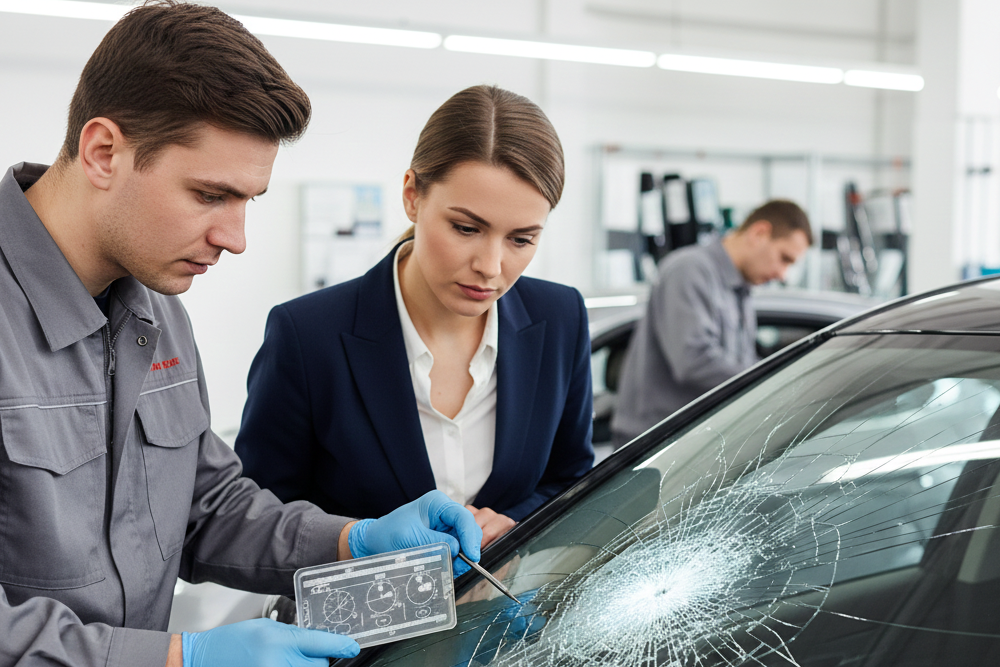
A crack is glaring back at you when a stray pebble strikes your windshield. The expense and hassle of a complete replacement are the first things that come to mind. What about a fix, though? It’s reasonable to question if patching the fracture is actually safe, even though it appears to be a quicker and less expensive solution. Are you taking a chance each time you drive, or is a mended windshield just as sturdy as a new one? Making an informed choice requires being aware of the possible hazards associated with windshield repair. A badly done repair can make a small problem into a serious threat by weakening your car’s safety systems and causing them to malfunction under pressure.
Get An Auto Glass Replacement Quote Now 866.278.7417

Windshield Replacement & Repair
Our competitors push you into going to their shop to get your glass fixed-making it cheaper for them. We make it easier for YOU to get back on the road by offering free mobile repairs at your home or work. With our free mobile services servicing the entire Orange County & Los Angeles area, we can often handle your windscreen replacement the same day! So the next time you need a windshield replacement, give us a call.
Talk to a Windshield Replacement Specialist Now 866.278.7417

Calibration
Calibration is the process of returning a vehicle’s ADAS to OEM specifications. Calibration is necessary after a new glass installation, particularly a windshield with a camera mounted to it, to ensure that the ADAS features continue to function properly despite having been moved during installation. If a car’s ADAS is not properly calibrated, the system may not function safely. A misaligned camera could jeopardize the functionality of the system and lead to dangerous driving or accidents, so it is crucial that the cameras are aligned perfectly, which is what windshield calibration ensures.
Talk to a Calibration Specialist Now 866.278.7417

Fleet Auto Glass Repair
We provide expert auto glass repair and windshield replacement services for commercial fleets of all sizes. We are experienced with all manufacturers and machine types of domestic or foreign cars, trucks, vans, or commercial vehicles, including heavy equipment. Our same day mobile auto glass and windshield repair service will enable you to get back on the road faster and start saving you time and money instantly. Give us a call today! We are here to help!
Talk to a Fleet Auto Glass Specialist Now 866.278.7417
The Reasons Windshield Integrity Cannot Be Negotiated
Understanding how important the windshield is to your car’s safety is essential when assessing repair risks. It is an essential part of safety and does more than just protect you from wind and rain.
Structural Support: Up to 30% of your car’s structural strength comes from the windshield. It keeps the roof from collapsing in a rollover. This degree of assistance is simply impossible from a weakened windshield.
Airbag Operation: For proper deployment, the passenger-side airbag depends on the windshield. It inflates in the direction of the passenger after bouncing against the glass. The power of the airbag might blow out a flimsy windshield, rendering it worthless.
Stopping Ejection: The windshield serves as an essential barrier to protect people inside the car in the event of a catastrophic collision.
The quality of any repair is crucial since even a little fracture has the potential to compromise this entire safety mechanism.
The Dangers of a Poorly Performed Windscreen Repair
There are a number of serious concerns involved in improper windshield repair. These risks result from shoddy construction, subpar materials, or trying to repair damage that ought to have prompted a replacement.
The crack spreads and the repair fails: The most frequent danger of a poor repair is that it will just not hold. The resin might have been a poor-quality substance that was unable to endure environmental stress, or it might not have adhered to the glass correctly.
Glass expands and contracts in response to temperature changes, and a flimsy patch may soon give way, causing the initial crack to grow. Long-term costs might increase if a little, fixable chip develops into a lengthy crack that requires a complete replacement.
Violated Structural Soundness: Restoring the glass’s structural integrity is the main objective of a windshield repair. If the repair is unsuccessful, the windshield will continue to be fragile. This flaw might have disastrous results in an accident.
The windshield might not be able to sustain the force of an airbag deployment, and the roof might be more prone to collapse in a rollover. The vehicle’s safety cage is inadequate, leaving occupants at a substantially increased risk of serious harm.
Impaired Vision: A successful repair should be practically unnoticeable, leaving only a tiny “scar” that doesn’t impair the driver’s view. A poor effort, however, might result in noticeable optical distortion. This might show up as
Cloudiness or Haziness: The resin wasn’t cured correctly or was of poor quality.
Yellowing: Over time, the resin deteriorates in the sun due to its lack of UV resilience.
Air Bubbles: During the injection procedure, air became trapped in the resin.
Any of these problems can cause vision impairment and harmful distraction while driving, particularly if they are in the driver’s direct line of sight. For this reason, reputable technicians won’t fix damage in the driver’s crucial sight area.
Leaks of Water and Additional Damage: Moisture may leak into the windshield’s lamination layer if the resin fails to completely seal the fracture. Over time, this can cause the lamination to split from the glass, leaving a foggy and discolored look. In addition to causing mold development, water leaks can harm the electronics within your car.
Do you have a Question?
Get An Auto Glass Replacement Quote Now 866.278.7417
How to Reduce the Risk of Windshield Repair
When done properly, windshield repair is a safe and efficient solution, despite the possible risks. The most important thing is to make sure the work is done by a qualified expert who adheres to industry standards and employs premium materials.
Determine whether the damage can be repaired: Not every fracture is made equally. For windshield repair, the Repair of Laminated Automotive Glass Standard (ROLAGS™) is the industry standard. It gives precise instructions on what may and cannot be fixed in a safe manner.
Repairable Damage: Smaller than a quarter, bull’s-eye or star-shaped breaks are typically ideal candidates for mending. It is frequently possible to repair cracks up to six inches in length.
Replacement Required: A complete replacement is typically necessary for damage that reaches the border of the windshield, penetrates both layers of glass, or has several intricate cracks. As previously stated, any noticeable damage inside the driver’s immediate field of vision is likewise cause for concern.
Select a Reputable and Certified Technician: Selecting the correct individual for the work is your best line of protection against a poor repair. Seek out experts that have earned certification from the National Windshield Repair Division (NWRD) or a comparable professional association. A technician’s certification attests to their training in following industry best practices.
Read reviews, get referrals, and don’t be scared to ask about their background and the resources they employ. A professional will be open and honest about their methods and reliable products.
Inquire about the warranty as soon as possible: Time is of the essence. The sooner a crack is fixed, the better the result will be. Because a new fracture is clean, the glue can attach more successfully. A smooth repair becomes considerably more challenging when dirt, debris, and moisture contaminate the fracture over time.
A trustworthy repair business would also guarantee its work. Always find out whether they provide a guarantee. A company’s trust in its services is demonstrated by a lifetime warranty that ensures the repair won’t spread or discolor for as long as you own the vehicle.
Choosing the Safe Option
It is not necessary for a windshield crack to be stressful. You may confidently select a repair that restores your car’s safety without having to pay the high price of a replacement when you are aware of the hazards and know what to look for.
Although the technology used for windshield repair is well-established, the technician’s ability and the caliber of the materials used determine how effective the repair is.
You may prevent the risks of a poor repair by making sure the damage is repairable, choosing a qualified expert, and taking prompt action. A competent repair strengthens one of your car’s most crucial safety features and is more than simply a cosmetic touch-up.
How Cracks Endanger the Safety of Your Car: Although a little fracture in an automobile’s frame may appear to be a minor aesthetic concern, it may really be the first indication of a far more serious condition.
That minor flaw has the potential to develop over time, affecting vital parts and jeopardizing the vehicle’s overall structural soundness. The long-term safety of vehicles is seriously threatened by this process, which is called crack propagation.
Any automobile owner must comprehend how and why cracks develop and spread. Maintaining the car’s exterior is important, but so is making sure it will continue to be a dependable and safe means of transportation for many years to come.
The mechanics of fracture propagation, the car sections most at risk, and the actions you can take to stop, identify, and deal with this hidden threat are all covered in this piece.
Crack Propagation
The process by which a fracture develops or spreads across a material is known as crack propagation. It begins with a microscopic defect, a little fault that may have resulted from an external incident or from the production process. This defect starts to enlarge when it is repeatedly stressed.
Imagine it like twisting a paperclip in two directions. After a few bends that don’t seem to do anything, a little crack appears. The fracture becomes larger with each bend until the paperclip breaks. Vehicle components go through a similar process.
Road vibrations, the strain of braking and acceleration, and temperature variations all function as those repeated bends, promoting the expansion of preexisting fractures. The term “fatigue crack propagation” is frequently used to describe this.
Because it may occur gradually and silently, weakening a component from the inside out without any visible symptoms until it’s too late, this process is very risky.
The Reasons Behind Vehicle Component Cracks
A vehicle’s cracks can develop and spread due to a number of circumstances. You can better understand the need for routine maintenance and cautious driving if you are aware of these underlying issues.
Fatigue of Materials: This is the most frequent reason why cracks spread throughout cars. Over the course of their existence, components are made to tolerate a specific level of stress. But each jolt, pothole, and abrupt halt adds a little bit of stress.
Fatigue fractures develop as a result of the material being worn down over thousands of miles by this accumulated stress. Particularly vulnerable to material stress are important structural components such as the engine mounts, suspension arms, and chassis.
Manufacturing Errors: Metal and plastic components can develop minute defects even with sophisticated production processes. These flaws might be minor surface scratches, metal impurities, or microscopic air bubbles. Despite their apparent innocuousness, these defects provide weak spots where tension may build up, which makes them the ideal place for a crack to begin.
Environmental Aspects: Your car‘s operating environment has a big impact. The process of corrosion Rust and other types of metal corrosion can be brought on by exposure to moisture, humidity, and road salt. Rusted regions are very vulnerable to breaking under stress because they are weaker and more brittle than the surrounding metal.
Variations in Temperature: Materials expand and shrink in response to extreme temperature fluctuations. Over time, fracture development may result from this heat cycling, which increases component stress, particularly when several materials are linked.
Effects on the Body
Even little collisions may put a lot of stress on the frame and other parts of a car. Hidden fissures that would not be apparent during a routine post-accident assessment can be created by a collision. In a similar vein, driving recklessly over uneven ground or frequently striking curbs can result in impact damage that starts the fracture propagation process.
Which Components Are Most Dangerous: Although fractures may occur in any section of a car, certain parts are more susceptible than others because of the extreme stress they experience.
The Frame and Chassis: Your car’s chassis, which supports the body, suspension, and engine, is its skeleton. The weight of the car and the forces of driving put it under continual strain. A frame fracture can seriously impair the vehicle’s structural soundness, influencing how it handles and how well it can shield its occupants in an accident.
The Suspension System: Sturdy handling and a smooth ride depend on parts like shock absorber mounts, control arms, and struts. Additionally, they are constantly struck by the surface of the road. Uneven tire wear, a lack of vehicle control, and eventually component failure can result from cracks in these areas.
Mounts for engines and transmissions: The engine and transmission are secured in place by these mounts, which also absorb vibrations to keep them from entering the cabin. The metal and rubber components may deteriorate and fracture over time, causing odd sounds, excessive engine movement, and even harm to other drivetrain elements.
Axles and Wheels: The vehicle’s whole weight is supported by the wheels and axles, which also withstand strong rotating forces. When driving, a wheel crack that usually begins at the rim edge or lug nut holes might cause catastrophic failure. Likewise, a wheel may separate from the vehicle due to an axle crack.
Do you have a Question?
Get An Auto Glass Replacement Quote Now 866.278.7417
How to Keep Your Car Safe
Proactive maintenance combined with safe driving practices can stop cracks from spreading. You can guarantee your car’s safety and greatly increase its lifespan by doing these things.
Frequent Visual Examinations: Develop the practice of routinely checking your car, particularly if you’ve struck a pothole or driven over uneven terrain. Pay special attention to the suspension and undercarriage parts for any obvious indications of corrosion, rust, or cracking. To see clearly in regions that are difficult to see, use a flashlight.
Expert Upkeep: Make an appointment for routine expert checks with a reliable technician. Technicians are equipped with the knowledge and resources to identify problems that you would overlook. For example, they might use non-destructive testing (NDT) techniques like dye penetrant or magnetic particle inspection to locate tiny fractures in important parts.
Drive in a defensive manner: Your driving habits directly affect how long your car lasts. Steer clear of aggressive driving techniques, including abrupt braking and acceleration. Avoid potholes as much as possible and slow down for speed bumps. This lessens the strain on the suspension and chassis of your vehicle.
Maintain It Clean: Regular car washing, particularly for the underside, helps get rid of dirt and road salt that can cause corrosion. In addition to being more appealing to the eye, a clean car is also simpler to check for possible problems.
What to Do Next for a Safer Drive
The slow but dangerous threat of crack propagation can compromise the security of your car from the inside out. It subtly erodes vital parts, transforming a little, undetectable imperfection into a catastrophic failure in the making.
You may take charge of the long-term condition of your car by being aware of the hazards and causes. Vigilance is the key. Your greatest line of defense against this unseen threat is routine inspections, both personal and professional.
You can reduce the chance of material fatigue and make sure your automobile continues to be a dependable and safe part of your life with careful driving and regular maintenance. Take proactive measures to improve vehicle safety now rather than waiting for a minor issue to grow into a major one.
Mobile Safe Auto Glass
14241 E Firestone blvd suite 400,
La Mirada, CA 90638
Phone: (562) 608-1154
Toll Free: 1 866 278 7417
Mail: sales@mobilesafeautoglass.com
Get a FREE QUOTE today! You can get a free quote and schedule 24/7 using this free quote wizard.
Mon – Fri 8am – 5pm
Saturday 8am – 1pm
Sunday Closed