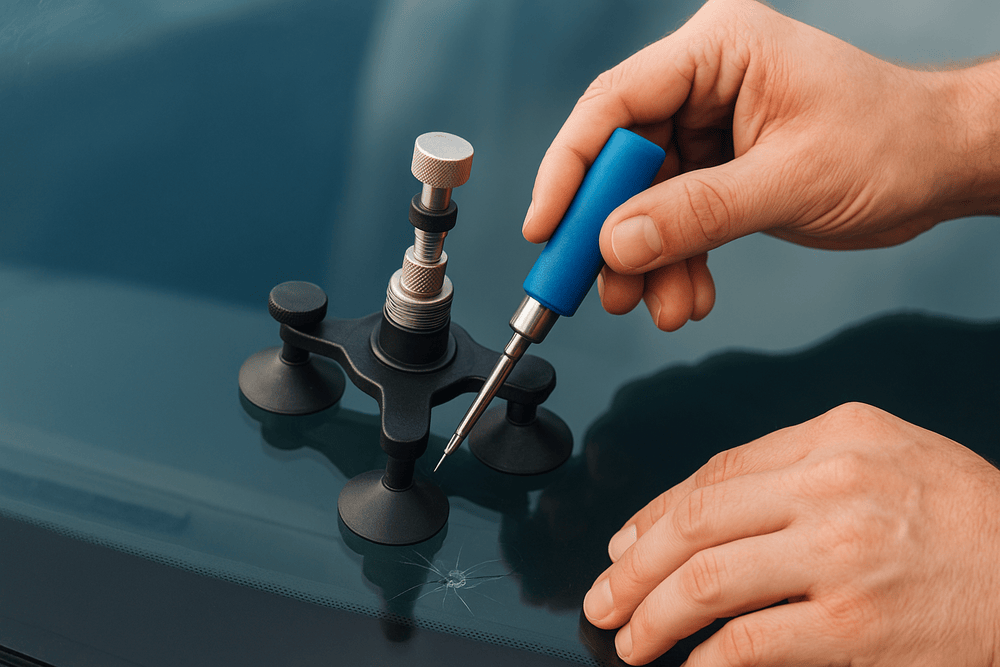
Car Windscreen Chip Repair Explained Clearly
A small rock hits your windscreen, leaving behind a tiny chip. It seems harmless enough, but should you get it fixed? Windscreen chips are one of the most common types of car damage, yet many drivers aren’t sure how to handle them. Some ignore the problem until it’s too late, while others rush to replace the entire windscreen when a simple repair would have sufficed. Everything you need to know about fixing windshield chips will be covered in this article. You’ll learn what causes chips, when they can be repaired versus replaced, how the repair process works, and how to prevent future damage.
Get An Auto Glass Replacement Quote Now 866.278.7417

Windshield Replacement & Repair
Our competitors push you into going to their shop to get your glass fixed-making it cheaper for them. We make it easier for YOU to get back on the road by offering free mobile repairs at your home or work. With our free mobile services servicing the entire Orange County & Los Angeles area, we can often handle your windscreen replacement the same day! So the next time you need a windshield replacement, give us a call.
Talk to a Windshield Replacement Specialist Now 866.278.7417

Calibration
Calibration is the process of returning a vehicle’s ADAS to OEM specifications. Calibration is necessary after a new glass installation, particularly a windshield with a camera mounted to it, to ensure that the ADAS features continue to function properly despite having been moved during installation. If a car’s ADAS is not properly calibrated, the system may not function safely. A misaligned camera could jeopardize the functionality of the system and lead to dangerous driving or accidents, so it is crucial that the cameras are aligned perfectly, which is what windshield calibration ensures.
Talk to a Calibration Specialist Now 866.278.7417

Fleet Auto Glass Repair
We provide expert auto glass repair and windshield replacement services for commercial fleets of all sizes. We are experienced with all manufacturers and machine types of domestic or foreign cars, trucks, vans, or commercial vehicles, including heavy equipment. Our same day mobile auto glass and windshield repair service will enable you to get back on the road faster and start saving you time and money instantly. Give us a call today! We are here to help!
Talk to a Fleet Auto Glass Specialist Now 866.278.7417
What Causes Windscreen Chips
Windscreen chips typically occur when small objects strike the glass at high speed. The most common culprits include:
Road debris: Loose gravel, small rocks, and stones kicked up by other vehicles are the leading cause of windscreen damage. This is especially common on highways and freshly paved roads.
Construction zones: Areas with active construction often have loose materials that can become projectiles when hit by tires.
Weather conditions: Hail can cause multiple chips across your windscreen in a matter of minutes. Extreme temperature changes can also cause existing minor damage to worsen.
Accidents and impacts: Everything from falling branches to flying objects during storms can create chips in your windscreen.
The outer layer of your windscreen is made of tempered glass designed to withstand impact, but it’s not indestructible. When something strikes with enough force, it creates a chip by breaking through the outer surface.
Types of Windscreen Chips: Not all windscreen damage looks the same. Understanding the type of chip you have can help you determine whether it’s repairable. Here are the most common types:
Bull’s Eye: This circular chip looks like a bullseye target, with a dark center surrounded by a circular ring. These can usually be fixed if they are smaller than a quarter and are mainly produced by round objects.
Star Break
A star break has a central impact point with multiple short cracks radiating outward, resembling a star. If detected early, they may frequently be fixed, but they spread swiftly.
Combination Break: This type combines elements of different chip patterns, such as a bull’s eye with small cracks extending from it. The extent and complexity of the damage determine whether it can be repaired.
Crack: Unlike chips, cracks are lines that extend across the glass. Short cracks (under 3 inches) may be repairable, but longer cracks typically require windscreen replacement.
Edge Crack: These cracks can jeopardize the glass’s structural integrity and begin within two inches of the windscreen’s edge. Instead of being repaired, they frequently need to be replaced.
Is It Possible to Repair Your Windscreen Chip? Not every chip necessitates replacing the entire windshield.Several factors determine whether your damage is repairable:
Size matters: Most chips smaller than a quarter (about 1 inch in diameter) can be successfully repaired. Larger chips may require replacement.
The location is crucial: Even little chips that are right in the driver’s line of sight may need to be replaced because repairs may cause minor distortions. Because they jeopardize structural integrity, chips close to the windscreen’s edge are frequently irreparable.
Depth of damage: If the chip has penetrated through multiple layers of the laminated glass, repair may not be possible.
Number of chips: A single chip is usually repairable, but multiple chips in close proximity might weaken the glass too much for a safe repair.
Contamination: If dirt, debris, or moisture has gotten into the chip, it may affect the repair quality. Fresh chips are easier to repair than old, contaminated ones.
As a general rule, if you can cover the damaged area with a quarter, and it’s not directly in your line of sight or at the edge of the windscreen, it’s likely repairable.
Do you have a Question?
Get An Auto Glass Replacement Quote Now 866.278.7417
How Windscreen Chip Repair Works
Professional windscreen chip repair is a straightforward process that typically takes 30 minutes to an hour. This is what occurs:
Evaluation: To ascertain whether the chip can be fixed, a technician looks at it. The extent, location, depth, and kind of damage will all be examined.
Cleaning: To get rid of any moisture, filth, or debris, the affected area is carefully cleansed. Because impurities can hinder the resin’s ability to adhere correctly, this step is essential.
Resin Injection: A specialized bridge tool is placed over the chip, and a vacuum is created to remove any remaining air from the damaged area. Next, under pressure, a clear resin is pumped into the chip. This resin is formulated to have optical properties similar to glass.
Curing: UV light is used to cure the resin when it has fully filled the chip. This restores structural integrity by solidifying the resin and binding it to the surrounding glass.
Polishing: After the resin cures, the technician removes any excess material and polishes the surface to create a smooth finish. The result is a windscreen that’s restored to near-original strength and clarity. While you may still see a slight mark where the chip was, it will be far less noticeable than before and won’t obstruct your vision.
DIY vs Professional Repair
The majority of auto parts companies sell windshield chip repair kits for $10 to $20. These kits include basic resin and application tools, and they can work for very small, simple chips. However, professional repair offers several advantages:
Better materials: Professional-grade resin is higher quality and bonds more effectively than consumer-grade products.
Proper equipment: Technicians use specialized tools that create the right pressure and vacuum conditions for optimal resin penetration.
Expertise: Professionals can assess whether a chip is truly repairable and identify hidden damage that might not be obvious to an untrained eye.
Warranty: While do-it-yourself repairs lack a warranty, the majority of professional fixes do.
Insurance coverage: Professional windscreen repair is essentially free under many insurance policies, which have no deductible. For best results and long-term durability, professional repair is worth the investment—especially since it may cost you nothing out of pocket if your insurance covers it.
Cost of Windscreen Chip Repair
Professional windscreen chip repair typically costs between $50 and $150 per chip, depending on your location and the severity of the damage. Windscreen repair is covered by many comprehensive auto insurance plans without a deductible.
In fact, insurance companies prefer to pay for repairs rather than replacements because it’s much more cost-effective. A windscreen replacement can cost $200 to $500 or more, compared to under $100 for a repair.
To learn more about your coverage, speak with your insurance company. Even if you have a deductible, paying for a repair out of pocket is often cheaper than paying a deductible for a full replacement later.
Why You Shouldn’t Delay Repair: That small chip might seem insignificant, but delaying repair can lead to bigger problems:
Chips spread: Temperature changes, road vibrations, and additional impacts can cause small chips to develop into large cracks. Once a crack extends beyond a few inches, repair is no longer an option.
Safety concerns: In the event of an accident, your windscreen may contribute as much as 30% of the structural integrity of your car. Because damaged glass is weaker, it might not adequately protect you in an accident.
Problems with visibility: Even little chips can cause distortions and glare that impair vision, particularly at night or in direct sunshine.
Legal concerns: Driving with a damaged windscreen that blocks your view is prohibited in several jurisdictions and may result in a ticket.
Higher costs: Waiting too long often means you’ll need a full replacement instead of a simple repair, costing significantly more money and time.
As soon as you see a chip in your windshield, it’s preferable to fix it. The majority of repairs may be finished in less than an hour, and same-day service is frequently available.
How to Prevent Windscreen Chips
While you can’t completely eliminate the risk of windscreen damage, you can reduce it:
Keep your distance: Give yourself plenty of room to maneuver between your car and the one in front of you, particularly on highways or gravel roads. This lessens the possibility of getting struck by kicked-up debris and allows you more time to react.
Avoid construction zones when possible: Take alternate routes around construction areas if you can, or drive slowly through them.
Replace your worn-out wiper blades since they can scrape your windshield and leave weak spots that are more prone to chipping.
Park smart: When possible, park in covered or protected areas to avoid exposure to falling objects and hail.
Address small damage immediately: Small chips are much less likely to spread if they’re repaired promptly.
Avoid drastic temperature changes: Don’t blast cold air conditioning on a heated windscreen or throw hot water on an icy one. Gradual temperature changes help prevent stress cracks.
Taking Care of Your Windscreen: A small chip in your windscreen doesn’t have to become a big problem. When caught early, most chips can be repaired quickly and affordably, restoring your windscreen’s strength and clarity.
The key is acting fast. As soon as you notice damage, assess whether it’s repairable and schedule service with a professional technician. Check with your insurance company about coverage, as you may be able to get the repair done at no cost to you.
By understanding how windscreen chip repair works and why it’s important, you can make informed decisions that keep you safe on the road and save you money in the long run.
Complete Guide to Fixing Chips Fast and Safely
You’re cruising down the highway when suddenly—crack. A small rock hits your windscreen, leaving behind a tiny chip. It might look harmless, but that small piece of damage could turn into a major problem if you ignore it.
Windscreen chips are among the most common types of car damage, yet many drivers aren’t sure how to handle them properly. Some people ignore the problem until it spreads into an expensive crack, while others panic and assume they need a costly windscreen replacement when a simple repair would work perfectly.
This comprehensive guide covers everything you need to know about windscreen chip repair. You’ll discover what causes chips, how to determine if yours can be repaired, what the repair process involves, and proven strategies to prevent future damage. By the end, you’ll have the knowledge to make smart decisions that keep you safe and save you money.
What Causes Windscreen Chips?: Understanding what creates windscreen chips can help you avoid them and recognize when damage occurs. Most chips happen when small objects strike your windscreen at high speed.
Road debris tops the list of culprits. Loose gravel, small rocks, and stones get kicked up by vehicle tires, especially on highways and freshly paved roads. Construction zones create particularly hazardous conditions with loose materials that become dangerous projectiles.
Weather conditions also play a major role. Hailstorms can pepper your windscreen with multiple chips in minutes, while extreme temperature swings can cause existing minor damage to worsen rapidly.
Accidents and unexpected impacts round out the common causes. Falling branches during storms, debris from other vehicles, or objects blown by strong winds can all create chips in your windscreen.
Your windscreen’s outer layer consists of tempered glass designed to handle impacts, but it has limits. When something strikes with sufficient force, it breaks through the outer surface and creates a chip.
Do you have a Question?
Get An Auto Glass Replacement Quote Now 866.278.7417
Types of Windscreen Chips You Might Encounter
Recognizing the type of chip helps determine whether repair is possible. Each type has different characteristics and repairability factors.
Bull’s Eye Chips: These circular chips resemble a bullseye target, featuring a dark center surrounded by a ring. Round objects typically cause this damage pattern. Bull’s eyes smaller than a quarter are usually excellent candidates for repair.
Star Break Patterns: Star breaks show a central impact point with multiple short cracks radiating outward like a star. While often repairable when caught early, they tend to spread quickly, making prompt action essential.
Combination Breaks: These complex patterns combine elements from different chip types, such as a bull’s eye with small extending cracks. Repairability depends on the overall size and complexity of the combined damage.
Linear Cracks: Unlike chips, cracks form continuous lines across the glass. Short cracks under three inches may be repairable, but longer ones typically require complete windscreen replacement.
Edge Cracks: Starting within two inches of your windscreen’s edge, these cracks compromise the glass’s structural integrity. They almost always require replacement rather than repair due to safety concerns.
Determining If Your Windscreen Chip Can Be Repaired: Several key factors determine whether your chip qualifies for repair or requires replacement. Size serves as the primary factor. Most chips smaller than a quarter (roughly one inch in diameter) can be successfully repaired. Larger damage typically necessitates replacement.
Location matters significantly. Chips directly in your line of sight may need replacement even when small, since repairs can leave slight visual distortions. Damage near the windscreen edges often can’t be repaired because it compromises structural integrity.
Depth affects repair success. If the chip has penetrated through multiple layers of laminated glass, repair becomes impossible or ineffective.
The number of chips influences the decision. A single chip usually qualifies for repair, but multiple chips in close proximity can weaken the glass beyond safe repair limits.
Contamination impacts repair quality. Dirt, debris, or moisture in the chip affects how well resin bonds. Fresh, clean chips repair much better than old, contaminated ones.
The general rule: if you can cover the damaged area with a quarter, and it’s not in your direct sight line or at the windscreen edge, repair is likely possible.
Precision Resin Injection
A specialized bridge tool positions over the chip, creating a vacuum that removes remaining air from the damaged area. Clear resin formulated to match glass optical properties gets injected under controlled pressure, completely filling the chip.
UV Light Curing: Once the resin fills the chip completely, ultraviolet light cures it. This process hardens the resin and creates a strong bond with surrounding glass, restoring structural integrity to near-original levels.
Final Polishing: After curing, the technician removes excess material and polishes the surface smooth. The result is a windscreen restored to nearly original strength and clarity, with minimal visual evidence of the original damage.
DIY Repair Kits vs. Professional Service: Auto parts stores sell windscreen chip repair kits for $10-$20, including basic resin and application tools. These kits can work for very small, simple chips, but professional repair offers significant advantages.
Superior materials make a difference. Professional-grade resin provides better optical clarity and stronger bonding than consumer products. Specialized equipment ensures optimal results. Technicians use tools that create precise pressure and vacuum conditions for complete resin penetration.
Expert knowledge helps identify problems. Professionals can spot hidden damage and accurately assess whether repair will succeed long-term. Warranty protection provides peace of mind. Most professional repairs include warranties, while DIY attempts offer no guarantees.
Insurance coverage often applies. Many policies cover professional windscreen repair without deductibles, making it essentially free. For lasting results and maximum safety, professional repair justifies the investment—especially when insurance covers the cost.
Understanding Windscreen Chip Repair Costs
Professional windscreen chip repair typically ranges from $50 to $150 per chip, depending on location and damage severity. Many comprehensive auto insurance policies cover windscreen repair without requiring deductible payments.
Insurance companies actually prefer paying for repairs over replacements because of the significant cost difference. Windscreen replacement can cost $200 to $500 or more, compared to under $100 for most repairs. Contact your insurance provider to understand your specific coverage. Even with a deductible, paying repair costs out-of-pocket often costs less than paying the deductible for eventual replacement.
Why Delaying Repair Creates Bigger Problems: That seemingly insignificant chip can quickly become a major headache if you postpone repair.
Chips spread predictably. Temperature changes, road vibrations, and additional impacts cause small chips to develop into large cracks. Once cracks extend beyond a few inches, repair becomes impossible.
Safety gets compromised. Your windscreen provides up to 30% of your vehicle’s structural integrity during crashes. Damaged glass weakens this protection and may fail when you need it most.
Visibility suffers. Even small chips create glare and visual distortions that impair driving ability, particularly at night or in bright sunlight.
Legal consequences exist. Some jurisdictions prohibit driving with windscreen damage that obstructs vision, potentially resulting in traffic citations.
Costs multiply. Waiting too long transforms an affordable repair into an expensive replacement, costing significantly more money and time. The optimal repair window opens as soon as you notice damage. Most repairs complete within an hour, and same-day service is often available.
Strategies to Prevent Windscreen Chips
While you can’t eliminate windscreen damage risk entirely, smart driving habits significantly reduce it. Maintain safe following distances, especially on gravel roads and highways. Extra space provides reaction time and reduces exposure to kicked-up debris.
Navigate construction zones carefully. Choose alternate routes when possible, or drive slowly through work areas to minimize debris impact risk. Replace worn wiper blades promptly. Old, damaged blades scratch windscreen surfaces, creating weak points more susceptible to chipping.
Choose parking locations wisely. Covered or protected parking areas reduce exposure to falling objects and hail damage. Address minor damage immediately. Small chips spread much less when repaired quickly after they occur.
Avoid extreme temperature shocks. Gradual temperature changes prevent stress cracks caused by thermal expansion differences.
Making Smart Decisions About Your Windscreen: Small windscreen chips don’t have to become expensive problems. When addressed promptly, most chips can be repaired quickly and affordably, restoring your windscreen’s protective strength and optical clarity.
Success depends on quick action. Assess damage as soon as you notice it, determine if repair is viable, and schedule professional service promptly. Check your insurance coverage first—you may qualify for no-cost repair.
Understanding windscreen chip repair empowers you to make informed decisions that prioritize safety and minimize costs. Don’t let a small chip turn into a big expense. Take action today to protect yourself and your investment.
Mobile Safe Auto Glass
14241 E Firestone blvd suite 400,
La Mirada, CA 90638
Phone: (562) 608-1154
Toll Free: 1 866 278 7417
Mail: sales@mobilesafeautoglass.com
Get a FREE QUOTE today! You can get a free quote and schedule 24/7 using this free quote wizard.
Mon – Fri 8am – 5pm
Saturday 8am – 1pm
Sunday Closed