Auto Chip Repair Insights for Smart Vehicle Owners
This sound is familiar. Twack prevents interstate travel. Your car hits a truck-forward rock. Looking for the windshield starburst or white mark lowers your heart. Later that evening, a jagged hood scratch may occur, but not glass damage. The everyday grind may miss these small optical abnormalities. Ignoring them rarely works for car owners. A windshield chip may block visibility after a cold night or crash. Cars rust from untreated paint chipping. Prompt action protects your car’s appearance, structure, and value. This auto chip repair guide identifies paint and glass damage to help you decide whether to DIY or pay a pro.
Get An Auto Glass Replacement Quote Now 866.278.7417

Windshield Replacement & Repair
Our competitors push you into going to their shop to get your glass fixed-making it cheaper for them. We make it easier for YOU to get back on the road by offering free mobile repairs at your home or work. With our free mobile services servicing the entire Orange County & Los Angeles area, we can often handle your windscreen replacement the same day! So the next time you need a windshield replacement, give us a call.
Talk to a Windshield Replacement Specialist Now 866.278.7417

Calibration
Calibration is the process of returning a vehicle’s ADAS to OEM specifications. Calibration is necessary after a new glass installation, particularly a windshield with a camera mounted to it, to ensure that the ADAS features continue to function properly despite having been moved during installation. If a car’s ADAS is not properly calibrated, the system may not function safely. A misaligned camera could jeopardize the functionality of the system and lead to dangerous driving or accidents, so it is crucial that the cameras are aligned perfectly, which is what windshield calibration ensures.
Talk to a Calibration Specialist Now 866.278.7417

Fleet Auto Glass Repair
We provide expert auto glass repair and windshield replacement services for commercial fleets of all sizes. We are experienced with all manufacturers and machine types of domestic or foreign cars, trucks, vans, or commercial vehicles, including heavy equipment. Our same day mobile auto glass and windshield repair service will enable you to get back on the road faster and start saving you time and money instantly. Give us a call today! We are here to help!
Talk to a Fleet Auto Glass Specialist Now 866.278.7417
The Two Faces of Chip Damage
Not all chips are created equal. To treat the problem effectively, you first need to understand what material has been compromised and the specific risks associated with it.
Integrity of the Windshield: Modern windshields are amazing works of engineering. They have two layers of glass and a layer of polyvinyl butyral (PVB) in the middle. The outside layer is typically damaged when a rock hits it. While the inner layer protects you from glass shards, that outer damage compromises the structural strength of the windshield. Up to 45% of the cabin’s strength comes from the glass in a rollover accident. A compromised windshield is a safety hazard, not just a visual distraction.
Paint and Bodywork: Paint chips are deceptively dangerous. Paint is more than just color; it seals off the metal body of your car from the weather. When a stone chips that paint away, it exposes the bare metal to oxygen and moisture. This is where oxidation begins. If left untreated, that tiny spot the size of a freckle can bubble up into a rust patch that spreads beneath the surrounding paint, leading to expensive bodywork repairs down the line.
It is a Race Against Time to Fix Windshield Chips
When it comes to broken glass, speed is key. The longer you wait, the less likely it is that any fix will work.
How Chips Become Cracks: When the temperature changes, glass gets bigger or smaller. If you blast your defroster on a frozen morning, the rapid temperature shift creates stress on the glass. If there is a chip, that stress has a focal point, causing the glass to snap and a crack to run across the windshield. Even the vibrations from driving or hitting a pothole can cause a stable chip to “run” instantly.
Assessing the Damage: Before you head to a shop, look closely at the chip. Industry standards generally suggest that a repair is possible if:
It’s not even a quarter of the damage.
There’s not even three chips.
The damage is not in the exact line of sight of the driver.
Most shops that you can trust will tell you to get a whole new set if the chip is right in front of the driver. When glass is fixed, it often gets a little warped, which can make it harder to see and less safe.
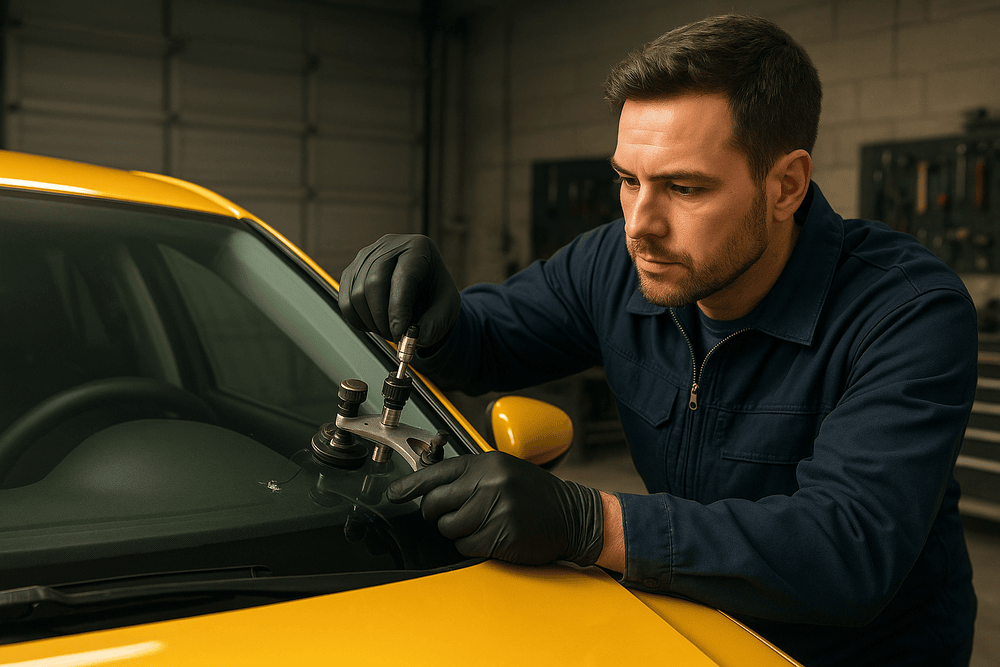
How to Fix Things: Injecting a clear, curing glue into the chip is an interesting part of windshield repair. A suction is used to get rid of the air around the point of impact, and then the resin fills the space. UV light hardens the glue, which holds the glass back together.This restores the strength of the windshield and prevents the crack from spreading, though a small blemish usually remains visible.
Do you have a Question?
Get An Auto Glass Replacement Quote Now 866.278.7417
Handling Paint Chips Before Rust Sets In
While a cracked windshield demands urgent attention, paint chips require a steady, methodical approach. You have a bit more time here, but “later” should not turn into “never.”
Finding the Right Match: The most critical step in paint repair is color matching. You cannot simply buy a generic “red” or “blue” touch-up pen. You need to find the color code for your car. This is usually written on a sticker inside the driver’s side door jamb or in the owner’s instructions. Using the exact original code makes sure that the repair fits in with the rest of the bodywork perfectly.
The DIY Repair Method: For minor road rash and small chips, a DIY approach is often sufficient.
Clean Up: To get rid of road dirt, use soap and water. Follow up with rubbing alcohol to remove wax or grease.
Remove Surface Rust: If the metal looks brownish, use the abrasive tip of a touch-up pen or fine-grit sandpaper to gently clean the metal. Do not sand the surrounding good paint.
Apply Primer: If the metal is exposed, a dab of primer helps the paint stick.
Paint Application: Apply the base coat in thin layers. It is better to do three light coats than one gloopy one. Let it dry between applications.
Clear Coat: Finish with a layer of clear coat to seal the repair and match the gloss of your car.
The Financial Reality
Understanding the cost difference between proactive repair and reactive replacement is usually enough to motivate any vehicle owner.
Glass Costs: Professional windshield chip repair typically costs between $50 and $150. Many insurance policies cover this fully with no deductible because they would rather pay $100 now than $1,000 later.
A full windshield repair, on the other hand, can cost anywhere from $300 to over $1,000. If your car has Advanced Driver Assistance Systems (ADAS) like lane-keep assist or automatic braking, cameras mounted behind the windshield must be recalibrated after a replacement. This calibration alone can add hundreds of dollars to the bill.
Bodywork Costs: A high-quality automotive touch-up kit costs around $30 to $60. It contains enough material to fix dozens of chips.
If you ignore those chips and rust sets in, you are no longer looking at a touch-up. You are looking at sanding, body filler, and repainting entire panels. Professional body shop rates vary, but repainting a single hood or fender can easily exceed $500 to $800 depending on the paint type and labor involved.
Safety First
However, you can lessen the chance of damage even though you can’t change the road conditions or the cars around you.
The Three-Second Rule: The most effective prevention method is free: increase your following distance. Most rock chips occur on highways when following large trucks or SUVs too closely. These vehicles have large tires that easily pick up debris and fling it backward. By keeping a safe distance (at least three seconds behind), you allow most debris to fall back to the road before it strikes your car.
Paint Protection Film (PPF): For those who want physical protection, Paint Protection Film—often called a “Clear Bra”—is the gold standard. This is a clear urethane material that is put on your car’s high-impact parts, like the front body, hood, and side mirrors. PPF is self-healing; if a rock hits it, the film absorbs the impact. Small scratches on the film can go away when it gets hot in the sun or in warm water. While expensive (often costing heavily for full front-end coverage), it is the ultimate shield for pristine paint.
Bug Deflectors: For trucks and SUVs, a bug deflector mounted on the front of the hood can alter the aerodynamics enough to direct bugs and small pebbles up and over the windshield rather than directly into it.
Frequently Asked Questions
Will a windshield repair make the chip invisible?
No, not entirely. The principal objective of chip restoration is structural integrity, rather than aesthetic flawlessness. While the appearance will improve significantly—often clearing up by 80% to 95%—you will likely still see a small pit or faint spot where the impact occurred.
After getting rock chips fixed, can I wash my car right away?
Yes, in most cases. Professional repairs use UV-cured resin, which hardens instantly. You can drive the car and wash it immediately. However, if you have just repaired a paint chip, you should wait at least 48 hours for the paint to cure fully before washing or waxing.
Does insurance cover paint chips?
Generally, no. Paint chips are considered normal wear and tear. However, if the damage is significant and caused by a specific incident (like driving through a construction zone where debris fell on your car), it might be covered under comprehensive insurance, though your deductible would apply.
How long does it take for a professional to fix my windshield?
It is one of the fastest automotive services available. A skilled expert can usually fix a rock chip in thirty minutes or less.
Keep Your Ride Road Ready
Owning a vehicle comes with an endless checklist of maintenance tasks, but few are as time-sensitive as chip repair. That sickening sound of impact is your cue to act. By assessing damage immediately, utilizing professional glass repair services, and keeping a touch-up pen handy for paintwork, you ensure that your vehicle remains safe, beautiful, and valuable.
Do not let a five-dollar issue become a five-hundred-dollar headache. Today, give your car the attention it needs and check the windows and hood.
How to Fix Windshield Chips More Quickly and Safely
If you don’t take care of a small chip in your windshield the right way, it can quickly become an expensive replacement.For auto glass technicians, mastering the art of chip repair is essential. Not only does a quick, safe, and reliable repair fix the glass’s structural integrity, but it also earns you more trust from customers and boosts your professional image. Efficient repairs mean you can serve more customers, while a focus on safety ensures both you and your client are protected.
Successfully repairing a windshield chip requires more than just filling it with resin. It involves a systematic approach, from preparing the surface correctly to using the right tools and techniques for a seamless, durable finish. A high-quality repair should be nearly invisible and strong enough to prevent the damage from spreading, ensuring the vehicle’s safety systems, which often rely on windshield-mounted sensors, continue to function as intended.
This guide provides five expert tips designed to help auto glass professionals streamline their process. By incorporating these practices into your workflow, you can make every chip repair faster, safer, and more reliable, leading to happier customers and a stronger business.
Do you have a Question?
Get An Auto Glass Replacement Quote Now 866.278.7417
Prioritize a Clean and Dry Surface
The foundation of any lasting windshield repair is impeccable preparation. Before you even think about injecting resin, the damaged area must be completely clean and dry. Any moisture, dirt, or leftover glass fragments trapped inside the chip will compromise the bond of the resin, leading to a weak repair that could fail over time. A failed repair might look cloudy, develop air bubbles, or simply not hold, allowing the chip to spread into a crack.
Start by using a scribe or a pick to carefully remove any loose glass shards from the impact point. This step is very important so that the repair resin can get into all of the harm. Once the loose debris is gone, clean the area with a high-quality, residue-free glass cleaner and a lint-free cloth. Isopropyl alcohol is a great choice because it doesn’t leave a film and evaporates fast.
Drying the chip thoroughly is just as important. Even a microscopic amount of moisture can prevent the resin from properly curing and bonding with the glass. Use a moisture evaporator or a heat gun on a low setting to gently warm the area and force out any trapped water. Be careful not to heat the glass too much, as this can make the chip grow into a crack. A properly prepared surface ensures the resin achieves maximum adhesion, resulting in a clear, strong, and durable repair.
Make Sure you Use Good Resin and Tools
The quality of your products has a direct effect on how well your work turns out. It might be tempting to save money by using cheaper alternatives, but if you want solid results, you have to spend money on professional-grade resin and tools. Premium resins are formulated to have optical clarity that matches the windshield glass, making the final repair almost invisible. They also offer superior strength and durability, preventing the chip from spreading and withstanding temperature changes and vibrations.
Your injector system is equally important. A professional-grade injector allows you to create a strong vacuum to remove air from the chip and then apply consistent, controlled pressure to force the resin deep into every fissure. Look for injectors that are easy to clean, maintain, and offer precise control over both the vacuum and pressure cycles. Tools that are difficult to operate can lead to incomplete fills or introduce air bubbles, compromising the repair.
Similarly, a powerful and reliable UV curing lamp is essential. The resin used in chip repair is cured by ultraviolet light, and an inadequate lamp can result in an incomplete cure. This leaves the resin soft and weak, making the repair susceptible to failure. Invest in a UV lamp that provides consistent, high-intensity light to ensure the resin cures completely and forms a permanent bond with the glass.
Learn How to Give Injections Correctly
Having the right tools is only half the fight. What makes a professional from an amateur is knowing how to use them well. The injection process is a delicate balance of vacuum and pressure, and mastering this technique is key to a successful repair. The goal is to remove all air from the chip and replace it completely with resin.
Begin by mounting your injector securely over the impact point. Apply a vacuum to the chip to suck out any trapped air. You may need to cycle between vacuum and pressure several times, especially for more complex breaks like star or combination chips. This “flexing” of the glass helps open up the tiny cracks and allows the air to escape. Watch carefully to see the air bubbles being drawn out of the damage.
Switch to the pressure cycle once you are sure that all the air has been taken out. Apply steady, gradual pressure to inject the resin into the void. Try not to put too much pressure on the glass at once, as this can damage it more. Allow the resin time to flow and penetrate every part of the chip. For stubborn areas, gently tapping the glass from the inside of the windshield can help the resin fill the remaining gaps. A methodical and patient approach to injection ensures a complete fill and a structurally sound repair.
Do not Skip the Curing and Finishing Steps
The repair isn’t finished once the resin is injected. Proper curing and finishing are critical for ensuring the longevity and cosmetic appearance of the repair. After filling the chip, place a curing tab or a small piece of Mylar film over the resin. This prevents oxygen from inhibiting the curing process and helps create a smooth, level surface.
Next, position your UV lamp directly over the repair. It’s usually only a few minutes, but check with the resin’s maker to make sure you follow their instructions. Make sure the lamp is stable and won’t move during the process. An even and complete cure is necessary for the resin to reach its full strength. Once the resin is hard, carefully scrape any extra off the glass surface with a new, sharp razor blade held at a 45-degree angle. The chip should be flush with the rest of the glass when it’s done.
Finally, polish the area with a small amount of pit polish and a clean cloth. This final step removes any minor scratches left by the razor blade and restores the glass to a crystal-clear shine. A well-finished repair should be smooth to the touch and nearly invisible, leaving the customer with a windshield that looks and performs like new.
Follow the Safety Rules
At any time you work on car glass, safety should always come first. Working with glass, resins, and tools presents potential hazards, and following established safety protocols protects both you and the vehicle. Wear safety glasses at all times to protect your eyes from glass or resin splashes. Nitrile gloves are also essential to protect your skin from the chemicals in the resins and cleaners.
When working, be mindful of the vehicle’s interior and exterior. Use drop cloths or protective coverings to prevent any resin or polish from damaging the car’s paint, dashboard, or upholstery. Accidental spills can be difficult to clean and may leave permanent stains, leading to an unhappy customer and additional costs for you.
Furthermore, it’s important to educate your customer about the repair process. Explain what you are doing and manage their expectations regarding the final appearance. Let them know that while the repair will restore the structural integrity of the windshield, a small blemish may still be visible. It’s important to communicate clearly so that there are no mistakes and the customer has a good experience from beginning to end.
Elevate Your Repair Standards
Mastering windshield chip repair is a continuous process of refining your skills and adhering to best practices. By focusing on meticulous preparation, using high-quality materials, perfecting your injection technique, and never cutting corners on curing or safety, you can consistently deliver faster, safer, and more reliable repairs.
These efforts not only result in a superior finished product but also enhance your reputation as a skilled and trustworthy technician. In a competitive market, reliability and quality are what set you apart. By implementing these expert tips, you can elevate the standard of your work, increase customer satisfaction, and build a successful and sustainable business.
Mobile Safe Auto Glass
14241 E Firestone blvd suite 400,
La Mirada, CA 90638
Phone: (562) 608-1154
Toll Free: 1 866 278 7417
Mail: sales@mobilesafeautoglass.com
Get a FREE QUOTE today! You can get a free quote and schedule 24/7 using this free quote wizard.
Mon – Fri 8am – 5pm
Saturday 8am – 1pm
Sunday Closed