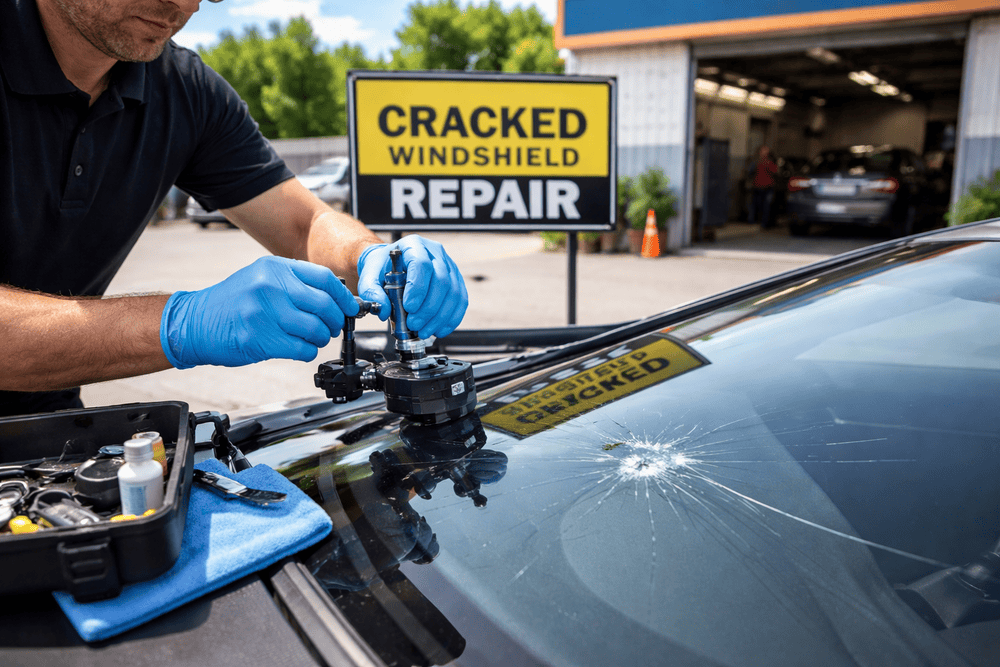
Delaying Repairs Raises Cracked Windshield Repair
It begins modestly. Perhaps a piece of hail during a summer storm or a rock kicked up by a truck on the highway. There’s a tiny chip or a tiny crack in the corner of your windshield when you hear a quick thwack. Ignoring it is simple. After all, life is hectic, and it doesn’t obstruct your vision. “Later” is often significantly more costly than “now,” yet you tell yourself you’ll take care of it later. What starts out as a small aesthetic irritation can easily turn into a serious safety risk and an expensive replacement. Realizing the importance of taking prompt action will help you save money, time, and stress.
Get An Auto Glass Replacement Quote Now 866.278.7417

Windshield Replacement & Repair
Our competitors push you into going to their shop to get your glass fixed-making it cheaper for them. We make it easier for YOU to get back on the road by offering free mobile repairs at your home or work. With our free mobile services servicing the entire Orange County & Los Angeles area, we can often handle your windscreen replacement the same day! So the next time you need a windshield replacement, give us a call.
Talk to a Windshield Replacement Specialist Now 866.278.7417

Calibration
Calibration is the process of returning a vehicle’s ADAS to OEM specifications. Calibration is necessary after a new glass installation, particularly a windshield with a camera mounted to it, to ensure that the ADAS features continue to function properly despite having been moved during installation. If a car’s ADAS is not properly calibrated, the system may not function safely. A misaligned camera could jeopardize the functionality of the system and lead to dangerous driving or accidents, so it is crucial that the cameras are aligned perfectly, which is what windshield calibration ensures.
Talk to a Calibration Specialist Now 866.278.7417

Fleet Auto Glass Repair
We provide expert auto glass repair and windshield replacement services for commercial fleets of all sizes. We are experienced with all manufacturers and machine types of domestic or foreign cars, trucks, vans, or commercial vehicles, including heavy equipment. Our same day mobile auto glass and windshield repair service will enable you to get back on the road faster and start saving you time and money instantly. Give us a call today! We are here to help!
Talk to a Fleet Auto Glass Specialist Now 866.278.7417
The Science of Crack Spreading
Despite appearing motionless, glass is constantly under tension. A structural element of your car, the windshield supports the roof and absorbs traffic vibrations. When a chip weakens the glass’s structural integrity, it exposes it to several outside influences that promote spreading.
Temperature Fluctuations: As the temperature varies, glass expands and contracts. The glass is severely stressed by the sudden temperature change that occurs when you turn on the air conditioner on a hot afternoon or blast the defroster on a frigid morning. A microscopic crack creates a weak spot where stress accumulates, causing the crack to “run” or abruptly lengthen.
Road Vibrations and Impact: Every pothole, speed bump, and slammed door causes the car’s frame to tremble. These shocks are too much for a damaged windshield to withstand. A little chip will eventually spiderweb outward under typical driving circumstances.
Moisture and Dirt: If water seeps into the crack, it may swell and push the glass apart if it freezes. Additionally, the crack may become clogged with dirt and debris. Dirt can prevent the repair glue from adhering, even if you fix it later. Such an event could lead to a less durable repair or necessitate a complete replacement.
The Difference in Cost Between Repair and Replacement: The financial case for early intervention is straightforward: replacements are costly, whereas repairs are inexpensive.
The Affordability of Repairs
Early detection of a chip allows a specialist to inject a specific transparent resin into the damaged area, usually when the chip is less than a quarter. This resin cures and fuses the glass back together, restoring its strength and optical clarity. Usually, the procedure takes no more than half an hour.
Cost: Usually in the range of $50 to $150. Many insurance policies cover this 100% with no deductible because policyholders prefer to pay for an inexpensive repair rather than an expensive replacement later.
The Cost of Replacing: Once a break reaches the edge of the windshield or extends past around six inches, repair is usually not feasible. Too much of the structural integrity has been lost. A complete windshield replacement is now required.
Time: Before you can drive safely, it may take a few hours plus cure time.
Cost: The price could range from $300 to over $1,000, depending on the brand and model of your vehicle.
ADAS (Advanced Driver Assistance Systems) is an additional cost associated with modern cars. Cameras and sensors are frequently installed behind the windshield if your vehicle includes technologies like rain-sensing wipers, automated braking, or lane-keeping assistance.
These systems need to be recalibrated when the glass is changed. Specialized tools and knowledge are needed for this calibration process, which frequently raises the final cost by hundreds of dollars.
The Dangers of Waiting for Safety: Although cost is a significant consideration, safety ought to come first. The function of your windshield extends beyond merely blocking wind.
Do you have a Question?
Get An Auto Glass Replacement Quote Now 866.278.7417
Maintaining Structural Integrity in Accidents
Up to 45% of the car cabin’s structural integrity in a rollover accident is provided by the windshield. Keeping the windshield intact lessens the chance that the roof will collapse on the people inside. Your protection is greatly diminished by a broken windshield, which is already compromised and could break or pop out under pressure.
Airbag Deployment: The passenger-side airbags are protected by the windshield. The airbag correctly positions itself in front of the passenger by bouncing against the window as it deploys. The airbag may deploy improperly and leave the passenger unprotected if the glass is damaged since the force of the deployment could break the windshield.
Problems with Visibility: Light is reflected differently by cracks than by smooth glass. A fracture can produce dazzling glare in direct sunlight or at night, which might obscure obstacles or divert your attention from the road.
How can you determine whether you are in the “repair” or “replace” zone and when to call a professional? Although expert evaluation is ideal, the following generic rules can be used:
Dimensions: Does the chip weigh less than a quarter? How short is the crack compared to a dollar bill? If so, it’s probably fixable.
Depth: Does the damage extend through both glass layers? You’ll need a replacement if it goes all the way through.
Location: Can the driver see the crack directly? Sometimes a small distortion remains after repairs. It is safer to replace if it obstructs your vision. Does the fracture reach the glass’s edge? If the fracture extends to the glass’s edge, it necessitates replacement to maintain the structural integrity.
Do Not Let a Small Chip Break the Bank
Ignoring a damaged windshield puts you at a significant disadvantage. Time, the road, and the surroundings are all contributing to that tiny chip becoming a huge crack.
You can protect your car’s safety integrity and prevent sticker shock from a complete replacement and ADAS recalibration by taking care of the problem right away. Examine your insurance policy; you may discover that correcting it now will cost you nothing at all. Make an appointment for a repair before the fracture spreads, then drive with assurance.
Why It’s Costly to Ignore a Small Windshield Chip: The sound is familiar to you. A dump truck merges in front of you as you travel down the highway. Abruptly—thwack. A stray pebble hits your windshield after bouncing off the truck’s tire.
You wince and look at the window, noticing a little star-shaped mark close to the passenger side. It appears inconsequential, no larger than a cent. Later, you’ll take care of it, you tell yourself.
Who has time to sit at a car repair shop for a hardly noticeable flaw when life is so busy? Waiting rarely pays off. Frequently, a small cosmetic irritation turns into a significant financial burden.
Every disruption to the high surface tension that the windshield glass functions under starts the clock. That tiny chip eventually spreads into a spiderweb crack across your line of sight due to environmental influences and regular driving practices.
You can save hundreds or even thousands of dollars by knowing why glass breaks and the hidden expenses of contemporary car maintenance. Even though there is a big difference between a basic fill-in repair and a complete replacement, many drivers put off making the wise decision until it is too late.
The Delicate Science of Automobile Glass
You must examine how windshields are designed to comprehend why a tiny chip is a major issue. Your windshield is composed of laminated safety glass, rather than the tempered glass used for your car’s side windows, which breaks into dull cubes. This construction consists of a polyvinyl butyral (PVB) layer encased in two glass layers.
When a rock hits your windshield, it usually only breaks the outer layer of glass. Despite the compromised structural integrity, the inner layer and PVB hold the windshield together. However, the outer layer is now exposed.
It breaks the tension that makes the windshield strong. The chip serves as the weak spot where the glass’s desire to separate can be released. Once the physical structure sustains damage, everyday forces begin to act on that weak spot, transforming a static chip into a moving crack.
The Three Damage-Spreading Triggers: Rock chips almost always grow. Damage is accelerated by three main environmental conditions, which frequently take drivers by surprise.
Temperature fluctuations cause glass to expand when heated and compress when cooled. Your windshield continuously experiences extreme temperature changes. You blast the defroster against a frozen windshield during the winter.
The glass expands unevenly as a result of this quick heating, severely stressing the chip. When you use air conditioning in a car that has been heated excessively during the summer, the opposite effect occurs. The primary cause of abrupt crack expansion is these thermal shocks.
Dirt and Moisture: An open wound on your car is called a chip. Rain or car wash water seeps into the fissure. When the temperature falls below freezing, the trapped water expands and turns into ice, causing the glass to separate from the inside.
Washing liquid and grime can also find their way inside the crack. This material can pollute the area, even if the split doesn’t spread right away, making a clean repair later on impossible.
Vibration and Physical Stress
Your automobile vibrates each time you drive. Vibrations caused by potholes, speed bumps, slamming the car door, or even loud music can reach the glass through the chassis. A clean windshield readily handles this stress.
A damaged windshield is unable to. A rough patch of road will eventually supply enough energy to transform that chip into a noticeable fissure.
The Reality of Finance: Comparing Repair and Replacement Economic considerations mostly motivate quick action. Replacing the entire glass slab is far more expensive than just mending a chip.
The price of fixing something If a specialist discovers the damage early, they can inject a specific glue into the chip. When exposed to UV light, this glue hardens and rebonds the glass, giving it strength.
Time: Usually less than half an hour.
Cost: Usually falls between $50 and $150.
Coverage Many insurance companies may waive the deductible for repairs because it saves them money on a full replacement. This feature suggests that the cost of the repair may not be borne by you.
The Replacement Cost: Repair is no longer a safe option once a crack is more than six inches in diameter or comes into the driver’s direct line of sight. The windshield needs to be replaced.
Time: In addition to the time needed for the glue to dry, which frequently calls for the automobile to sit for an extra hour or longer, it can take several hours.
Price: For normal cars, the glass alone can cost between $300 and $600, but specialty or luxury cars can easily cost more than $1,000.
Do you have a Question?
Get An Auto Glass Replacement Quote Now 866.278.7417
The Unstated Price
In older cars, replacing the windshield only required glass and work. The cost of modern cars has increased significantly due to Advanced Driver Assistance Systems (ADAS).
Most current cars come equipped with safety features like automated emergency braking, adaptive cruise control, and lane-keeping assistance. Often, these systems install their cameras and sensors directly behind the windshield.
Those cameras move a little when the windshield is replaced. The system may miscalculate distances or lane markings due to a millimeter difference, for example. Consequently, the car needs to be recalibrated either dynamically or statically when the glass is placed.
The Premium for Calibration: Specialized tools and skilled specialists are needed for this procedure. It can raise the price of the glass from $300 to $600.
Total Cost: Because of the technologies involved, a replacement that used to cost $300 may now cost $1,200 or more. Because the original seal and camera placement are preserved, a straightforward resin repair eliminates the need for this entire procedure.
The structural function of the windshield prioritizes safety over financial gain. In addition to providing wind protection, your windshield is an essential structural element of the car’s safety cage.
The windshield provides up to 60% of the roof’s crush resistance in a rollover collision. Damage to the windshield weakens the structure and increases the likelihood of the roof collapsing under the car’s weight.
Additionally, your passenger-side airbag cannot function correctly without the windshield. When the airbag deploys, it bounces against the windshield to cushion the passenger. The power of the airbag could break the windshield or cause it to pop out of the frame if the glass is fragile due to a significant crack, making the safety device ineffective.
When Is It Too Late to Repair
How can you tell whether an inexpensive fix has become a costly replacement? Generally speaking, industry norms adhere to a few “rules of thumb.” The test of dollar bills: Damage is typically minimal enough to be repaired if it can be fully covered by a $1 note.
The Test of the Quarter: Simple bullseye chips are an easy choice for repair if the damage is less than a quarter.
Line of View: The glass still has a little imperfection or distortion even after a good repair. Reputable shops will demand a replacement if the damage is in the “steering wheel” area, which is the driver’s direct line of sight, to guarantee that visibility is unaffected.
Cracks on the edges: The structural bond is probably weakened and has to be replaced if a crack begins at the windshield’s edge or reaches the edge.
Common Questions: Is it possible to utilize a do-it-yourself windshield repair kit? Auto parts retailers sell do-it-yourself kits that work similarly to professional equipment. They are dangerous, though.
You only get one shot if the resin cures improperly or if you leave air in the chip. A failed attempt cannot be fixed. Trusting an expert is frequently preferable due to the comparatively inexpensive cost of professional repair.
After repair, will the chip fully vanish? No. Repairs are structural rather than aesthetic. Preventing the crack from expanding is the aim. Even though the appearance will much improve—typically by 80% or 90%—the impact site will probably still have a minor scar.
Does my insurance rate increase if I file a glass claim? Since glass repair claims are classified as comprehensive claims rather than collision claims, they typically do not result in an increase in your premiums. However, it is always advisable to call your agent to confirm, as policies differ by state and provider.
Stop the Spread Before It Begins: A small mark on your windshield may seem insignificant today, but it can quickly become a financial burden. It only takes one speed bump or a chilly night to go from a $0 (insurance-covered) repair to a $1,000+ ADAS calibration and replacement procedure.
Check your glass frequently. Take quick action if you spot a chip. This weekend, arrange for a mobile repair provider to drive to a business or come to your office. It’s much better to invest thirty minutes in a repair now rather than using your savings for a replacement later.
Mobile Safe Auto Glass
14241 E Firestone blvd suite 400,
La Mirada, CA 90638
Phone: (562) 608-1154
Toll Free: 1 866 278 7417
Mail: sales@mobilesafeautoglass.com
Get a FREE QUOTE today! You can get a free quote and schedule 24/7 using this free quote wizard.
Mon – Fri 8am – 5pm
Saturday 8am – 1pm
Sunday Closed